

10 Types Of Bread From Around The World
Bread is a staple of dinner tables, lunch bags, and restaurant menus across the globe. This comforting carb serves as a hearty base for sandwiching and dipping, while also fitting right in alongside an array of main dishes. Most recipes combine basic ingredients like flour and water, but bread comes in an impressive variety of shapes, textures, and flavors, with different cultures putting their own spin on the dough prep and cooking methods to create unique regional specialties.
Whether you prefer something light and fluffy, delightfully crusty, or thick and chewy, there's a bread to suit any craving. Many of the world's most popular bakes have a fascinating history behind them, with centuries-old recipes remaining unchanged through the generations. And plenty are easy enough to recreate from the comfort of your own kitchen. This lineup highlights 10 of the most iconic breads from around the world, from familiar favorites to lesser-known creations that should absolutely be on your radar.
1. Baguette - France
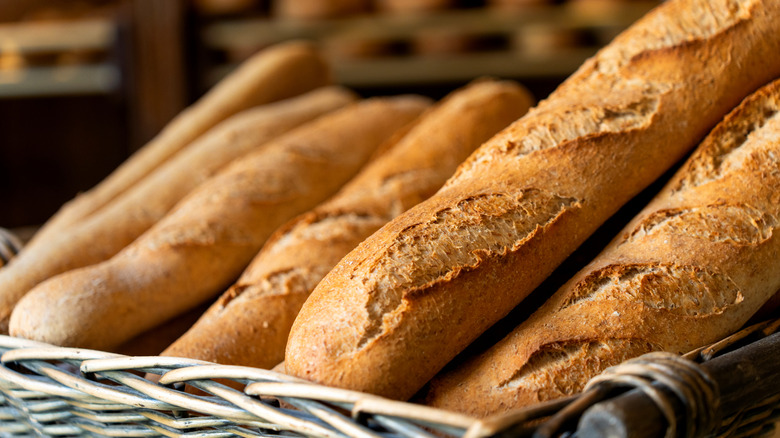
France is known for its diverse array of artisanal breads, but the baguette is arguably the most iconic. These long, thin, crusty loaves are proudly displayed in boulangerie windows across the country, but their appeal extends well beyond French borders. Baguettes have found their way into homes and restaurants around the world, loved for their sturdy texture, rich flavor, and endless versatility.
This bread is thought to have its roots in Paris during the 18th century, though the exact origins of the French baguette are a little murky. Some say baguettes were inspired by the similarly shaped Austrian Vienna loaves, which were brought to France during the Napoleonic Wars. Meanwhile, others claim the invention of larger ovens was the catalyst for the development of these easy-to-bake, stick-shaped loaves.
A traditional French baguette is made with just four simple ingredients — flour, water, yeast, and salt. The dough undergoes multiple rounds of kneading and proofing before it's shaped and baked, which helps to create a light, fluffy crumb and subtly nutty, wheaty flavor. It's also typically baked with steam to keep the crust moist, shiny, and golden, and the interior perfectly airy. The resulting loaf boasts a moreish textural contrast, and the bread's robust texture makes it ideal for slicing and stuffing with hearty fillings, like deli meats, cheeses, and crisp salad veggies.
2. Naan - South Asia
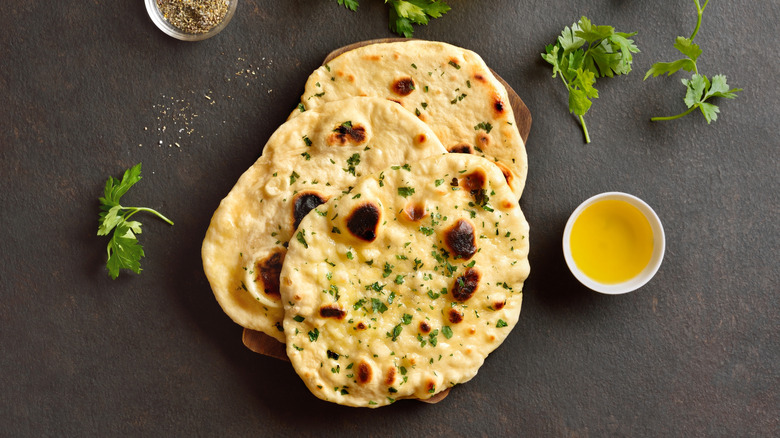
Naan bread is a must-have accompaniment to any South Asian curry, and this bread's uniquely chewy, fluffy, and soft texture makes it perfect for mopping up rich, spicy sauces. Naan is a form of leavened flatbread that can be served plain, generously brushed with butter and garlic, or even stuffed with meats and cheeses. This bread is similar in appearance to paratha, but it differs in preparation. While naan is traditionally made with a yeasted dough and baked in a tandoor oven, paratha is a flakier, unleavened flatbread that's typically pan-fried.
Naan bread is thought to have its origins in Ancient Persia, before being introduced to the Indian subcontinent during the Delhi Sultanate beginning in the 13th century, and becoming more popular during the Mughal Empire a few centuries later. At first, the flatbreads were made with a simple dough of flour and water, but recipes later evolved to include yeast, while cooks began experimenting with different savory fillings. Naan was once viewed as a luxury food, reserved for the upper classes, but today, it's become a worldwide staple thanks to simplified prep methods and the widespread availability of yeast.
Modern naan recipes see all-purpose flour combined with yogurt and activated yeast, before the dough is left to rise. Then, it can be divided up and rolled into rounds ready for cooking. In the absence of the traditional tandoor oven, pan-frying the breads will also yield a sufficiently bubbly, charred finish. Naan is best served warm, and it pairs beautifully with rich curries like butter chicken and tikka masala, as well as sweet chutneys and fresh raita.
3. Pita - Middle East
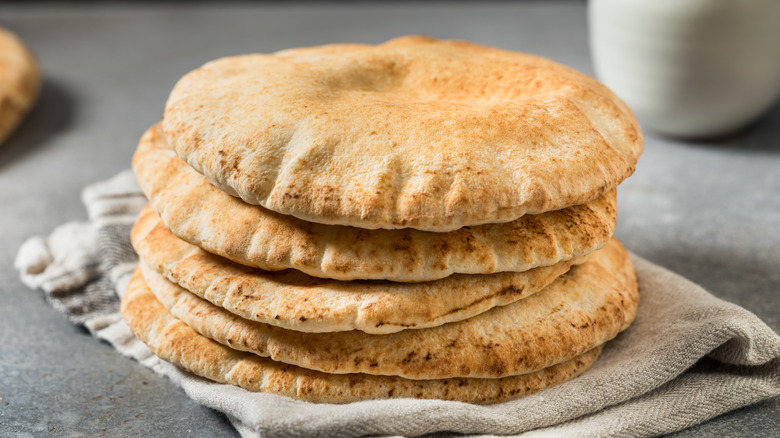
A popular feature in Mediterranean and Middle Eastern cuisine, pita boasts a dense, soft-yet-chewy texture and a lightly browned exterior. This bread is also known for its signature pocket, which makes it ideal for stuffing with savory fillings. It's made with a simple yeasted wheat flour dough, which is flattened and baked or pan-fried at a high temperature to create that distinct puffy finish.
Pita bread has a long and fascinating history, and its origins can be traced back to the Stone Age. Early versions were baked on hot stones by the Natufians, Amorites, and Bedouins. These nomadic communities lived in remote desert and mountainous regions of the Middle East, and they helped spread early flatbread-making traditions throughout the neighboring regions. Around 2,000 B.C., pita breads were a staple of the Arabian diet, and they've continued to be widely consumed ever since. Today, pita is enjoyed worldwide, appearing in cafes, grocery stores, and upscale restaurants alike.
Popular pita bread fillings include falafel, grilled meats and veggies, and creamy hummus. In Greek cuisine, chicken gyro is a top pick for wrapping or stuffing into the flatbreads, while spicy shawarma meat is the go-to in Turkish cooking. Sliced or torn, pita is also excellent for scooping up creamy dips and spreads, such as tzatziki and baba ghanoush.
4. Focaccia - Italy
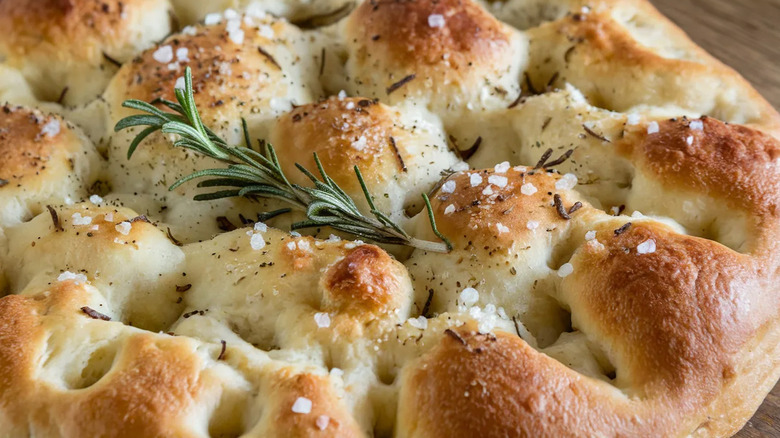
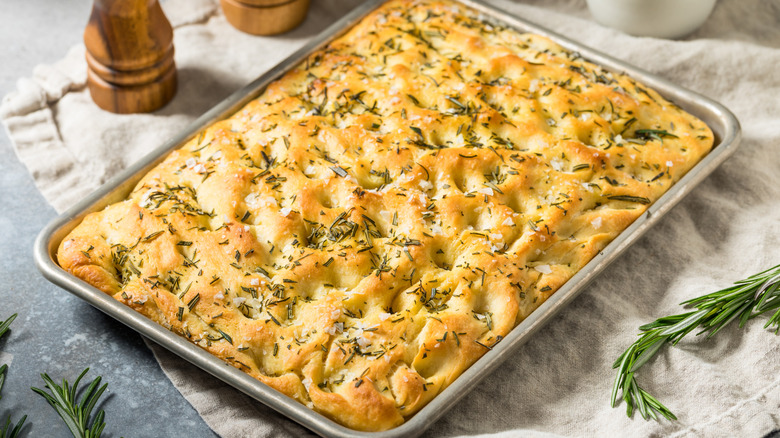
In Italy, focaccia is a standout on the bread scene. Offering a springy, dimpled texture like no other, this rustic bread is wonderfully comforting. It shines both on its own or as a base for a variety of toppings, and its soft, open crumb is adept at soaking up the rich, savory flavors of broths and sauces. Focaccia is often flavored with fresh herbs and aromatics, like rosemary, garlic, and sage, or adorned with colorful veggies for a striking presentation.
There are a few different theories about focaccia's origins, with some sources attributing its invention to the Etruscans in North-Central Italy (around 700 B.C.), and others pointing to the Ancient Greeks. During the Roman era, focaccia was baked on hot coals, and it was often paired with savory soups. Over time, the bread's popularity slowly grew, with recipes spreading across Europe and beyond. In modern-day Italy, there are multiple regional varieties of the bread, from the soft and airy focaccia Genovese to the thinner, chewier versions made in Tuscany, and Puglia's flatter, pizza-like focaccia Barese.
Olive oil is a key ingredient in modern focaccia recipes. This creates a deeply golden, crunchy crust on the top and bottom of the loaf, while maintaining the soft, pillowy interior. Dimpling the dough before baking also prevents the bread from doming and gives the olive oil places to pool, promoting even crisping and browning.
5. Tortilla - Mexico
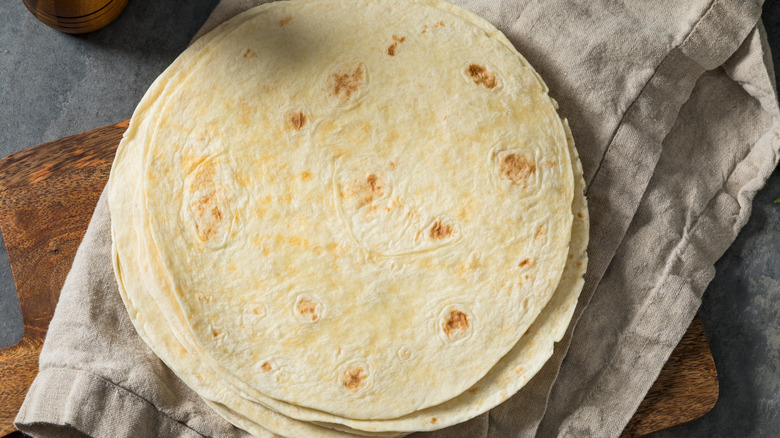
The humble tortilla is central to countless Mexican dishes, including tacos, enchiladas, quesadillas, and fajitas. These thin, pliable wraps are made either from corn-based masa harina or all-purpose flour, which are mixed with water, salt, and sometimes butter or oil to create a soft dough. This is then flattened into rounds by hand or using a tortilla press, before the tortillas are cooked in a skillet.
Historical evidence suggests that corn tortillas were first created by communities living in Mexico's Sierra Madre Mountain range over 10,000 years ago. Fast-forward to the early 1300s, and tortillas featured heavily in the Aztec diet, often served stuffed with meats and vegetables. However, it was in the 16th century that tortillas became a worldwide phenomenon, after Spanish conquistadors discovered the flatbreads and swiftly spread the word. Wheat flour versions later emerged, and modern production methods make tortillas more accessible than ever.
Tortillas offer a mild, fairly neutral taste, which is why they're an excellent canvas for filling with spicy meats, hearty beans, melty cheeses, and a whole host of fresh, crunchy toppings. They're soft yet sturdy, and when fried or baked, tortillas become delightfully crisp. Whether wrapped, rolled, or stacked, tortillas have to be one of the world's most versatile breads.
6. Injera - Ethiopia
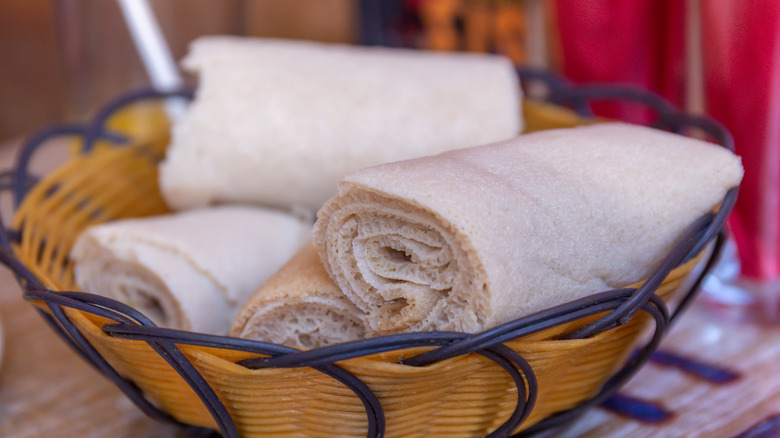
Injera is the traditional accompaniment to Ethiopia's national dish — a spicy chicken stew called doro wat. These flatbreads have a pancake-like appearance, with a soft, spongy texture and a distinctive tangy taste. They can be torn into chunks or rolled up and used to scoop up the stew, with their porous crumb soaking up every bit of the rich, aromatic sauce.
Historians haven't pinpointed the exact origins of injera, but we do know that teff was first cultivated in the Ethiopian highlands over 5,000 years ago. Mitads (the traditional griddles used to cook the breads) have been around since at least A.D. 500, suggesting that teff-based flatbreads have been a part of Ethiopian cooking for centuries.
Classic Ethiopian injera is made with a fermented teff flour starter called ersho, which gives the bread its unique sour edge. The ersho must be prepared two to three days in advance of making the dough (which is also teff-based). After it's been left to ferment, the injera dough is mixed with water to create a crepe-style batter, and it's cooked in a thin layer in a skillet, much like a pancake. If you're short on time, it is also possible to whip up a shortcut version of injera with instant yeast, but this will lack the rich, fermented flavor of traditional versions.
7. Mantou - China
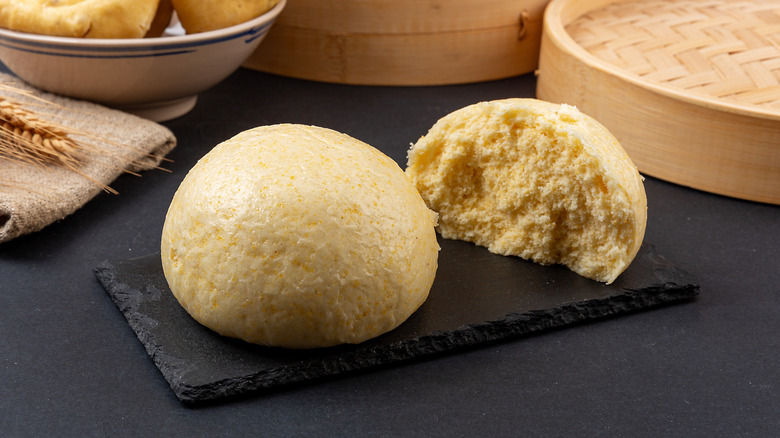
Light, fluffy, and exceptionally versatile, Chinese mantou are soft steamed buns with a subtly sweet flavor. These miniature cloud-like breads are generally served plain alongside sauce-heavy dishes, or even with sweet jams and spreads at breakfast time. While they're often confused with bao buns, true mantou do not contain any fillings.
According to a Chinese legend, mantou date back thousands of years to the Zhou Dynasty. While attempting to cross the treacherous Lu River, military strategist Zhuge Liang is said to have created the buns as an offering in an attempt to calm the turbulent waters. The idea was to shape the dough into rounds that represented human heads, as an alternative to making human sacrifices. Hence, the word mantou translates to "barbarian's head" in Chinese.
Making mantou involves first mixing a simple yeasted dough with all-purpose flour, then shaping this into balls. The buns are left to proof until gloriously springy, then steamed and served warm. They shine alongside classic Chinese-style dishes like beef and broccoli, sweet and sour chicken, and hearty noodle soups. Mantou can also be deep-fried and dipped in condensed milk for a crispy, indulgent twist.
8. Lavash - Armenia
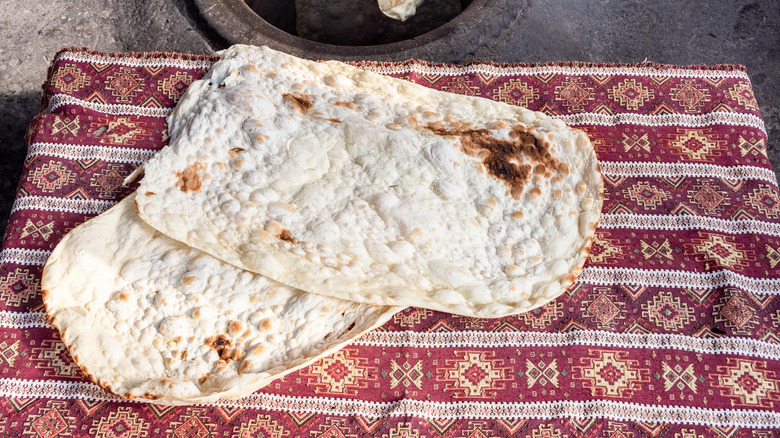
At first glance, lavash looks like a supersized version of a pita bread, but this ancient creation has its own distinct set of characteristics. Lavash has a chewy, pliable texture and blistered appearance, with a mild flavor that works brilliantly with a whole host of savory fillings. Hence, the bread is served alongside most meals in Armenia.
First baked in the Armenian highlands over 3,000 years ago, Lavash is a true cornerstone of the country's cuisine and culture, and preparing the bread is often a group effort. The dough is much like that of other leavened flatbreads — a blend of flour, yeast, oil, salt, and water. However, the shaping and cooking methods are what set lavash apart. The traditional approach is to roll the dough out thin and stretch it over an oval cushion. Then, the lavash is cooked rapidly against the walls of a special clay oven called a tonir, while developing those signature brown spots and a subtle smokiness.
Popular fillings for lavash include barbecued meats, vegetables, cheeses, and fresh herbs. The bread can also be dunked into stews and soups, or even used as a substitute for parchment paper when steaming fish. Lavash is often dried for long-term storage, allowing it to keep for months, and a light sprinkle of water is all that's needed to restore the bread's soft, flexible texture.
9. Arepas - South America
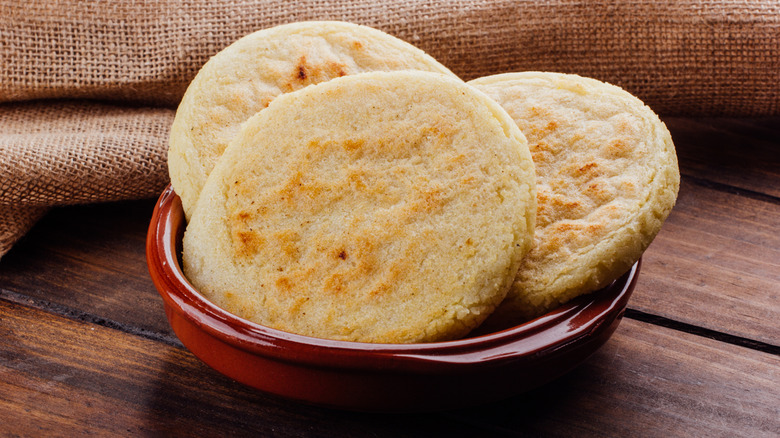
In South American cuisine, arepas are a firm favorite. Made with a corn-based dough, these small, round breads have a wonderfully satisfying texture. Arepas are relatively thick, with crisp exteriors, pillowy middles, and a satisfying chew. They're commonly served stuffed with savory fillings, such as meats, cheeses, and beans, and are versatile enough to enjoy at any time of the day.
Arepa dough is made with pre-cooked, refined corn flour (typically a variety called harina P.A.N.). This is essential for creating the bread's unique texture and flavor, and it cannot be substituted for masa harina or other types of corn flour. The arepa flour is mixed with water and salt, and the dough is shaped into patties, which can either be pan-fried, baked, or grilled. Served warm, arepas can be topped, folded, or sliced in half and stuffed with savory goodies.
The origins of arepas are hotly debated, with some claiming the breads hail from Colombia, and others deeming them a Venezuelan creation. In reality, the invention of arepas most likely precedes the formation of both countries. Instead, it can be attributed to indigenous groups that roamed then-undefined areas of South America centuries before Spanish colonists arrived in the 16th century. Early recipes were far more labor intensive than modern versions, with the corn chewed or stone ground to transform it into a finer flour.
10. Barmbrack - Ireland
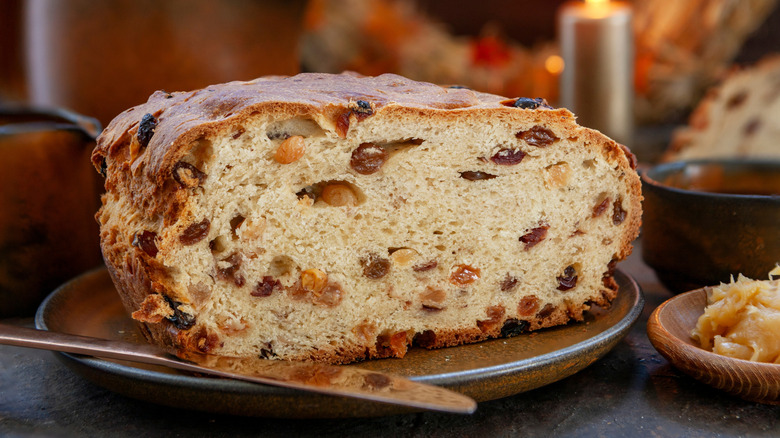
One of Ireland's most beloved bread recipes is barmbrack — a sweet, fruit-studded, yeasted loaf that's closely associated with Halloween. This bread is similar to a festive fruit cake, but the texture is much lighter and fluffier, making it delightfully snackable. It's fantastic served toasted, slathered with butter, and enjoyed alongside a steaming mug of tea as an afternoon treat.
The bread includes a mixture of dried fruits, such as raisins, currants, and sultanas. These are typically soaked in tea to infuse them with a rich, aromatic flavor and add extra moisture to the loaf, and some recipes also include whiskey for a subtle boozy kick. The dough, made with wheat flour, can also be enriched with egg, milk, or butter, and lightly spiced with cinnamon, nutmeg, and ginger. Once baked, the loaf is sometimes finished with a sugary glaze for an extra touch of sweet indulgence.
Barmbrack is central to a centuries-old, Irish fortune-telling tradition. This involves baking various "charms" into the loaf, with each item believed to predict the recipient's future. Finding a coin in your slice is said to bring good fortune, while a ring is thought to signal an upcoming marriage. A cloth or rag, however, is considered an omen of back luck.