

Is It Better To Cook With Stainless Steel Or Ceramic?
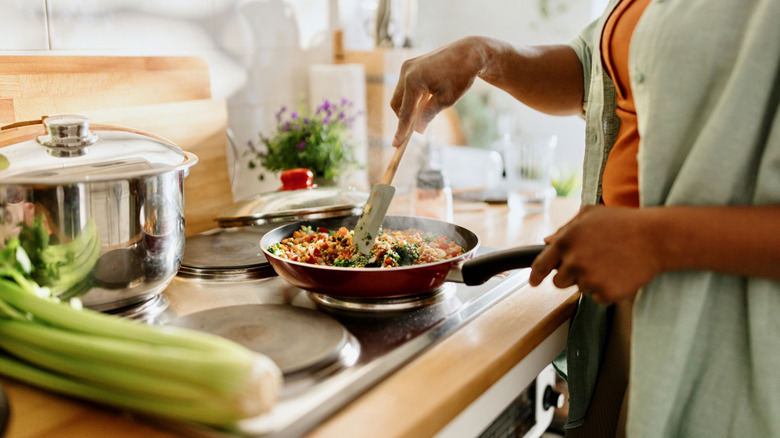
Whether stainless steel or ceramic is best for you depends on your cooking style and budget. Nonstick cookware was long considered the best option, as it was easy to clean and could handle a wide variety of foods. However, as people became more aware of the dangers associated with certain coatings, they began to question if nonstick pans were really worth investing in. Now, you can find a huge selection of ceramic nonstick cookware that is marketed as free from PTFE, PFOA, PFAS, lead, and other known toxins that have proven to be dangerous for food preparation and consumption. Yet some people, including many professional chefs, still prefer cooking with stainless steel over ceramic.
Because stainless steel can withstand extremely high heat, it's the perfect cooking material for searing, sautéing, caramelizing, and stir-frying. It can also be used to create the Maillard reaction for rich crusts on meat and seafood. There is no risk of it leaching chemicals into your food or reacting poorly with ingredients and creating an unpleasant metallic taste. It's the perfect type of cookware to use for meat, seafood, and vegetables. Eggs are doable too, though they are trickier to cook on stainless steel.
Modern ceramic nonstick cookware has a slick, non-toxic finish that allows for easy release of foods, even if you don't grease the pan. It's best for cooking delicate foods that don't require high heat and have flavors that could be altered by the use of nonstick sprays, oils, or butter. While it's harder to create a good sear on meat with non-stick cookware because the pan can't tolerate the same high temperatures as stainless steel, it's a great choice for eggs, fish, veggies, and sauces. Here's a closer look at what to consider when choosing between ceramic, Teflon, or stainless steel pans.
Ceramic cookware is a great option for casual home chefs
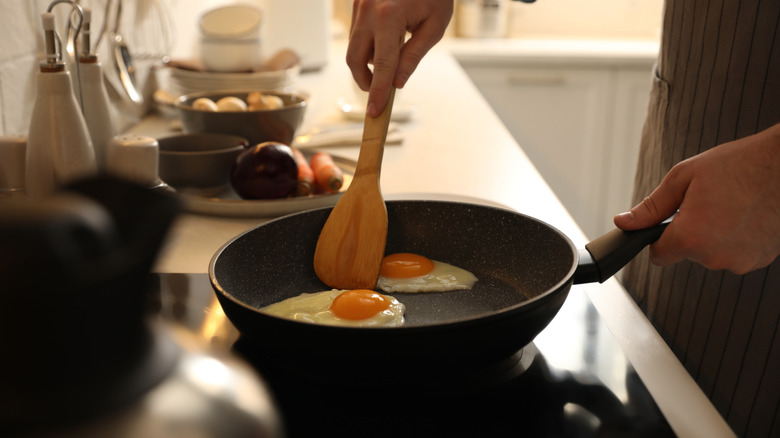
Ceramic cookware consists of a stainless steel or aluminum base coated with a slick, silicon- and/or titanium-based layer that is easy to clean. Modern products are available in a huge variety of colors and designs and are free from harmful chemicals and toxins. Some are even dishwasher safe. The glass-like finish of ceramic cookware allows you to cook with minimal oil or butter while still releasing food easily.
But before you start shopping for the highest-rated ceramic cookware on the market — like this Caraway nonstick ceramic cookware set on Amazon for around $450 — you should be aware of its downsides. Most nonstick coatings degrade relatively quickly, which means you may have to replace pots and pans in one to three years. To maintain the coating, you also need to commit to following expert tips for cooking with ceramic pans, as well as proper care and maintenance: avoiding metal utensils, abrasive cleaning tools or products, cooking sprays, and high heat. In fact, most ceramic pots and pans should only be used on low-to-medium stovetop heat. Some are only oven-safe to 450 to 550 degrees Fahrenheit, and others cannot be put in the oven or under the broiler at all. Ceramic cookware may also suffer from reduced heat conduction and retention, resulting in uneven heating and cooking.
Ceramic models may also require more maintenance. Even if the product is dishwasher safe, hand washing is the proper way to clean your ceramic pans to preserve the lifespan of the nonstick coating. Because this cookware is often more expensive, doesn't last as long as stainless steel, and is more finicky, many professional chefs — and even home chefs — prefer stainless steel.
Stainless steel is affordable, durable, and versatile
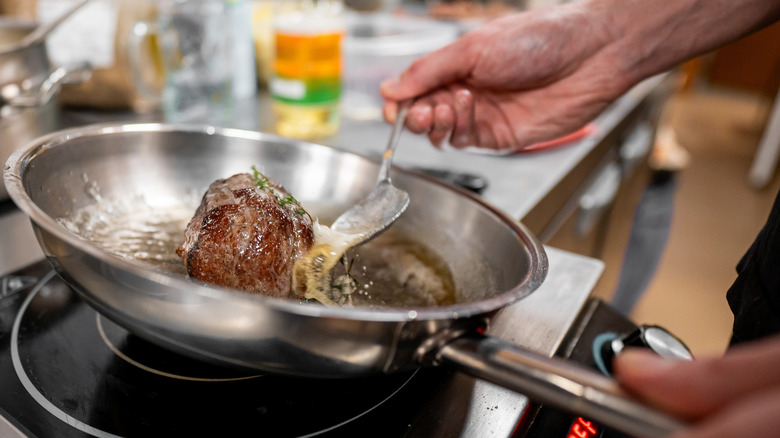
Stainless steel cookware is made from a metal alloy that resists rust, corrosion, warping, scratching, and denting, and it can last for decades with proper care. If you use our tips for cooking with stainless steel, you can use it for virtually every dish you make. Quality cookware, like the highest-rated stainless steel pan on Consumer Reports, is constructed with a thermally conductive inner core of copper or aluminum to ensure even heating. It can be used on the stovetop, under a broiler, and in the oven. Many models — like the Cuisinart Chef's Classic stainless steel cookware set available on Amazon for around $100 — are compatible with all types of cooktops, including induction ranges. You can use any type of cooking utensil on stainless steel, as well as more aggressive cleaning methods. Some brands are even dishwasher safe. These pots and pans usually last longer than ceramic and also offer more versatile food prep options, as they can be used safely for a variety of foods and cooking methods.
Stainless steel does have its cons, though. Some people find it hard to cook food without sticking, especially if they don't want to use a lot of butter or oil. Others say stainless steel pans are harder to clean and can develop stains or discoloration. Yet if you want a versatile, long-term option that will give you the most bang for your buck, choose stainless steel. If you want cookware that is easier to clean and you are comfortable with the fact you may have to replace it in a few years, choose ceramic nonstick cookware. Of course, if you can afford to, get a few pieces of each type.