

Why You Should Stop Buying Pre-Packaged Deli Meat At The Grocery Store
We may receive a commission on purchases made from links.
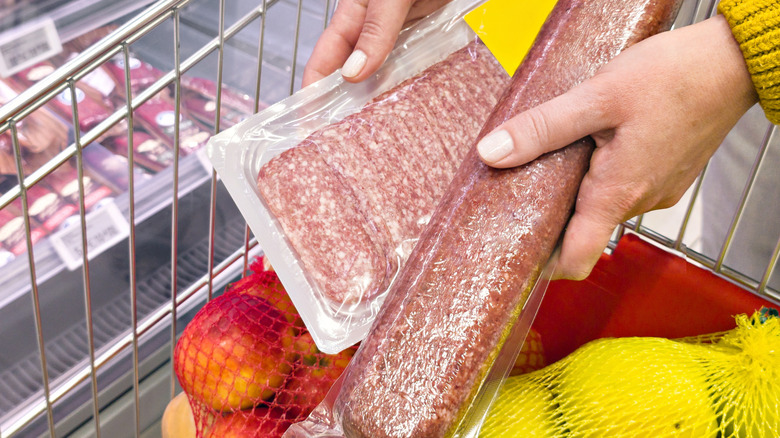
The biggest advantage of buying pre-packaged deli meat is convenience — it's significantly faster than waiting at the deli counter for someone to slice, weigh, and pack your order. However, the trade-off in terms of quality is just too high, according to Owen Han, content creator and author of "Stacked: The Art of the Perfect Sandwich." Han strongly believes you should stop buying pre-packaged deli meat at the grocery store, and spend that extra time and money at the deli counter instead.
"The deli counter is almost always going to give you a fresher product," Han, who has over 3 million followers on Instagram, told Tasting Table. The quality isn't just restricted to the freshness of meat. Han said the added control over how the meat is sliced is crucial, as well. "Thickness can completely change the eating experience of a sandwich, and at the deli counter you can get exactly what you're looking for."
"In many cases, the flavor and texture are noticeably better than pre-packaged options, especially when you're building a sandwich where the ingredients really need to shine," Han explained. He continued, "If you're passionate about sandwiches, I'd say the upgrade is usually worth it." Since we are — here are our top 26 sandwiches, ranked worst to best — we decided to dig a little deeper into how we could level up our sandwich game.
Consider the effort versus reward ratio
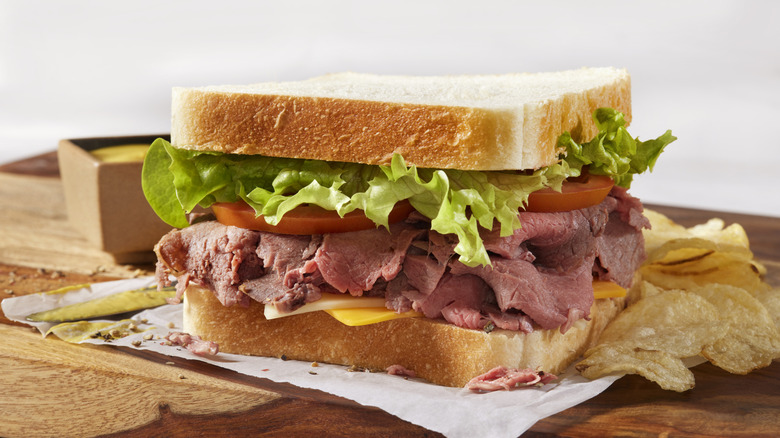
We're firm believers that the simple way to make better sandwiches is to literally keep things simple and allow the ingredients to speak for themselves by using high-quality options. According to Han, this means roasting some meats from scratch instead of relying solely on freshly sliced deli meats.
"Roast beef is one of my favorite things to make at home, because it's surprisingly easy and can be very cost-effective," Han said. And he's not wrong. Making deli-worthy roast beef sandwiches at home is a matter of picking the right cut, following the proper cooking technique, and choosing the best condiments.
However, this only goes for meats that are relatively easy to cook. "Not every meat is worth the effort," Han said. "Turkey, for example, can be tricky to get right, and often requires a lot more work for a result that's not dramatically better than what you can get from a good deli."
Investing in a meat slicer could be beneficial
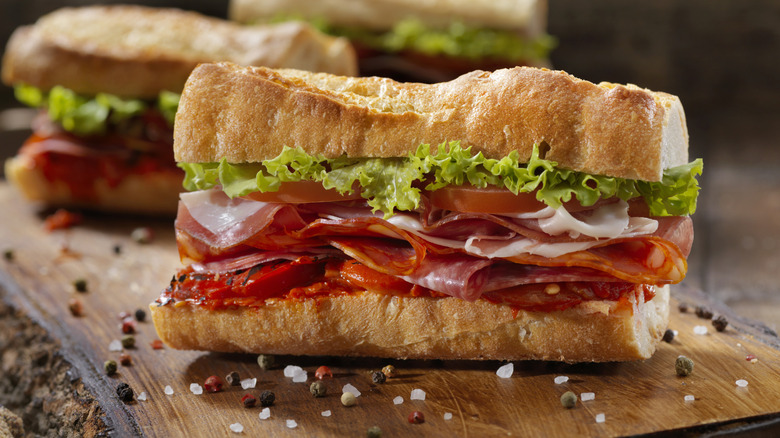
Investing in a meat slicer is another way to control quality, according to Han. "I have a deli-grade meat slicer at home, which makes a huge difference because I can slice everything to my preferred thickness," he said. The ideal thickness can vary depending on what meat you're slicing — the average thickness for salami and pepperoni is about 1/16 inch, while for bacon it's 1/4 inch. But if you're seeking the gold standard for sandwiches, 1/8 inch is a great all-purpose thickness for cooked ham, pastrami, and beyond.
Buying a meat slicer can also help you control costs. "Even if you don't cook the meat yourself, buying larger cuts in bulk and slicing them at home can save money over time, while giving you more control over the final product," Han explained. Having said that, he added that for most people, getting quality deli-sliced meat from a trusted meat counter at your local grocery store or deli is still a great option. Just skip the pre-packaged deli meats, and you're golden.