

These Spanish Tomatoes Elevate Sandwiches To New Heights (And You Can Find Them At Trader Joe's)
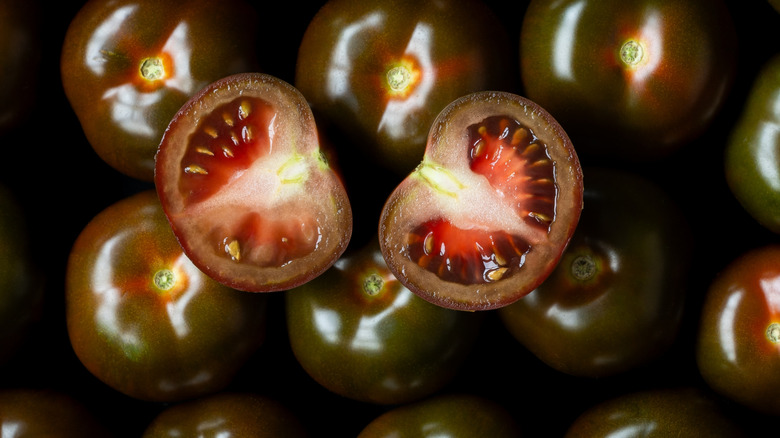
Making a sandwich means making a series of tiny decisions — white bread or sourdough, to toast or not to toast? Mayo, mustard, or both? When it all comes together, the sandwich is a layered culmination of your choices and desires. Every ingredient has the potential to improve the final result. That's where Kumato tomatoes come in. These aren't just any old tomato, they have a uniquely rich, sweet-savory flavor and can be found at Trader Joe's, among other places.
If you've run across them in the produce section, you've probably noticed that Kumatoes have a rich mahogany hue that comes somewhere on the puce, burple-green color spectrum. They're often sold in a single, vertical row stacked in a protective cardboard box, which gives them an aestheticized, aspirational aura, like niche chocolates or designer jewelry. They look expensive, and they are — sometimes up to four times more than generic beefsteak or even vine ripened tomatoes. And that's part of the appeal.
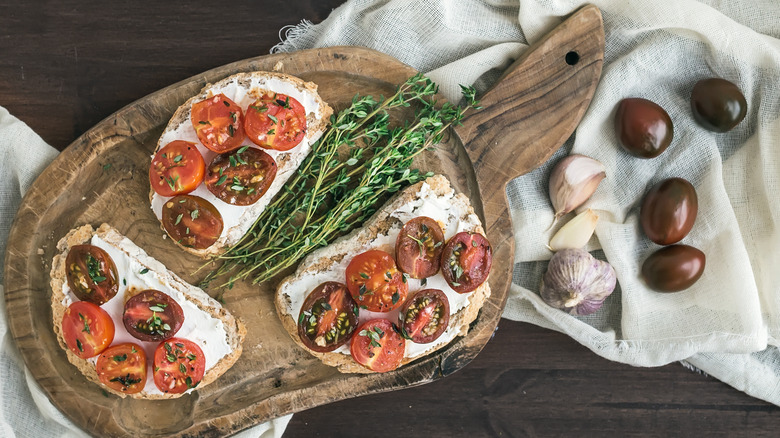
But Kumatoes aren't just status symbols. Their culinary distinction is apparent when layered on sandwiches. Tomato heads recommend varieties with concentrated flavor, moderate moisture, small seed cavities and a firm texture for sandwich making especially, because if they meet those metrics, they'll contribute some personality to every bite without making everything soggy and slippery. The flesh of the Kumato holds up well, staying coherent and relatively dense even after slicing, and their signature flavor stands up to other, strong flavored sandwich fillers like cured meats and sharp cheeses. Kumatoes certainly won't disappear into the background of a good sandwich.
Kumato seeds are another story
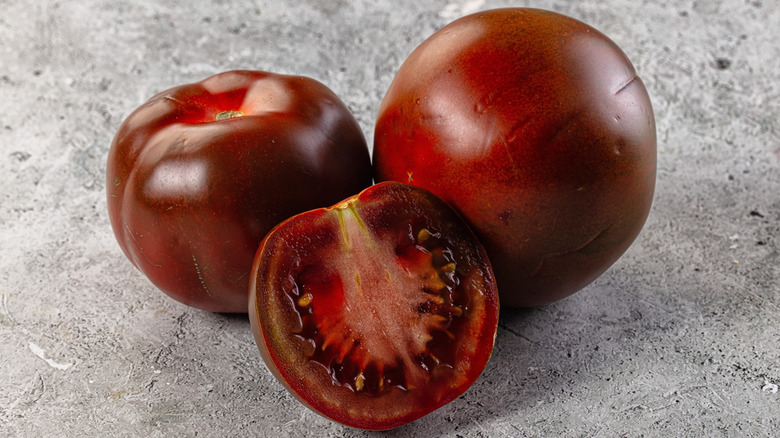
The story behind Kumatoes is almost as vivid as their flavor. Like a lot of domesticated, edible plants, many beloved types of tomato exist because gardeners engaged in the OG form of selective breeding. Seeds were saved, season after season. Gardeners swapped plants, and the plants cross pollinated, and favorable traits in color, flavor, texture, productivity, and store-ability were enhanced over successive generations.
Kumatoes, on the other hand, emerged from a highly controlled, scientific breeding program. They were developed over six years in 1970's Francoist Spain, and only became licensed, patented and available for reselling in the U.S. in 2009. Although not technically a GMO, the variety is owned by a high-tech Swiss biotech agribusiness company, Syrgenta, which licenses production to approved growers. Garden variety growers of the general public are not allowed to buy the seeds, making Kumatoes what the produce industry calls an elite "club variety."
That means you can buy a Kumato, eat a Kumato, admire a Kumato, and even build a delicious sandwich entirely around a Kumato. But you can't save the seeds to grow in your own garden. For a tomato, or any plant that grows in the ground, that's an unusual arrangement, placing them in a category more commonly associated with intellectual property-protected patented technology than sandwich ingredients. The product itself can be purchased almost anywhere — Trader Joe's is a reliable place to find them, where they're labeled Kumato Brown Tomatoes, and Whole Foods also sells them — but the access to its genetics is carefully cloistered.
The tomato behind the trademark
The result is a tomato that is genuinely delicious, but one that feels highly curated. Trademarked Kumatoes ripen from the inside out, are sorted according to strict standards, and are packaged with a level of bespoke branding, and fancy package design not usually found in the humble produce section.
The best tomato in the world will probably always be the spunky cherry tomato that grew in someone's backyard, warmed on the vine in the morning sun, or the lopsided heirloom tomato sitting on the farmer's market table in August's peak season. But Kumatoes occupy a different niche; they're an attempt to engineer quality and consistency while also consciously cultivating desirability and status. Still, a good sandwich doesn't care about agricultural philosophy and market manipulations. At the end of the day, lab-developed and patent protected or not, Kumatoes have earned a devoted following because they do deliver something that many supermarket tomatoes cannot. They taste like high-season local tomatoes year round, and can be shipped thousands of miles and still make it to the plate with their character intact.
Most tomatoes grow out of the dirt and are merchandized into a big pile at the store; Kumatoes have a much more precious presentation and technical backstory. Whether you find that story appealing is up to you. Kumatoes are one more sandwich ingredient option to consider — and are ultimately a reflection of your desires, preferences and values.