

Why You Should Use Lemon To Clean Dirty Garden Tools
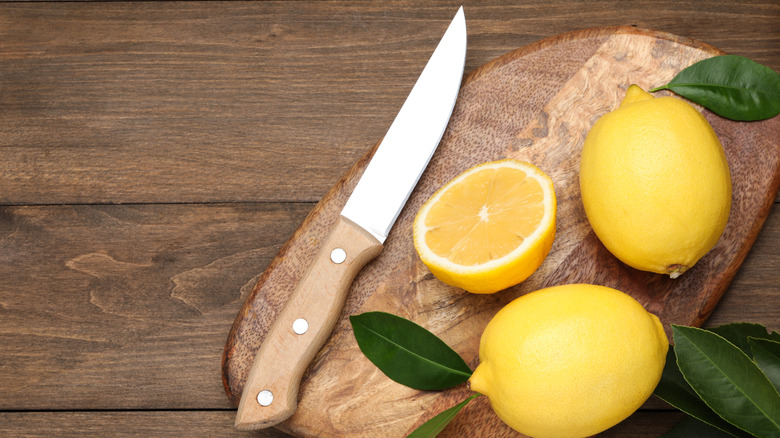
Lemon is a fascinating fruit, with uses not only in cooking but in cleaning and household upkeep as well. Got half a lemon that you didn't use in that lemon herb pasta salad? Toss it down the garbage disposal to help eliminate foul odors. Got a stubborn stain on your favorite shirt that just won't come out? Rub a paste of lemon and salt onto the blemish and watch it disappear. Lemons are even effective at cleaning grimy grill gates. In fact, the fruit is so versatile that we spoke to Alexis Rochester, investigative chemist and owner of Chemistry Cachet, about how you can use one to spruce up those dirty gardening tools.
"Since lemons are naturally acidic, they clean in a similar way to vinegar," she says. Meaning: Those garden shears you forgot to wipe down after pruning the tomatoes don't need to be grimy and gnarly forever. "Acidic solutions are especially effective at breaking down hard water stains, grime, and even light rust," Rochester explains. This trick applies to any garden tool made of metal, from spades to trowels to forks and everything in between, so you'll never again have to waste another partially used lemon that still has some juice left in it .
How to use lemons for cleaning dirty tools
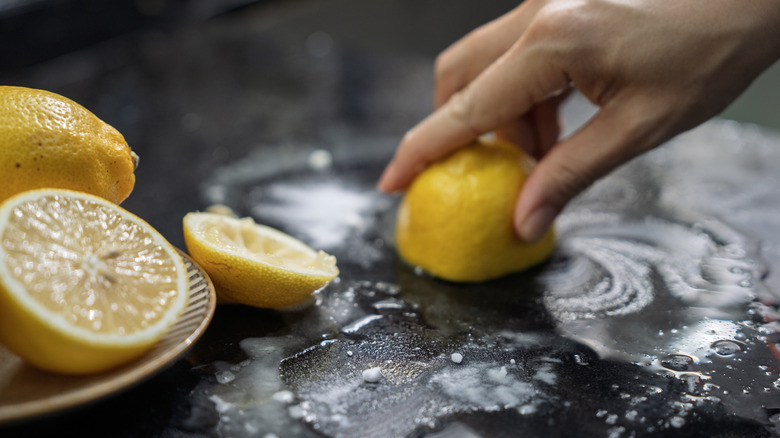
There's no need to break out special tools for this hack. "Simply cut a lemon in half and rub it directly onto your gardening tools, then rinse and dry thoroughly," Alexis Rochester tells us. Rust, in particular, is formed through a perfect storm of oxygen and moisture reacting with the iron in metal, which is why the citric acid in lemon juice is so effective at removing it. Of course, if you need a solution with a little more power, she recommends using a paste of citric acid powder and water. Rochester explains that "Because citric acid is more concentrated than fresh lemon juice, it may be even more effective at removing stubborn buildup."
Beyond cleaning metal garden tools, lemon juice can be used on those terracotta pots growing your sweet, juicy strawberries to help remove any buildup of mineral deposits. Lemons are also antibacterial, so they can be applied on your gardening tools immediately after use to keep any bacteria from spreading. Rochester's best piece of advice is to get ahead of the issue, advising readers to "always rinse and completely dry your gardening tools after cleaning to help prevent rust." Still, when the rust begins, lemons can be a very handy tool.