

The Company Behind Costco Kirkland Raw Chicken
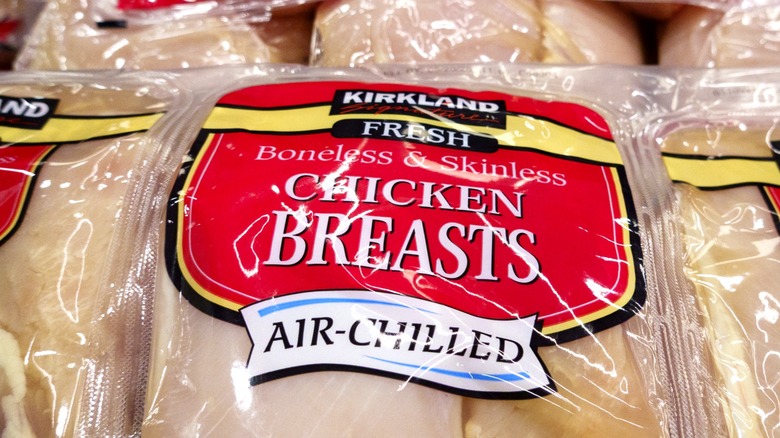
From extra-large packs of fresh chicken breasts to countless batches of those famous rotisserie birds, Costco puts out its Kirkland Signature chicken products in massive quantities. So where do all those birds come from? Costco has its own enormous poultry operation through Lincoln Premium Poultry (LPP) based in Fremont, Nebraska. This massive operation has proven profitable, but it has also drawn controversy over food safety and animal welfare concerns.
Lincoln Premium Poultry was founded in 2016 exclusively to produce Costco's Kirkland Signature chicken products, including the birds used to make its rotisserie chickens. Three years later, in 2019, Costco opened a $450 million LPP operation that continues to supply the warehouse chain today. It includes a hatchery, feed mill, and processing plant, allowing Costco to control every step of production, from hatching to packaging. Covering 400,000 square feet, at the time of building, Costco estimated that it would process about 100,000 million chickens per year.
One thing everyone wants to know about Costco's rotisserie chicken is how it has maintained its $4.99 price tag over the years, even with inflation. Lincoln Premium Poultry has a lot to do with it — the vast scale of the processing plant reduced Costco's production costs. However, it is not the only supplier of U.S. Costco's chickens, as other farms are required to make up the vast numbers of chickens needed. But LPP's model of operation is tailored to maximize profits and output, using top-of-the-line equipment and a massive workforce to keep the chicken plant efficient and productive.
How Costco's Lincoln Premium Poultry manages to process so many chickens
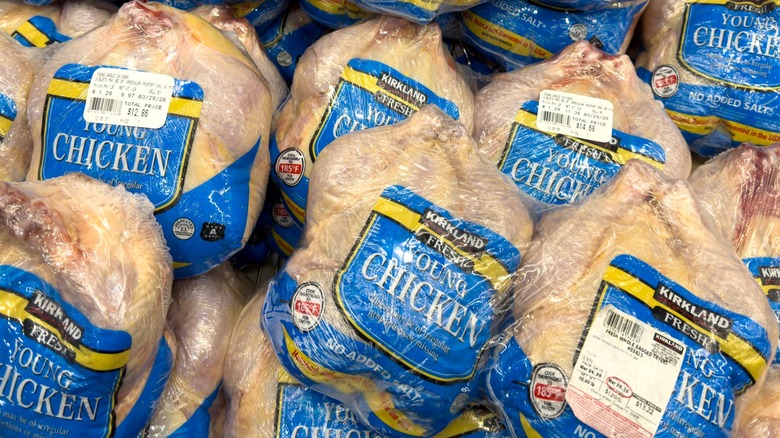
To keep up with the demand for Kirkland Signature chicken products, Costco's Lincoln Premium Poultry plant uses giant pieces of equipment that can handle huge volumes of birds, as well as top-of-the-line processing technology. According to Meat + Poultry, LPP uses robots to truss the raw chickens that become Costco's famous rotisserie birds. This bypasses the need to truss by hand, which takes more time. LPP also uses robots and other pieces of advanced tech to eviscerate, debone, and package chicken, as well as to control quality and sort and load products for shipping to Costco stores. A hefty workforce is needed to keep this production facility going. As of 2023, the Fremont plant employed over 1,200 workers (via Fremont Tribune), and LPP has partnered with about 100 farming families to assist with production.
At LPP's plant, chicken carcasses go through careful prep before they're ready for sale. After the birds have been processed into carcasses, they undergo air-chilling. When grocery store chicken is air-chilled rather than cooled by submerging in water, the meat doesn't absorb any excess moisture, which can result in a superior taste and texture. LPP's birds are then left whole for rotisserie chickens or split into parts for Kirkland Signature thighs, legs, breasts, and so on. It's clear that Costco's chicken operation is efficient, profitable, and puts out quality products, but this comes with strings attached. Over the years, LPP has become synonymous with one thing nobody wants from their chicken: salmonella.
Costco's Lincoln Premium Poultry company has been slammed for failing salmonella tests
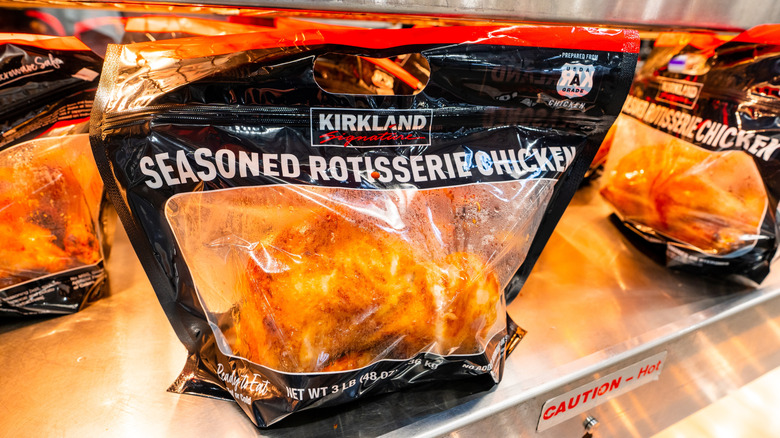
In December 2025, humane farming advocacy group Farm Forward released a report alleging that Costco's Fremont chicken plant has poor safety standards. Drawing on data from the USDA, Farm Forward revealed that the plant has consistently failed monthly salmonella tests since it opened, and estimated that over 1 in 10 whole chickens and over 1 in 6 packages of chicken parts from the facility may be contaminated with salmonella.
Farm Forward further argued that LPP's treatment of chickens heightened its salmonella problem, putting Costco under fire for alleged animal abuse. USDA data, as well as investigations by the nonprofit Mercy for Animals, revealed practices such as keeping chickens in overcrowded habitats without sufficient access to food and water. In light of this, perhaps the most major of all Costco's controversies, the chain was sued in Feburary 2026 by a Missouri woman, who alleged that the company willfully endangered customers with salmonella-infected chicken. However, Costco's response pointed out that its rotisserie chickens are fully cooked, which kills salmonella (via Seattle Times). Plus, the labels on Kirkland's raw chicken warn consumers about the risks of salmonella infection from improper cooking.
The risk of catching salmonella from Kirkland rotisserie chickens is indeed low, and cooking raw chicken to an internal temperature of 165 degrees Fahrenheit will also kill any salmonella present. So as long as you prepare Costco's chicken properly, you're unlikely to get sick — but if raw poultry is now a Costco chicken product to avoid in your eyes, we can't blame you.