

Fusilli Vs Rotini Pasta: Is There Really A Difference?
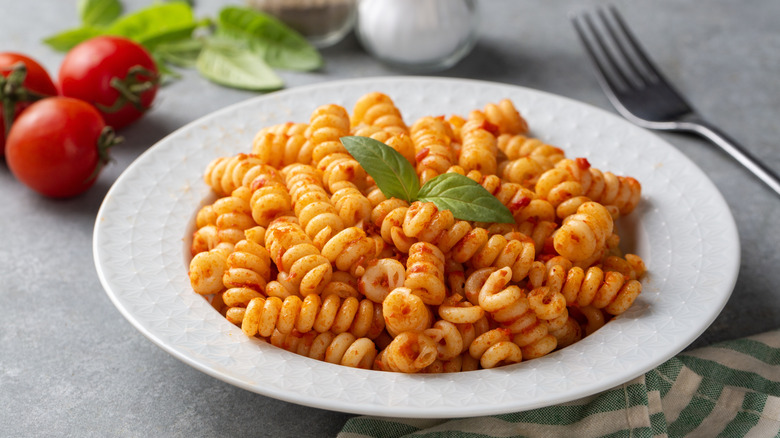
The more you look into the world of pasta, the more expansive you will find it to be. While there are numerous types of short pasta, some are often confused with another, including fusilli and rotini. The two spiral-shaped noodles are often placed near each other in the grocery store, and their names are even occasionally used interchangeably. Despite their similarities, however, these two varieties are not at all one and the same.
Their differences trace all the way back to their origins. Fusilli pasta was born in a little-known Italian region called Molise, which is located in southwestern Italy. Rotini, on the other hand, hails from the northern areas of Italy. In the United States, rotini is a little more common and may even be mistakenly labeled as fusilli.
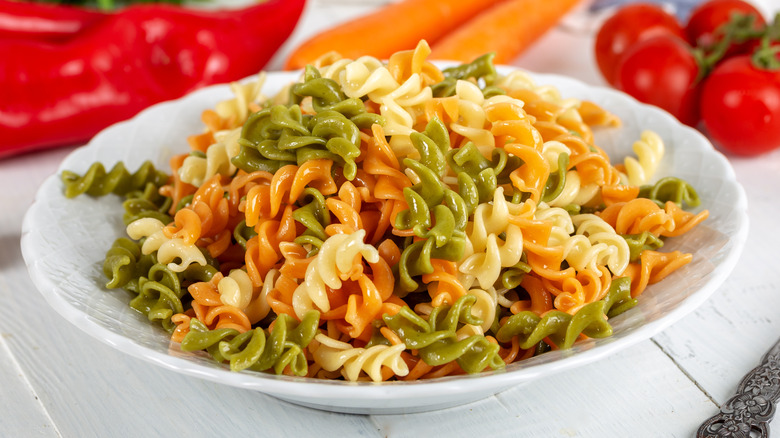
Upon closer inspection, however, you may notice that fusilli and rotini don't look as similar as they first appear. While both carry that corkscrew-like shape, rotini is slightly longer than fusilli, though exact lengths vary by manufacturer. Fusilli's spiral is also coiled much tighter and rounder around the edges, almost resembling a spring. Meanwhile, rotini twists outward with a wider, more curly surface area.
Each type of pasta comes with different uses
The seemingly minor distinctions in shape and form are what separate fusilli and rotini when you're adapting them to recipes. Although the two are generally good substitutes for one another, they each work better in certain dishes. Fusilli's tight coil gives it a lightly chewy bite, allowing it to hold its own against firmer ingredients like meat and chunky vegetables. Its smooth exterior is perfect for oil-based dressings and meaty dishes, while sauces and spices are captured within the spiral, almost as though they are the pasta's own filling. Needless to say, it's a great pick for a summer garden pasta salad or a pasta bake that calls for tender yet not overly soggy pasta.
Rotini also holds sauces quite well, but thanks to its wide grooves and outward spiral, the flavors mainly coat the noodle's exterior instead. Use this pasta in dishes where you want to maximize the amount of sauce in each forkful. Rotini works great in a pasta dish with a rich, creamy base, like this chicken sausage and bell pepper pasta recipe, or in soups and stews, where it scoops up a bit of flavorful broth every time you dig in. The large spirals also lend themselves particularly well to non-traditional pasta dishes, such as a Vietnamese-style stir fry, in which they are stir-fried with meat and veggies for a quick, hearty comfort food. Tossed with seasonings and air-fried, they can even make the most delightful snack food.