

The Scientific Reason Brussels Sprouts Taste Different For Some People
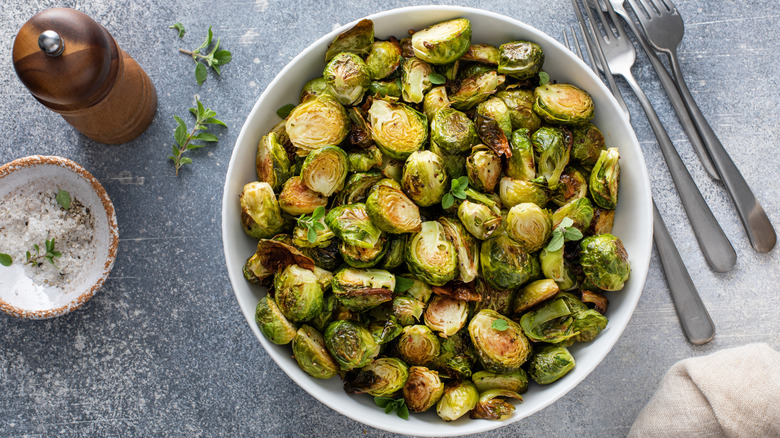
Imagine if you could go back to being a kid and tell your parents there was a real scientific taste difference behind why you didn't want to eat your Brussels sprouts. Many of us end up outgrowing that stereotypical aversion and loving Brussel sprouts, but it turns out that for kids and adults alike, there can be a good reason why some people are repulsed by them. As you may know, people have five basic taste sensations: salt, sugar, sour, umami, and bitter. Brussels sprouts and some other greens contain a chemical that is very similar to phenylthiocarbamide, or PTC for short, which creates the sensation of bitterness on the tongue. And there are humans with certain genes that make them extra sensitive to PTC, making those vegetables unpalatable due to bitterness.
The gene in question is a taste gene called TAS2R38, and it provides a fascinating insight into how taste can be scientific as much as it is subjective. There are two types of TAS2R38 genes, AVI and PAV, and we inherit them from our parents. AVI is less sensitive to bitter tastes, while PAV is more sensitive. So people who end up with two PAV genes are essentially bitter "supertasters," who experience the flavor much more intensely, while those with two AVI genes, or one AVI and one PAV, experience a milder taste. This sensitivity to bitter foods can extend to dark chocolate and coffee as well, but the PTC-adjacent chemicals in Brussels sprouts, broccoli, cabbage, and other cruciferous vegetables make them particularly brutal.
Certain tasting genes makes some people extra sensitive to the bitter flavors in Brussels sprouts
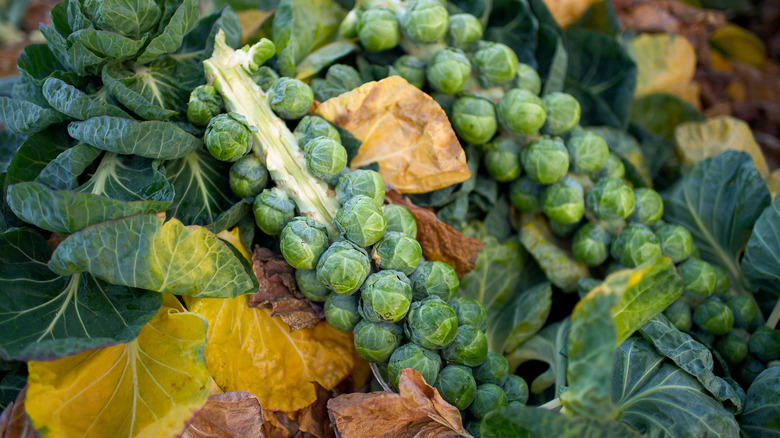
Genes are not the only reason someone might not like Brussels sprouts. Personal taste is influenced by different factors, but it's a good reason not to judge people too harshly for not wanting to eat certain vegetables. We really do experience some foods differently on an objective level. And having certain tasting genes can even be self-reinforcing for disliking a food. The original research on this phenomenon, dating back to the 1930s, began when a scientist working with PTC discovered you could strongly predict someone's dislike of the compound by how their family reacted to it first. And of course, another big part of tasting is exposure, as it often takes several times eating a certain flavor to become acclimated to it. Parents who hate foods like Brussels sprouts are likely to pass that genetic aversion on to their children, and are probably less likely to cook those foods at home, which adds to people's distaste for them.
However, there is hope for bitter supertasters and reason for people who hated Brussels sprouts as a kid to try them today. Over the years, they have been gradually bred to have lower levels of their bitterness-causing chemicals. This is something that only took place in the 1990s after the chemicals had been identified and farmers started cross-pollinating Brussel sprouts and growing better-tasting varieties, which partially explains why so many more people seem to like them now than in previous decades. So you might hate Brussels sprouts because of your genes, but you also might need to just give them another shot if it's been a while since you ate them.