

You Can Easily Thrift This Countertop Appliance And Save Some Dough
We may receive a commission on purchases made from links.
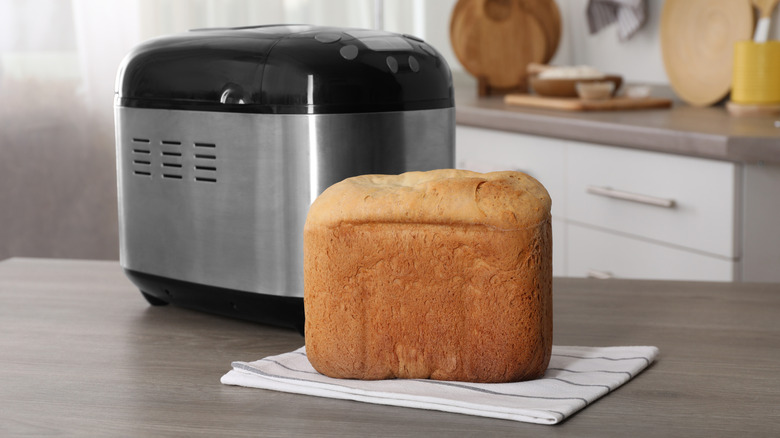
Like most food hobbies, breadmaking has a way of costing more upfront than it looks. Ingredients are the easy part. A machine to handle the mixing, kneading, and rising is another story — plan on $150 to over $200 new, from brands like Zojirushi or Cuisinart. Skip the retailer and go secondhand, though, and that number drops fast: most go for $5 to $20, often barely touched. Few appliances show up on donation racks as consistently as bread makers — they're a classic registry item that couples bring home, use a few times, quietly give up on, and drop at Goodwill (you can also find them on eBay and Facebook Marketplace).
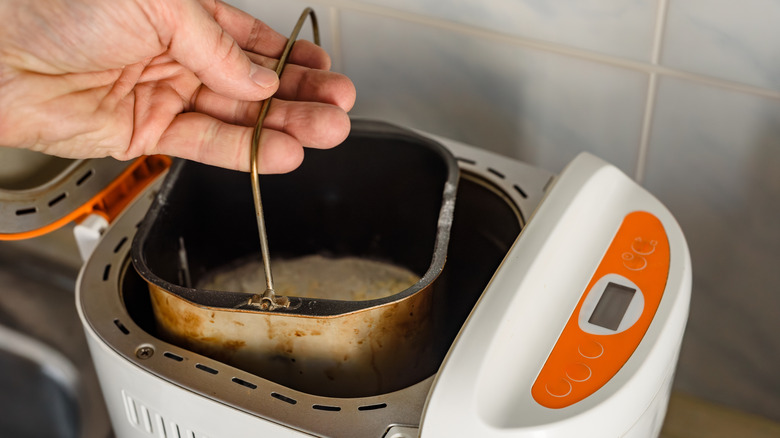
If you do decide to pick one up, make sure to give the machine a once-over before you buy it. Surface wear is fine; it's the functionality that counts. Make sure the baking pan and kneading paddle are both there and in reasonable shape. The pan's non-stick coating should be smooth and intact, with no deep scratches, peeling, chipping, or flaking, and the kneading paddle shouldn't be bent, excessively worn, or loose on the post. If there's an outlet nearby, plug the unit in and run a basic cycle to make sure the motor runs and the buttons actually work – a machine that won't start or stalls mid-cycle is worth walking away from.
Other thrift-worthy kitchen finds
Plenty of other kitchen gear rewards the thrifty shopper. KitchenAid stand mixers turn up at Goodwill more often than you'd expect, and given that they're built to last decades — even a slightly higher secondhand price is easy to justify. A used Vitamix at half retail beats a cheap new blender that gives out within a year, and the quality gap is wide enough to notice on the first use. Microwaves are nearly always a safe bet: durable, low-maintenance, and usually donated in working order.
The kitchen aisle has plenty for bakers, too. Bannetons, the woven proofing baskets that sourdough devotees use to shape their loaves, regularly retail for more than $30 but turn up secondhand for next to nothing — often donated by people whose artisan bread ambitions outlast their follow-through. You can also stock up on sheet pans and cake pans when they appear, as well. Running multiple pans at once keeps the oven working instead of leaving you standing around waiting for one pan to cool. And last but not least, rolling pins and dough scrapers are easy finds, while pie weights also occasionally turn up second-hand. These ceramic balls, used to hold down pastry during blind baking, typically retail for around $20 new, making thrifted sets a worthwhile find.
Across all of it, the same few rules apply: test before you buy if possible, make sure moving parts actually move, and stick with recognizable brands when you have a choice. Obscure makes are harder to find parts for — and harder to get repaired when something eventually goes wrong.