

Not Pyrex, Not CorningWare: The Thrift Store Kitchenware Collectors Chase
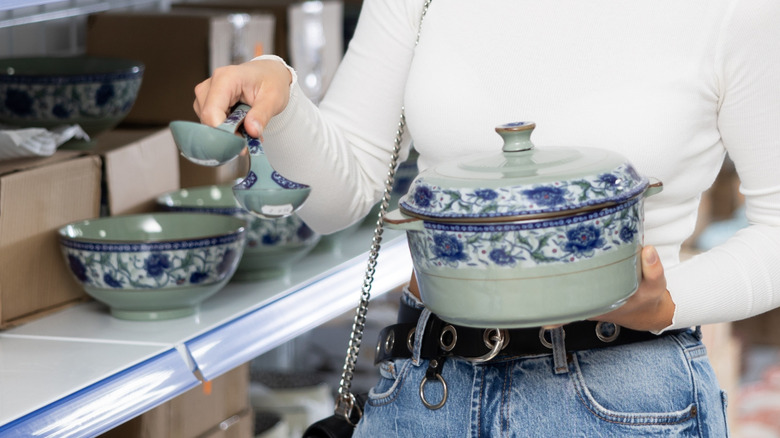
One of today's most popular kitchen-outfitting approaches involves thrifting. People are mixing modern and vintage kitchen items — it adds personality, is more affordable and eco-friendly to buy secondhand, and yesterday's brands were built to last. As you shop, you realize certain kitchen brands are the ultimate thrift store finds. That list has long included Pyrex and CorningWare, but there's a more recent obsession: Descoware.
Descoware is a line of enameled cast iron cookware that began as Bruxelles Ware in Belgium in the 1940s. Cast iron was already a popular choice for its durability and heat retention, but people didn't love the difficulty of cleaning it, the way it reacted to more acidic foods, and its lack of style. In the 1920s, enamel coating was introduced, offering practical advantages as well as potential for colors and patterns. While it's a misconception that enameled cookware is nonstick, it handles acidic foods better and is easier to clean.
When Bruxelles Ware debuted, it was especially modern with its color range, and was also lighter-weight than existing products, making it more desirable. The brand's popularity spread internationally by the 1950s — when it began shipping to America, importer D.E. Sanford Co. named it Descoware. In the '60s, using Descoware became one of Julia Child's hottest home-cooking tips when the icon utilized the brand's Dutch ovens on her TV show. Descoware officially became all the rage — but it was sadly short-lived. Rising production costs and competition from brands like Le Creuset led to the end of Descoware in the '70s.
How to identify Descoware and spot valuable pieces
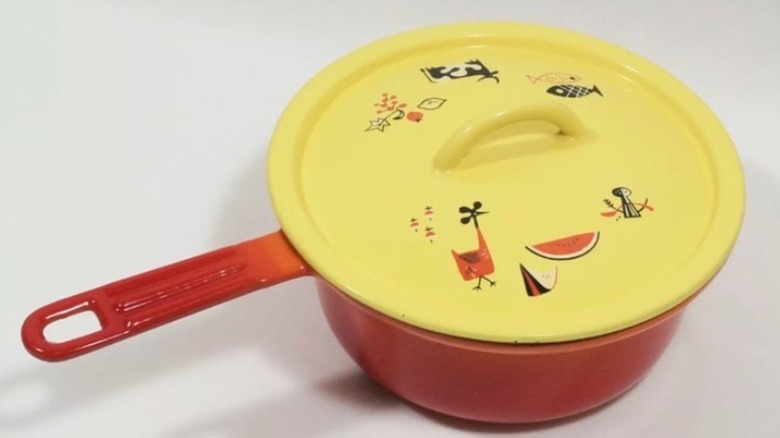
That relatively short run from the 1940s to 1970s limited Descoware pieces among the most valuable cookware sets to hunt for now. Descoware items are somewhat rare, uniquely stylish in their colors, and high-quality. It's important to research vintage cookware before buying and using it, but if you find Descoware without any cracks or chips, it promises the same durability, heat retention, and ease of cleaning of any of the best enameled cast iron lines. If you do find a piece with chips, use it for a vintage-chic display piece — turn baking dishes into fruit bowls and fill Dutch oven pots with flowers.
To identify Descoware, look for the "Descoware Made in Belgium" stamp on the bottom of any piece. You'll likely spot them by their bold hues, and they should feel a touch hefty but lighter than similar items from Le Creuset. The most valuable types of products are the Dutch ovens, which come in various sizes, plus rarer pieces like tagines, fondue sets, and woks. In terms of color, it's somewhat easier to track down "flame" orange, but pink, lime green, and colors done with gradient finishes are more elusive and therefore worth more.
A sky-blue Dutch oven goes for about $65 on resale sites, while a flame bean pot goes for about $140. A comparatively rarer piece like a wood-handled skillet can sell for roughly $100, and you may come across treasures like the Robert Markley animal-patterned yellow pot and pan, likely for around $120.