

This Fast-Growing Fruit Tree Thrives In Clay Soil And Produces Juicy Berries
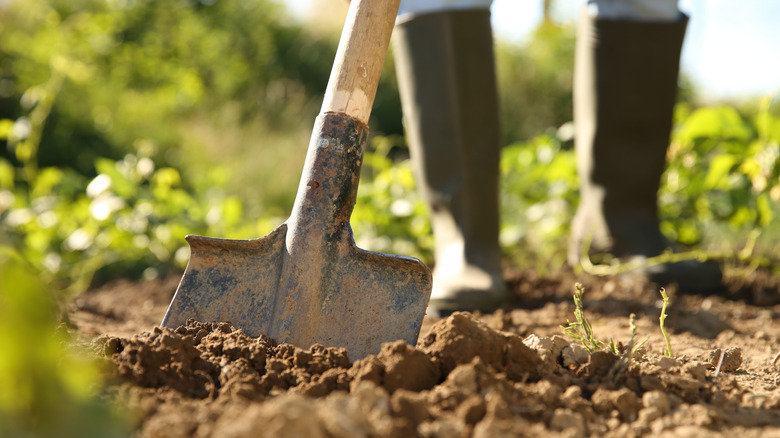
There's a lot to consider when selecting fruit trees for your garden, and not simply because they're a long-term investment. If you want your trees to survive and thrive, they need to be a good match for the conditions in your area and even your yard. This includes things like the climate, but also hours of sunlight, the amount of space you have, and what kind of soil you're working with.
Most fruit trees prefer a loamy, well-draining soil, so if you're stuck with clay, your options will be more limited. In an exclusive interview with House Digest, author and podcaster Josh Gardens suggested that those with heavy clay grow red mulberry trees. He shared that these trees have "proven to be surprisingly well-suited to clay soils in my experience."
The red mulberry (Morus rubra) is the only mulberry native to North America. It shouldn't be confused with invasive white mulberry trees, which are illegal to grow in some areas. These are one of the fastest growing fruit trees you can add to your garden, giving you a harvest of juicy red berries in just one to two years.
It's this trait that helps them deal with difficult clay soil. Gardens explained, "Compared to other fruit trees like apples or pawpaws, which grow more slowly and show more sensitivity in compacted clay, red mulberry stands out for its resilience."
Planting red mulberry trees
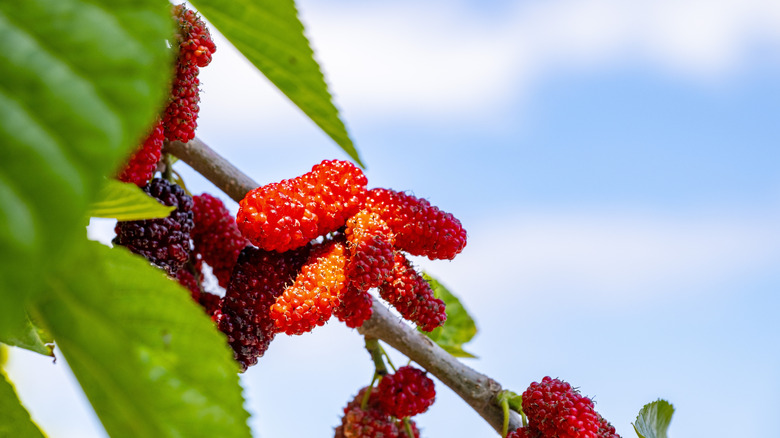
While red mulberry trees are fairly forgiving when it comes to soil, you'll still need to consider if they're the right fit for your garden before you start planting. These trees are suitable for growing in USDA zones four through nine and can tolerate some frost. What's possibly more important than the climate, however, is the sun they can expect to receive. "These trees thrive in full sun," Josh Gardens said, "and although they can tolerate some shade, fruit production is significantly reduced without at least six to eight hours of direct light."
You'll also need plenty of space. Red mulberry trees can reach up to 50 feet high and 40 feet wide, and they're often chosen for their shade as well as their fruit. Just consider carefully before planting them next to patios or paths, as the berries can stain where they drop. Fruiting mulberry trees will attract birds, who can create just as much of a mess.
While you can grow the trees from seed, you'll need anywhere from four to 10 years for the first harvest. Starting with a sapling from a nursery will take years off the wait. Beyond keeping them watered, particularly in the first few years, there's not much maintenance required for red mulberry trees. Despite this, they are one of the longest living fruit trees, and with the right conditions they can live upwards of 100 years.
Static Media owns and operates Tasting Table and House Digest.