

This Beautiful Flower Isn't Just Edible, It Helps Zucchini Grow Successfully
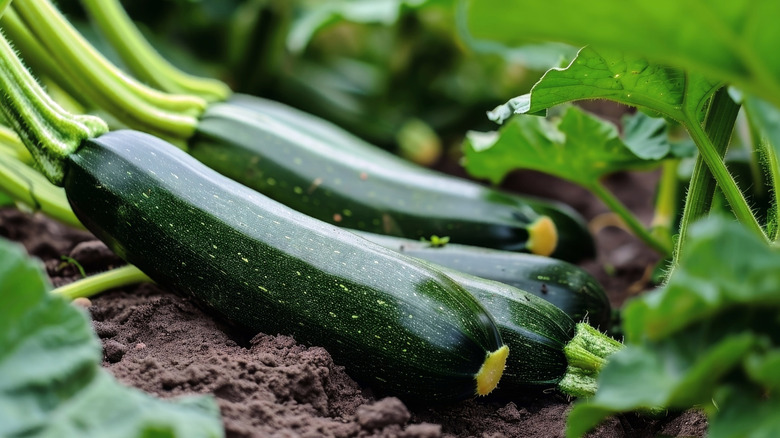
Zucchini is one of the best vegetables for home gardens. Not only is it delicious, it's also relatively easy to grow and a small crop can create a bountiful harvest. There are a lot of little tips and tricks you can employ to help you along the way too, like planting some companion seeds. Companion planting entails sowing the seeds of different crops near each other to encourage growth. Having different systems running near each other improves the fertility in the soil and helps repel insects. Luckily, one of the best companions for zucchini is a popular, edible flower that can be used in so many different ways: Lavender.
There are a lot of companion plants that will help your summer zucchini harvest, but lavender is particularly good at deterring pests. While most of us may love the floral scent of fresh lavender, animals and pests like deer, rabbits, mosquitos, and rodents tend to stay away from it, which will benefit the entire garden. Bees, meanwhile, love the scent, which is another big win.
Zucchini plants produce both male and female flowers, so they rely on bees to transfer pollen between the two. Lavender attracts bumblebees and honeybees, both of which are excellent pollinators. More bees buzzing around the area where your zucchini is growing means more pollination, leading to higher yields.
Tips for planting lavender
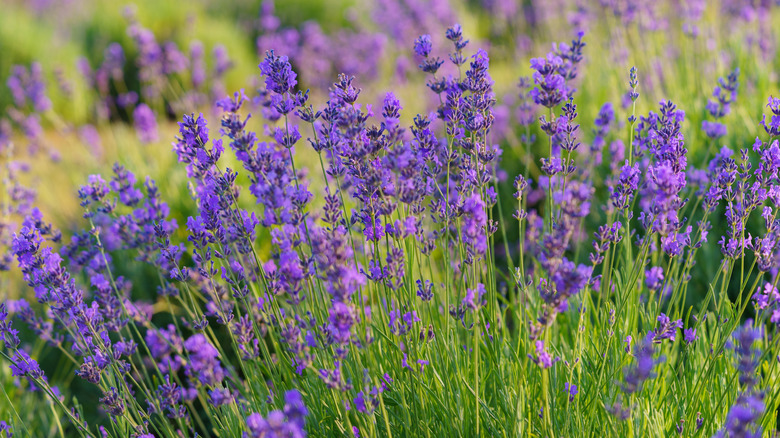
If you want to try it out, it's best to plant the lavender behind the zucchini, as it's the taller plant of the too. This will ensure there's enough airflow between the two, and it will look more natural as well. Lavender and zucchini are both Mediterranean plants, so they can share a soil bed, but it's best to keep them a few yards apart. Like zucchini, lavender needs a lot of sun, so make sure it will get at least six hours of direct sunlight per day. It also needs to be pruned regularly.
As for the zucchini, the plant grows quickly once the fruit starts to produce, so keep an eye on it and make sure it gets at least one inch of water per week. Beans and peas are also great companion plants for zucchini so you can opt for those if you're not a fan of lavender. Clover works too, as do marigolds and herbs like mint and dill.
That said, you can use lavender in so many different ways if you go for it. Bring some into your home to add a fresh fragrance, toss into a sachet to keep your closet free of bugs, or use it to make bath products. There are so many creative ways to use lavender in your cooking too, like making a flavorful lavender syrup for coffee or baking a sunny lemon and lavender cake. You never know, you might end up having a new favorite companion too.