

What's The Average Lifespan Of A Charcoal Grill?
We may receive a commission on purchases made from links.
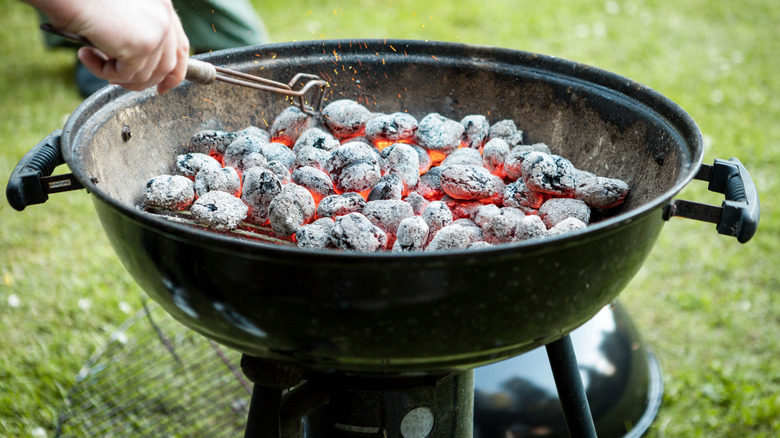
When the days get longer and warmer weather rolls around, foodies start thinking about outdoor entertaining — which means it's time to clean off the grill. The smell of charcoal is often synonymous with the backyard barbecues we wait for all year, and for good reason. Compared to gas grilling, charcoal grilling offers a flavorful smokiness that enhances meat's naturally savory flavor and delivers mouthwatering char. Even chef Bobby Flay prefers charcoal grills to gas models.
To start your grilling journey off right, it's important to understand the projected longevity of a charcoal grill before you shell out for your backyard. As a general rule, properly maintained charcoal grills tend to last for 5 to 15 years. By comparison, the average lifespan of Weber gas grills typically falls around the 5 to 10 year mark. That range is so wide due to a bouquet of different factors that can affect a grill's lifespan: The specific materials from which it's made, how often the grill gets used, and regularity of maintenance.
Charcoal grills made from a thinner metal are liable to rust through quicker than models made from a more durable material like cast iron. Higher-end models offer longer durability — like the Weber Original Kettle Premium Charcoal Grill, which features a porcelain-enameled steel lid and bowl. Beyond durability, these materials also facilitate heat circulation and retention for more even cooking. Although, for occasional use, this budget-friendly 14-inch diameter model from Gas One Store currently runs for just $20.89 on Amazon.
Expect to get 5 to 15 years out of your charcoal grill
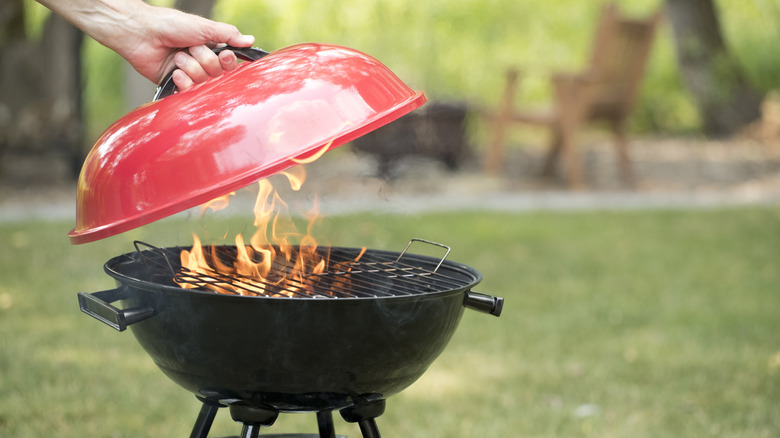
Beyond its smoky culinary benefits, charcoal grills can also offer a more accessible entry point for first-time grill owners. Charcoal grills lack intricate machinery and only require a small investment to get started. Plus, smaller charcoal grills are easily portable. Just load it into your car trunk or truck bed for a last-minute cookout at the park, beach, or campsite. Before it's ready to use, be sure to give your grill a good scrub, remembering that the outside of the grill needs a good cleaning, too. Proper maintenance is key to extending the lifespan of a charcoal grill.
Using a wire brush (like this one by Grillart), scrape the grates clean of food and debris after every use. Pro tip: Still-hot grates are easier to scrape clean. Once the grill has fully cooled, give the exterior body a good wipe-down with a damp rag to help stave off rust development. Then, pop the lid back on top of the grill for protection from the outdoor elements. If you happen to have space in a toolshed or barn, since charcoal grills can be carried and moved around, they'll last longer stored under cover. Foodies who use their charcoal grill on a daily basis should expect to replace it sooner than folks who only grill seasonally. To get the most out of your charcoal grill, keep an eye out for visual cues like excess rust on the grates or body, which can indicate that it may need replacing soon.