

6 Defunct Restaurant Chains That Reopened
Restaurant chains go ka-put for a lot of different reasons. There's the exciting stuff, of course, like bankruptcy, scandal, corporate mismanagement, or a pandemic that emptied dining rooms overnight. But there's also the mundane. A chain might be bested by its competitors. It might be torn apart by investment bankers who think they know the food industry. Whatever the cause, the impact is worse. Diners make memories at their favorite chain restaurants. Employees make a living. Fortunately, as it turns out, a restaurant going defunct isn't always permanent.
Mining the collective associations, memories, and nostalgia to make sales is one feature of late-stage capitalism. Sometimes, this can have the benefit of leading to delicious decisions. Across the country, restaurant chains that once disappeared are starting to relight their signage, giving excitement to guests who missed their favorite brand.
Jokes aside, the reasons behind a restaurant's revival are as varied as the reasons for collapse. In the case of Chi-Chi's, for example, a founder's descendant is chasing a family legacy. At Sweet Tomatoes, investment groups are betting that a recognizable name and a loyal fanbase can reverse the effects of COVID-19. Arthur Treacher's shows that sometimes all it takes is a single surviving location to quietly prove there's still an appetite for centuries-old recipes. What unites these restaurant reopenings isn't (just) nostalgia; it's betting that the tastes that people once loved, like a salad bar, a chimichanga, or a 39-cent burger, haven't really changed all that much.
Steak and Ale
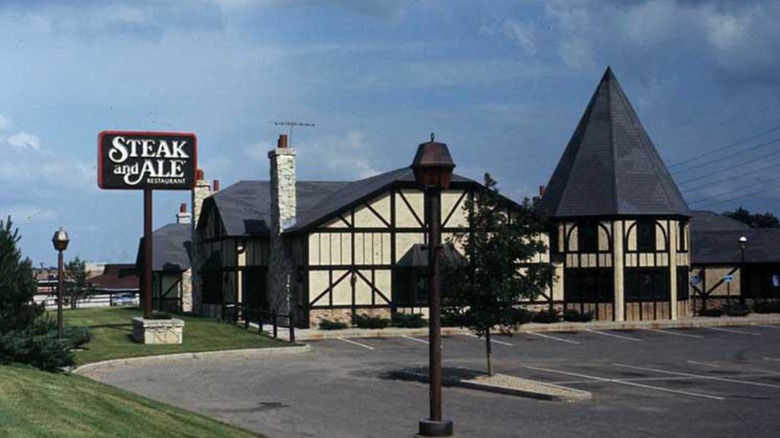
There's probably an endless number of restaurant chains that have come and gone throughout America's dining history, leaving nothing but a memory once going defunct. Steak and Ale can confidently claim to have left an indelible mark. The brand, which opened in 1966, is considered the pioneer of the salad bar. That's a nice legacy for a company whose name implied a meat-and-potatoes experience.
The original Steak and Ales were just that: an experience. Thematically cohesive, the ambiance was modeled after old English pubs, immersing diners from the point they passed the inn-like facade into the dim, wood-beamed, iron-worked interiors. Even the waitstaff were dressed in 17th-century attire. The menu, however, was less steak and kidney pudding and more mid-century American steakhouse. Prime rib was a popular plate, as was a dish of Hawaiian chicken. (It's unlikely you'd find that in medieval England.)
At its peak in 1980, Steak and Ale had nearly 300 locations. It was a sister restaurant to the Irish pub and grill chain, Bennigan's, and when the latter was hit by the 2008 financial crisis, the final 58 locations of Steak and Ale met their demise as well. That was until 2015, when it was acquired by Paul Mangiamele.
Now, Steak and Ale has returned with its first new location in Burnsville, Minnesota, in 2025 and planned franchise locations for Colorado, New Mexico, Texas, and Wisconsin. Per reporting in FSR Magazine, Mangiamele says that the new Steak and Ale locations will be scratch-made kitchens, which promises to return the business to standards from a different age. Despite a modern design, it maintains callbacks to the features that old guests loved, like the stained glass windows and deep booth seating.
Foxtrot
Restaurant chains go defunct for a lot of reasons. When they manage to be reborn, however, it's mostly because someone sees a lot of economic potential for tapping into the nostalgic memories of former guests. Yet, Foxtrot is the rare instance where the shuttered chain isn't being revived to repeat a golden era: It's the chain that never really reached its full potential.
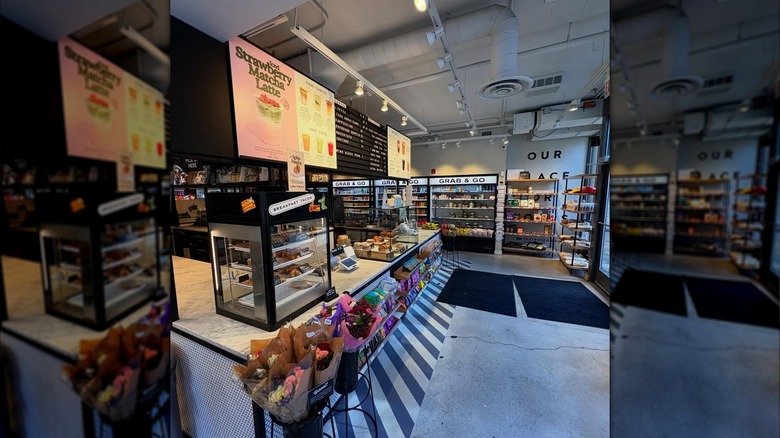
Foxtrot had (has?) a unique model. It's only one part restaurant, the other facets including an all-day café, wine shop, and grocery market that sells a wide array of prepared foods and quick meals. All of this developed from the business's first iteration. Foxtrot began as a Chicago-based app that facilitated delivery of curated food and bevvies from the inventory of an upscale corner store. In 2016, the online convenience store was spun into a small brick-and-mortar business. Then it became a whole bunch of brick-and-mortar businesses. Foxtrot had 32 locations across Texas, Illinois, and Washington D.C. by the time it merged with Dom's Kitchen & Market in 2023. The Chicago-based Dom's added another two locations to the mix. Then April 2024 arrived, and things turned sour for the investment darling. Rapid expansion led to a tough financial picture (read: Chapter 7 bankruptcy). Each location was unceremoniously and abruptly closed.
It's hard to keep the Chicago spirit down, though. In November of 2024, the chain reopened locations in Chicago. By January of 2025, a few stores in Dallas had returned to business. Foxtrot had begun its comeback, and now, it has eight shops in its home city, making for 10 total reopenings. The new food menu is paired back to include quick staples like paninis, avocado toast, and breakfast tacos.
Chi-Chi's
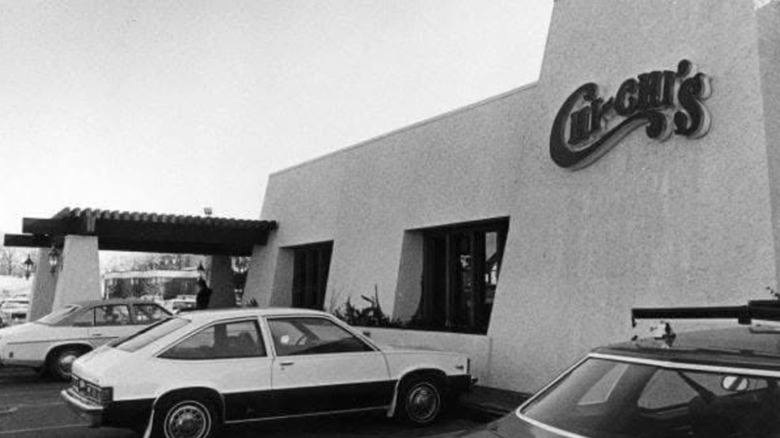
For a lot of mainstream American diners (this writer included) Chi-Chi's Restaurants offered the first taste of Mexican cuisine, though today we know its flavors are much more Tex-Mex. The chain was founded in 1975 and hit its stride in the mid-1980s, when there were nearly 250 Chi-Chi's across the country. Each was built around a festive and kitschy atmosphere that included hanging plants, Mexican pottery, piñatas, blue-rimmed margarita glasses, and birthday sombreros.
Chi-Chi's had a reputation for chimichangas, fried ice cream, and seafood nachos. Yet it was possibly best known for pioneering something we now take for granted: bottomless chips and salsa, served both mild and spicy. For decades, it was a key part of the experience at Chi-Chi's — so much so that in 1987, Hormel bought the rights to produce jarred salsa for grocery stores.
The '80s and '90s saw Chi-Chi's ownership change several times. By the time the second year of the new millennium rolled around, Chi-Chi's was no longer having a fiesta. It sank to just 144 locations. In 2003, the company filed for Chapter 11 bankruptcy. A month later, tainted green onions served at Chi-Chi's became the source of a hepatitis A outbreak that killed four people and sickened more than 600. Chi-Chi's closed all of its U.S. locations by 2004.
In December 2024, Chi-Chi's began its highly publicized comeback, headed by the son of its founder. The first Chi-Chi's location to operate in two decades opened in St. Louis Park, Minnesota, in 2025. The menu boasts familiar favorites, like Mexican pizza and Nachos Grande, but is modernized with things like seafood enchiladas, quesabirria tacos, and non-alcoholic versions of its famed margarita. Despite holding steady with only one location, plans for expansion are in the works for Chi-Chi's.
Sweet Tomatoes
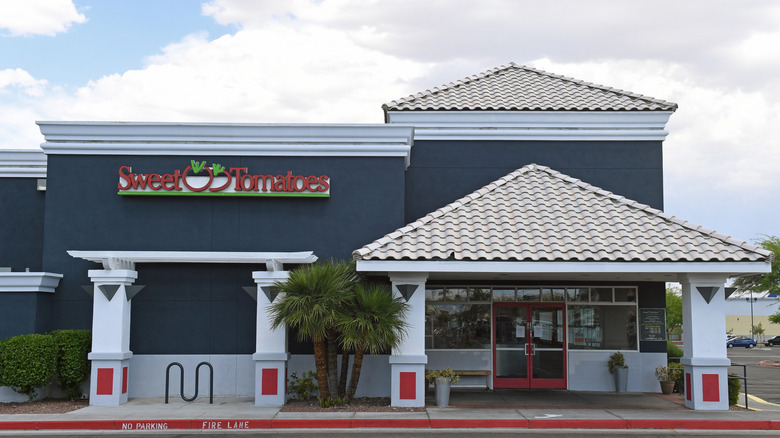
Souplantation. Sweet Tomatoes. No matter what your state called this chain, one thing is certain: Long before fast casual spots like Sweet Green or Cava were making salads easy, there was Sweet Tomatoes. Or Souplantation. We should really clear this up. Customers in Southern California knew the chain as Souplantation, while everyone else had Sweet Tomatoes. Under either banner, the restaurant chain was a buffet known for affordable and delicious soup, salad, bread, and pizza options. That is, before it went defunct.
Unlike many cratered restaurant businesses that went through dire financial straits, Sweet Tomatoes' run (which began in San Diego in 1978) was cut short by forces beyond its control: COVID-19. The company had already been saved from bankruptcy just years earlier. Its turnaround was looking legendary. But as a buffet chain, the business didn't have a chance, regardless of how much love its mac and cheese, chicken noodle soup, and baked goods got. In March of 2020, Sweet Tomatoes closed 97 locations and began another bankruptcy filing.
Fortunately, the brand didn't stay dormant for long. A new operating company purchased the company's intellectual property and launched a new Sweet Tomatoes location in Tucson, Arizona. It opened in 2024. The new spot kept its original branding intact, right down to the red tomato logo. Guests have traveled from across the country for a taste of something that had looked to be extinct, and Sweet Tomatoes' Arizona outpost has earned a pretty high Google rating. In December 2025, the company announced a second location in Fort Myers, Florida, on the site of a former Sweet Tomatoes. Meanwhile, cryptic social media posts have fans speculating that San Diego, the original home of Sweet Tomatoes, could be next.
Arthur Treacher's
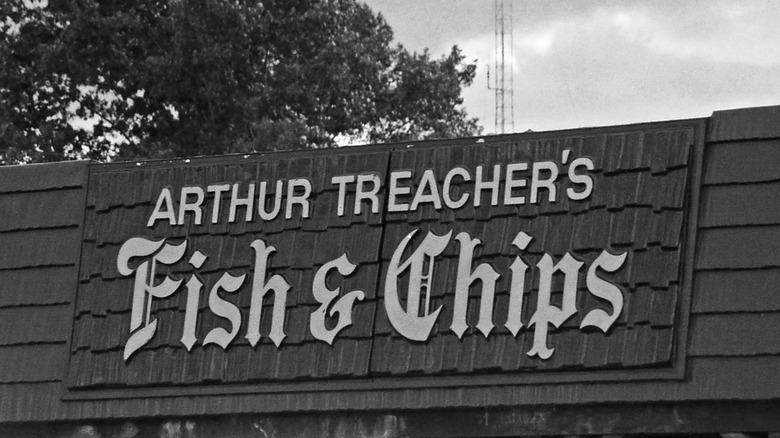
Think of your options for fast food fish and chips, and it's much more likely that the name you land on is Long John Silver's. That wasn't always the case. Once, there was Arthur Treacher's, a restaurant chain with an interesting pedigree. Established in 1969, the brand had developmental input from Wendy's founder Dave Thomas. It had a famous spokesperson, Arthur Treacher, an actor in popular films of the time like "Shirley Temple." Most important, its fried cod recipe was storied: Arthur Treacher's used an exclusive recipe from England's Malin's in Bow fish and chip shop, widely credited with inventing this dish.
At one point, Arthur Treacher's Fish & Chips was a favorite seafood chain for Americans, with over 800 locations nationwide. That was until geopolitics made its supply chain too expensive. In the '70s, the cod that Arthur Treacher's recipe relied on doubled in price, all because of the "Cod Wars" taking place between Iceland and Britain. At the same time, McDonald's and Burger King had begun an aggressive strategy to claim more of the fast food market. Arthur Treacher's swapped its cod for pollock. Customers swapped Arthur Treacher's for other restaurants. Sliding business pushed the chip shop into bankruptcy in 1983. It ended up a property of Nathan's Famous (the hot dog company) in 2006. By 2021, only one brick-and-mortar location, in Cuyahoga Falls, Ohio, remained.
Now, this functionally defunct restaurant chain is striving for a comeback. Nathan's Famous is making a slow play to revive the brand through a multifaceted approach: Arthur Treacher's ghost kitchens and Arthur Treacher's locations inside standalone Nathan's shops. In 2025, the first new Arthur Treacher's location in nearly 30 years opened in Cleveland Heights, Ohio.
Hot 'n Now
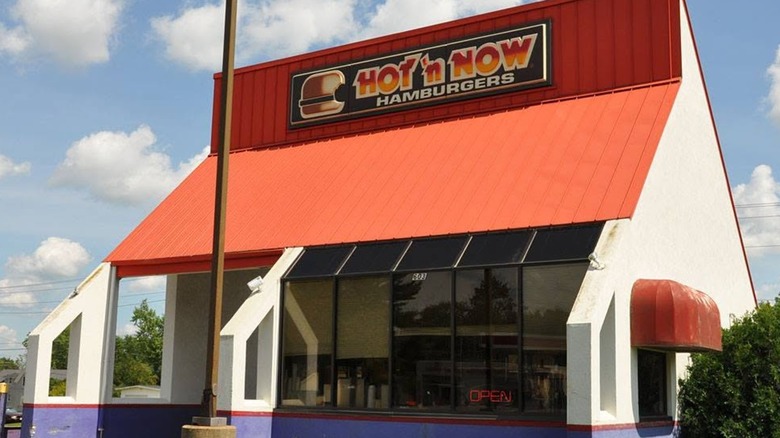
The first Hot 'n Now opened in 1984 in Kalamazoo, Michigan. The concept stripped fast food to its basic elements. Its locations had no inside seating and no counter to order from, just a simple menu, a drive-thru window, and burgers, fries, and bevvies, priced at $0.39 each.
Hot 'n Now buildings featured a small footprint. The roof style was tall and slanted and was painted a signature red color that was like a stop sign for the hungry. By 1990, there were more than 100 Hot 'n Now stores in 15 states. Menu choices like the Olive Burger were a Midwest cult favorite.
PepsiCo bought the business in 1990; the chain fell under the control of its Taco Bell division. New corporate ownership began making changes to the chain's concept that frustrated the franchisees. Taco Bell sold Hot 'n Now to a Connecticut investor in the late '90s. In October 2003, Hot 'n Now was acquired by another company, leading to the chain filing for bankruptcy in 2004. It eventually closed all but one restaurant: a drive-thru location in Sturgis, Michigan, which has been open since 1990.
That sole survivor became the sesame seed-sized hope for a comeback. In recent years, the brand was acquired by new operators who struck up a partnership with Gun Lake Investments, an indigenous economic development corporation owned by a band of the Pottawatomi tribe. As of April 2025, two new locations were planned. So far, the Wayland, Michigan shop has opened, and another in Alpena, Michigan, is "coming soon." With the rising cost of food, Hot 'n Now could be just the kind of affordable competitor that the fast food burger industry needs.