

Marinate Steak In These 3 Simple Ingredients For Flavorful Results You Won't Forget
We may receive a commission on purchases made from links.
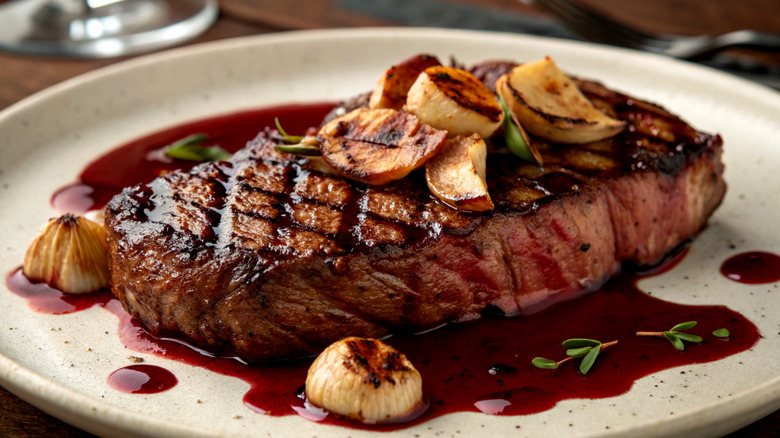
There are few more satisfying revelations than when an experiment in the kitchen works out so well, it becomes one of your go-to recipes of choice. That's why I urge you to try this steak marinade I threw together to make use of pantry staples, only for it to become an immediate favorite. It requires just three ingredients to yield intensely flavorful results: balsamic vinegar, red wine, and liquid smoke.
The balsamic vinegar introduces acidity, which helps tenderize the meat by denaturing its proteins. It also has sweetness, and its relatively high natural sugar content helps the meat caramelize. The red wine also carries some acidity, but its main role is to provide complexity and depth of flavor, while the liquid smoke brings — you guessed it — smokiness. As the size of your steak may vary, this is more a recipe of ratios than of measurements, roughly breaking down into two parts balsamic vinegar, one part red wine, and a few dashes of liquid smoke.
Make sure you use a high quality balsamic vinegar, preferably a traditional one from Modena. You can use whatever red wine you have on hand, but given the choice, I tend to opt for a spicy, fruity, and slightly herbaceous Italian Chianti. It's a good idea to always have liquid smoke in your pantry, so feel free to use your own preferred brand, but in my opinion the marinade works best with the hickory-infused variety, and I tend to stick with Colgin Liquid Smoke. A word of warning, though — when using liquid smoke, a little goes a long way, as it is strong stuff (trust me, get any on your fingers and you'll be smelling like a bonfire for the rest of the day).
How to marinate steak and turn leftover marinade into a reduction

To marinate, place your steak in a shallow bowl, with the marinade almost but not quite fully immersing the meat. For best results, cover and refrigerate for six to 12 hours, and remember to flip the steak midway through (if using the marinade for burgers, only let them rest for an hour or two, otherwise they may start to fall apart). Afterward, allow the steak to come to room temperature before seasoning liberally with salt and pepper. From there, you can pan-fry the meat over high heat in oil, before finishing by basting the steak with butter.
Most importantly, reserve the marinade once the steak is done soaking in it. This marinade serves a dual purpose. Once the steak is cooked and set aside to rest (the general rule of thumb is to rest for the same length of time it was cooked), add the reserved marinade to the pan, stirring to combine with the leftover oil and butter. Simmer this mixture until it has thickened into a dark, rich, glossy reduction, then drizzle this pan sauce over your steak.
You'll likely have your own preferences when it comes to steak sides, but typically I serve my marinated steak with warm sweetcorn, purple sprouting broccoli, and Cajun baked steak fries (the notes of garlic, cayenne, and oregano in the latter provide some welcome heat and a pleasing contrast to the subtly sweet yet intensely savory steak). Dressed with the reduction, any further condiments might not be necessary, but I'm sometimes unable to resist making a quick batch of Marie Rose sauce, more usually served in Britain with shrimp cocktail. It's easily made by combining mayonnaise, ketchup, Worcestershire sauce, hot sauce, and optionally lemon juice and paprika.