

6 Italian Food Myths, Debunked
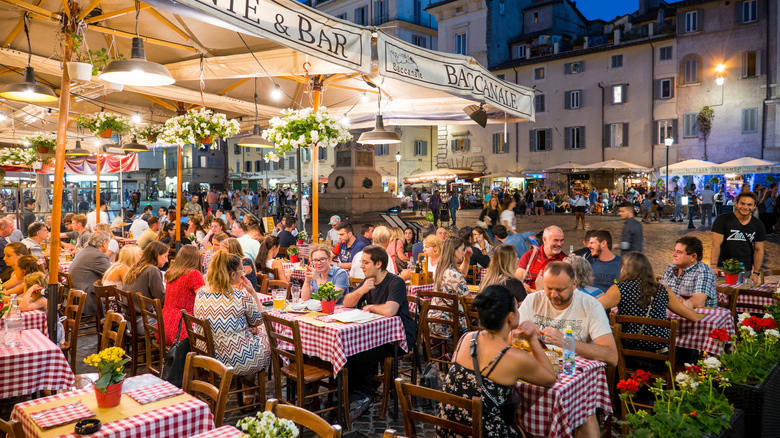
It is only natural that once a culture, including its food, crosses an ocean, that it should begin to evolve, shift, or turn into something entirely new. Change is an inevitable fact of life, even for something as widespread and established as Italian food. Yet perhaps driven by the human condition, we try to hold on to what we know, or think we know, about a culture and its food. We search for authenticity, a thing that is elusive by nature, and sometimes we think we find it. Or perhaps we rely on family lore, taking as fact an idea, a story, or a recipe that was really just the product of some ancestor's imagination.
This is the space where myths are born. And Italian food myths have taken on the form of ideas like the Italian nonna, whose archetype can do no wrong in the kitchen, whereas in reality, plenty of Italian grandmothers only make frozen meals and persistently cook the green beans to mush. Other myths revolve around Italian dining practices, like when and where to add cheese, or what a bread stick is supposed to look like. There is certainly a romanticism involved in imagining that Italian food in America is like finding an authentic piece of the old world, but anyone who has lived in Italy, as I have, or simply been there, will have found that these romantic myths and the cold, hard reality don't always match up. Here are some of those cases.
Italians do not put cheese on everything
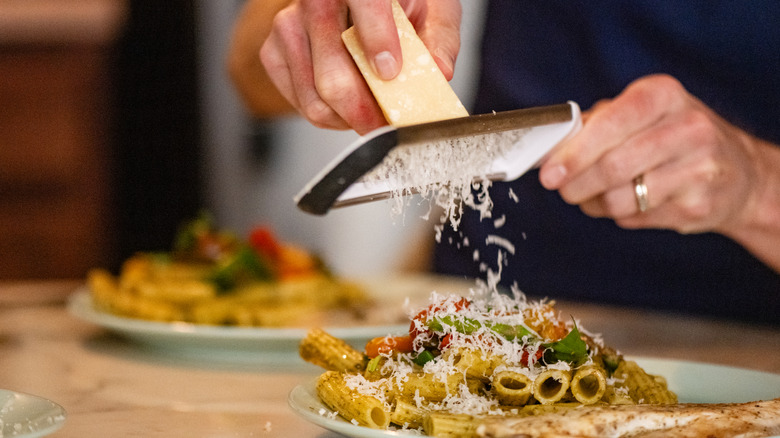
There seems to be an ingrained idea in America that Italian food is always covered in cheese. One can see how this myth might have evolved: Parmesan is a famous cheese that is ubiquitous in American kitchens and it is often seen -– in movies, at Italian restaurants — beeing freshly grated onto one's pasta. Likewise, dishes topped with mozzarella (and maybe some more Parmesan) abound, including the likes of lasagna, chicken parm, eggplant parm, and of course, pizza.
But these dishes only represent a segment of the Italian culinary arsenal, and perhaps they are so popular in America precisely because they are the ones that come with a lot of cheese. Indeed, there are scores of other Italian dishes on which it is blasphemy to add Parmesan or any other cheese. Anything with fish, for instance, should not have its delicate seafood flavors overwhelmed by the hefty taste of cheese. Dishes with delicate flavors in general — like anything with mushrooms, including truffles, or dishes designed to be simple, like a plain pasta with fresh tomato sauce and basil — should be served strictly without cheese, which risks stealing the show.
There is no unified Italian cuisine
In America, we often talk about going out to an Italian restaurant, or enjoying Italian food. But what does that actually mean? As with foods from many cultures, it doesn't mean much. Italian food is as varied as there are regions (of which there are 20), and there is no single, monolithic Italian cuisine. For instance, in the Veneto region, where Venice is located, it is common to find polenta served with meat stew or melted cheese. But if you're looking for cannolis for dessert, forget about it. You'll have to find a specialty food store that sells foods from other parts of Italy, or you'll have to head to Sicily, where they were invented.
You might wonder why so many Italian restaurants in the U.S. serve very similar food. Although the genre has expanded in recent years, traditionally, Italian restaurants here were opened by Italian families who had emigrated from southern Italy.
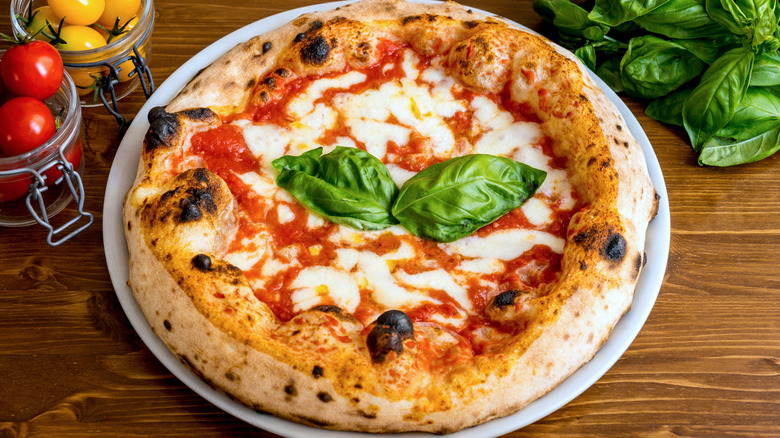
Starting in the late 1800s, the vast majority of Italians who came to America were from the impoverished south, so often, they brought with them the food from those regions for their restaurants. Additionally, some famous dishes were actually invented in America by Italian immigrants, or popularized here. One example is pizza, of all things, which didn't achieve global renown until after Italian immigrants brought it to the U.S. and tweaked the recipe to include tomato sauce instead of fresh tomatoes.
Spaghetti and meatballs are not a thing
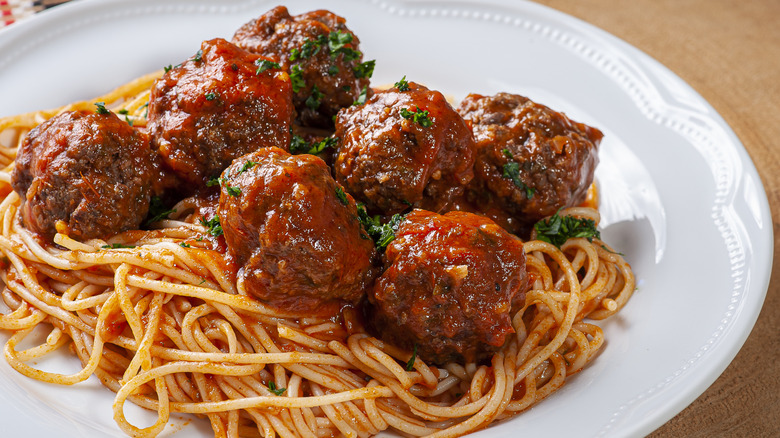
Meatballs are a popular dish in Italy, and so is pasta, of course. But in Italy, the combination of the spaghetti and meatballs on the same plate is unlikely to appear at a restaurant. Rather, the dish was invented by Italian immigrants who arrived in the U.S. starting in the late 1880s, and decided to combine two familiar elements with the meat, in particular, suddenly having become more attainable, economically speaking, in the New World.
Similarly, a dish called spaghetti Bolognese may seem familiar, like it rolls right off the tongue from all those times you've read it on a menu. But in truth, spaghetti and Bolognese are not so well suited to each other: the sauce tends to fall right off the smooth, long tubular pasta. Instead, when in Italy, look for tagliatelle Bolognese, which is a much better combination given the flat surface of the tagliatelle, which are often homemade to boot. It provides a slight grooviness to the pasta where the Bolognese sauce can take hold.
The Italian-American words you know won't mean the same thing in Italy
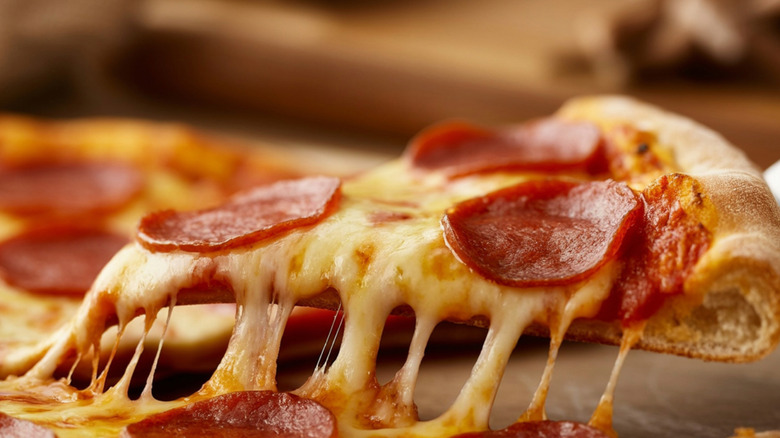
While tourists are not required to learn the language of every country they visit, there are a few words they should certainly familiarize themselves with before traveling. Please and thank you are good to know, but in the case of Italy, one might also want to brush up on key culinary terms. The ubiquitous American use of Italian food terms has likely lured us all into a false sense of security.
Take the pepperoni pizza, for instance. The term may conjure images of a pizza topped with thin, tasty meat disks. But in Italian, pepperoni means bell pepper. While this is a fine pizza topping, and a popular one for many vegetable-forward pizzas, it may disappoint you to find that it has nothing to do with meat.
Likewise, if a barista questions your intention to buy a latte, take a moment to look up the word in an Italian-English dictionary. You may know the term as something caffeinated you get at Starbucks, but in Italy it simply means "milk." The American use is taken from the abbreviation of "caffè latte," which does indeed contain coffee.
Bread sticks are not a substitute for an appetizer
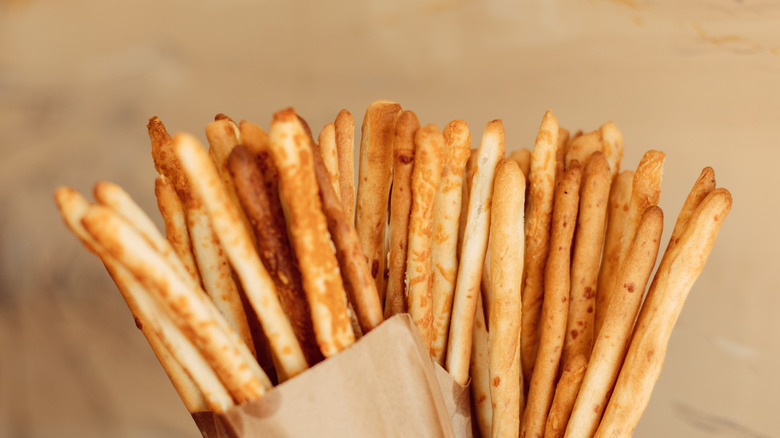
The bread sticks at Olive Garden may be the stuff of legend, but they have very little to do with the bread sticks you'd get at an Italian restaurant in Italy, much like other Olive Garden offerings. More specifically, while the Olive Garden variety tend to be thick and fluffy and could practically be a meal in and of themselves, Italian breadsticks are very thin, very crispy, and are not meant to spoil your dinner.
These breadsticks are called grissini, are about six inches long, and they often come prepackaged in little plastic packets. In more upscale restaurants you're likely to find them served in a fancy cup or plate, and they tend to be more uneven as they are often homemade. But the tall skinny profile persists. Patrons are expected to munch on these languidly while conversing with their party, and they may be used as a way to ensure diners don't start drinking on an empty stomach, as wine may appear at the table before the appetizer or first course.
Multi-course meals are not eaten every day
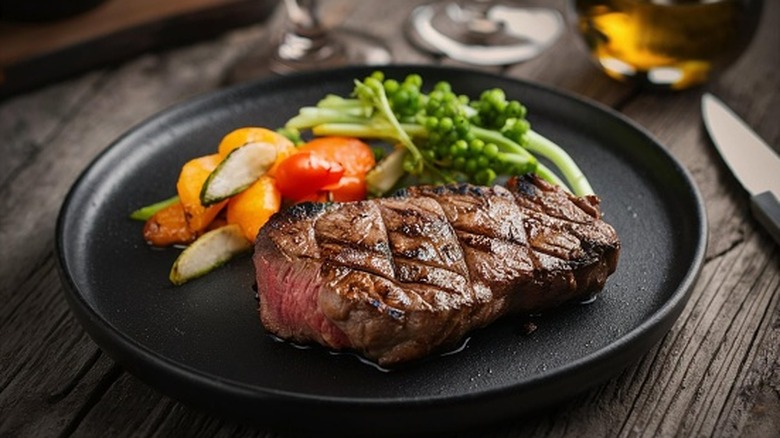
There seems to be a romantic notion that everyone in Europe, mostly France and Italy, eats multi-course meals every day. There are situations where this may seem true: In schools, for one, children may be offered a first course of pasta or rice, followed by a second course of meat or fish, and perhaps a fruit to finish. While this may sound fancy, it's no different from schools that offer a cafeteria where one might select these same items and eat them side by side.
Similarly, despite restaurants having menus that organize meals into courses, diners are not expected to choose all courses, or even more than one. It is perfectly acceptable to go to a restaurant, order a single plate of pasta (a first course dish) or steak (a second course dish) and leave it at that. To choose both would be the equivalent of choosing two entrees. And if you're wondering what people do at home, ask yourself whether busy parents cook multiple courses per night for their families and you'll have your answer.