

How Graza Olive Oil Became So Popular
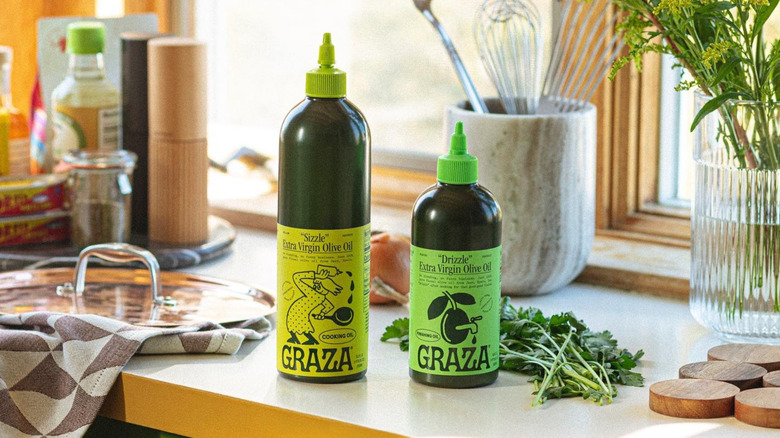
When any brand shows up out of nowhere and suddenly starts dominating grocery store shelves, it's natural to wonder where it came from, and the most prominent recent example of that is Graza olive oil. Six years ago, Graza didn't exist. Today, it's one of America's top olive oils, available almost anywhere you buy groceries, and a social media fixture. You might credit that to canny marketing, and that's certainly part of the success equation for Graza, but it also helps that the brand recognized a growing market for mid-range olive oil in the United States that was high quality, but not too expensive.
It helps that Graza just started with a genuine love of good olive oil. Founder Andrew Benin, who started out working for other trendy social-media-based companies like Casper mattresses, was interested in starting a food brand after a childhood spent struggling to eat healthy. He quit his job to work as a cook in restaurants, including the Michelin-starred restaurant Gramercy Tavern in New York. It was during a trip to Spain, where Benin's wife's family is from, that Graza first took shape. There, he saw how integral olive oil was to her family's life, and he also happened to taste the best olive oil he'd ever had.
This was the basis of what Graza would become. It is a single-origin Spanish olive oil, compared to many popular brands that use blends from different countries. In order to break into a market that is highly competitive with tons of big brands already, Graza needed to stand out from a quality standpoint. But it also needed to be accessible to people to grow.
Graza made quality olive oil fun and accessible at a reasonable price
When Benin returned from a trip tasting olive oils in Spain, he got some advice from the executive chef of Gramercy Tavern, who told him that while the oil was good, the world didn't need another expensive luxury olive oil brand on shelves that was only targeted at premium customers. That led to two of Graza's biggest moves that helped launch it to overnight success: the price and the bottles.
For years, supermarket olive oils in the U.S. have been divided into bottom-shelf brands priced in the low teens or single digits, which are often mediocre at best, and higher quality brands that taste good but can run $30 or more for a standard bottle. Graza hit that middle point, starting its pricing at $20 for its finishing olive oil in the "Drizzle" bottle, and $15 for "Sizzle." For a tasty single-origin olive oil, it's far more affordable than normal, even if it's more pricey than budget brands. Part of this affordability came from the choice of Spanish Picual olives. They were not well known or widely sought after for American olive oil, and they were more widely available to buy in bulk with a long shelf life.
The squeeze bottle was also a key innovation. While professional chefs have long kept cooking oils in squeeze bottles, quality olive oil was always supposed to come in glass. With a plastic squeeze bottle, Graza encouraged an image that its olive oil was meant to be used, and used liberally, not sit as an expensive luxury in your pantry. It was easy to use, fun, and accessible for normal people.
Strategic social media marketing helped Graza quickly reach customers without spending much money
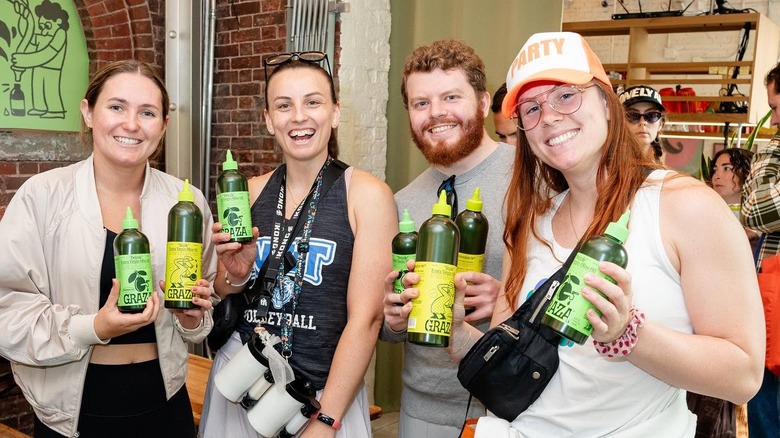
Having a quality olive oil only made marketing easier when Graza first launched in 2022. With no budget for a standard marketing campaign, Graza simply mailed bottles of its olive oil to influencers. The brand didn't pay for anything, and asked for nothing in return, not even a promise of coverage. The founders simply trusted that cooks and social media personalities would like the olive oil and recommend it on merit, and they did — publications like Bon Appétit gave it glowing reviews, which clearly worked in Graza's favor. The marketing campaign happened before the oil was even available for sale, and once launched, it sold out its entire inventory in a day.
Still, Graza could have flamed out if most people couldn't buy some of its olive oil to try themselves. To be a more accessible brand, it was built from day one to be ready to scale up to retail stores. It started off with a partnership with Foxtrot Markets, a small retailer, to help build its retail supply business. So when Whole Foods came calling not long after Graza went viral, it was already prepared to get its olive oil onto more shelves.
A fun social media presence also played a role through an engaging blog and a brand voice, which adds to its accessible image, but it never would have happened without good olive oil to back it up. Like many business success stories, Graza identified a hole in a big market that more complacent legacy brands had ignored: great extra-virgin olive oil that doesn't break the bank. And, using some classic business savvy, it filled it.