

Is It Actually Worth It To Thrift Your Cookware?
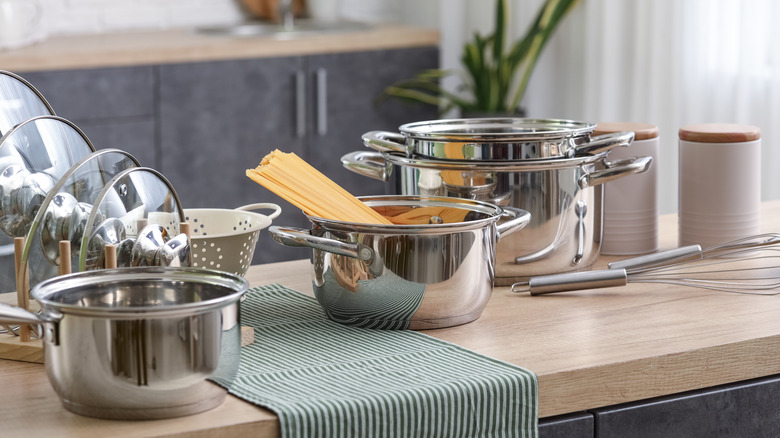
Having quality, name-brand cookware to work with is great. But it can get expensive quickly, so stocking your cabinets with all-new pots and pans may be cost-prohibitive. The price point for brands like All-Clad and Calphalon start at about $50 per pan, and a complete set can cost over $500. That's partially why your local thrift store can be a great place to find kitchenware brands worth hunting for.
The home aisle at any thrift store is always brimming with stacks of pots and pans, some of which are highly collectible. Not only are you supporting a good cause when shopping at a thrift store, you can grow your stock of kitchen goods affordably, try a new brand, or even simply have cookware you're not overly worried about damaging. In other words, thrifting your cookware can absolutely be worthwhile.
If you're up for the thrill of the hunt, you can find collectible brands like Le Creuset or CorningWare. Or, you could try a brand that's time-tested but might be considered as "overpriced" in retail stores like All-Clad or Lodge. You may be able to augment your collection of brands you already love and use for a fraction of the cost of a new pan. Even celebrity chef David Lebovitz is a fan of buying vintage cookware at Paris flea markets, but there are some things to be aware of before you buy.
Not all thrifted pans are created equal
Online, you can find Facebook and Reddit threads dedicated to discussing whether it makes sense to thrift pots and pans. They generally agree that it's more affordable than buying new, high-quality pans and great deals can easily be found, and they items you find are fine to use with a good wash. "The production and shipping of these types of items creates a massive carbon footprint, when perfectly good second-hand varieties are available for cheap right up the street," says one Redditor.
Obviously, you're going to want to check who the manufacturer is and go with a reputable name brand. Test the pan out in your hand. Is it a good, solid weight that reflects quality, or does it feel flimsy? Where is it made? Some countries, like France, Japan, and the U.S. have long-standing reputations for producing high-quality kitchenware.
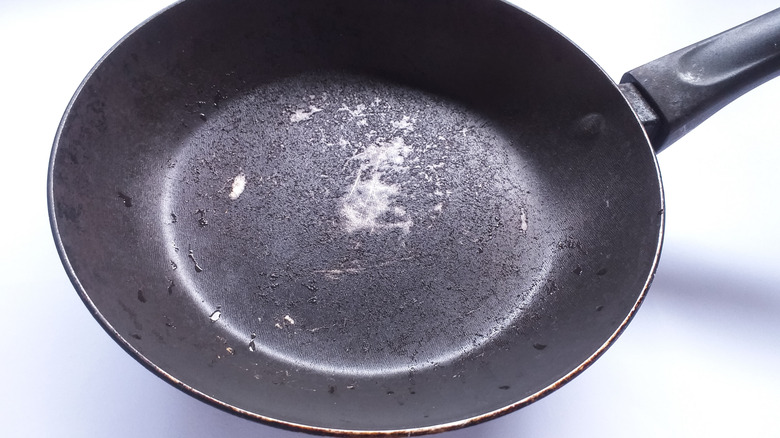
But there are some caveats when it comes to buying used pots and pans. You'll want to check if your thrifted pots and pans contain lead. You'll also want to avoid any Teflon-coated and non-stick pans, because their coating can break down and leech dangerous chemicals into your food. Reach for stainless steel over aluminum, which can put you at risk for chemical exposure. Copper might look good, but it will need to be relined if its tin lining isn't intact. As long as you keep these things in mind, it can be a thrill to find used kitchenware that still has a lot of life left for a low price.