

Not Le Creuset, Not Pyrex: The Kitchenware Brand Worth Hunting At Thrift Stores
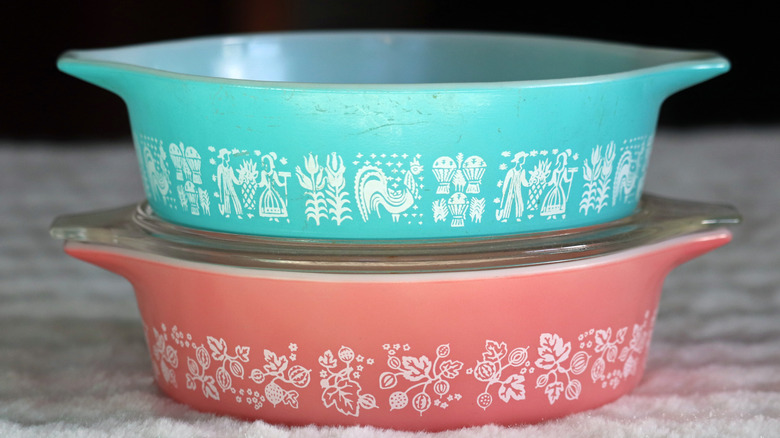
You may have seen CorningWare's colorful vintage casserole dishes with their funky mid-century motifs printed on them, gracing your grandma's table, or, if you're lucky, on the shelf at a thrift store. CorningWare is highly collectible — but how can you tell if your vintage CorningWare is valuable?
It's all in the history. The Corning Glass Works was founded in 1851 and was already a company known for its quality kitchenware by the time CorningWare debuted. In 1952, an oven accident led to the invention of the CorningWare we know so well today. Dr. S. Donald Stookey was working on photosensitive glass in the Corning Lab when he inadvertently heated the oven to 900 degrees instead of 600. As a result of heat-induced crystallization, the glass turned opaque white and didn't break when it was dropped. This durable, versatile new glass-ceramic material, Pyroceram, was an overnight sensation when it debuted in 1959, making CorningWare a staple and a household name. Home chefs across the country clambered to get it — meals could go from oven to table to refrigerator in one dish, simplifying yet elevating meal time.
By the 1960s, sets of CorningWare were in the cabinets of nearly every kitchen in America and were quickly becoming collectible. The company was releasing new motifs as limited editions and the kitchenware collections included casserole dishes, cake pans, pie plates, mixing bowls, Dutch ovens, muffin tins, teapots, percolators, sauce and frying pans, and more.
Thrift this highly collectible dishware
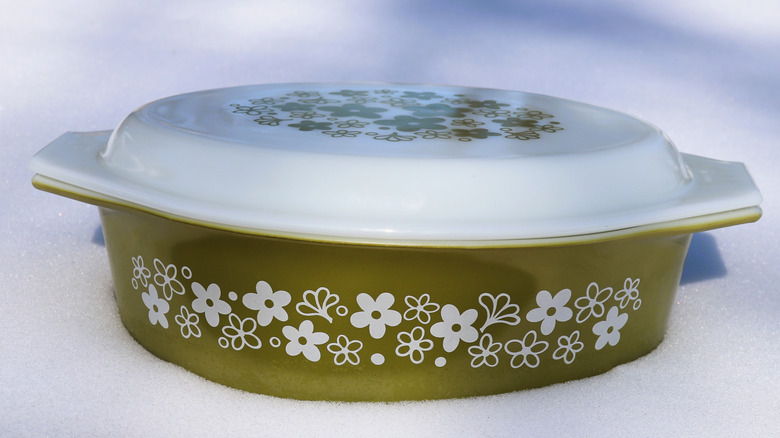
CorningWare's first design was a simple yet charming blue cornflower motif, which it used through the late 1980s. Some of the company's most popular patterns include the Atomic Starburst (associated with space travel), Blue Heather (flowers with vines and leaves), Nature's Bounty (vegetables), and Country Festival (birds in profile), but there are over a dozen more. Some of CorningWare's patterns are rarer (and therefore more sought after) than others, and collectors are often looking to complete a set. Authentic vintage CorningWare has a backstamp on its underside with different embossing styles, fonts, designs, and production information that gives buyers parameters of the dish's age and value.
People love collecting CorningWare for its aesthetic, nostalgic vibes, and because it's still functional kitchenware. It's also increasingly popular because it isn't made anymore — after consumers lost interest in ovenware sets, factories shuttered, and CorningWare ceased producing Pyroceram in 2000. The only company making Pyroceram items today is manufactured in France by Keraglass. People love the thrill of the hunt when it comes to tracking down vintage CorningWare — there are even Redditors scouring thrift stores to save it. It's well worth looking for some on your next thrift trip.