

Shoppers Keep Believing These 9 Myths About Grocery Store Rotisserie Chickens
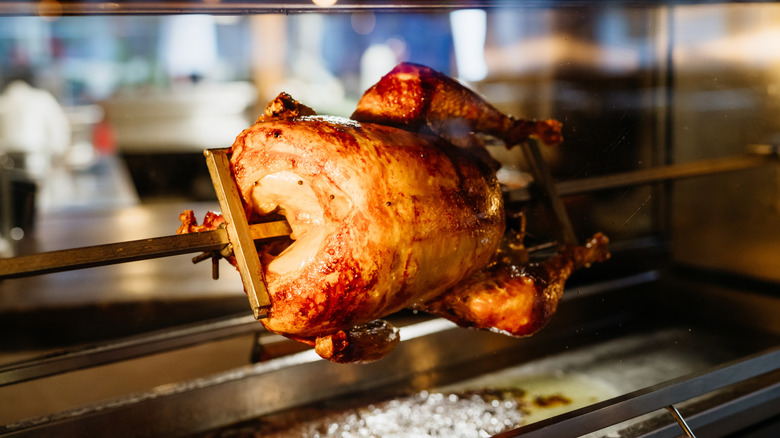
You're headed to the grocery store after a long day of work, and you need to pick up a meal that'll taste amazing but takes minimal effort to make. After all, you don't want to spend the evening cooking over the stove. This is when grocery store rotisserie chickens come in clutch. Ideally, they're already perfectly cooked and crisp, with plenty of salt and seasoning, so there's nothing you have to do to make them taste good. Once you get home, you can serve the chicken with some simple sides or incorporate it into any other recipe that calls for cooked chicken.
Whether you don't buy grocery store rotisserie chicken often or it's an absolute staple of your diet, there's probably a good chance that you believe some myths about the dish that just aren't true. By believing these myths, you might be preventing yourself from buying rotisserie chicken as much as you want to — or you may not be using it to its full potential. We're debunking these myths so you can have a better rotisserie chicken experience the next time you go to the grocery store, no matter how you use it.
Rotisserie chickens are just fresh chickens that are about to go bad
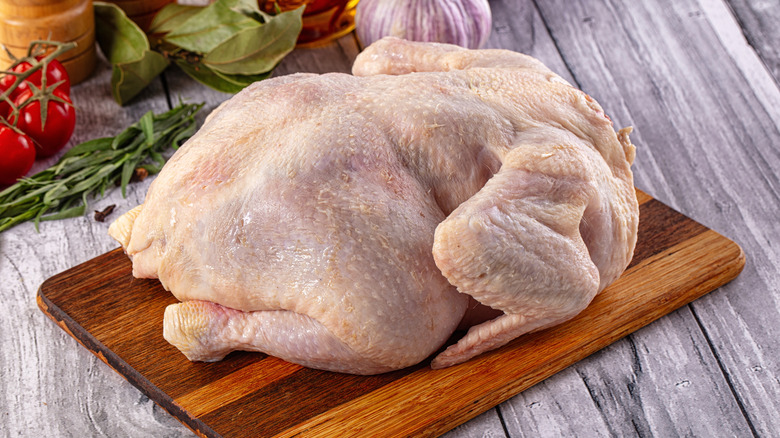
You may have heard that Costco uses its older rotisserie chickens to make a variety of prepped meals at the big box store (some of which even taste better than takeout). The store does this to prevent waste while ensuring that every customer who picks up a rotisserie chicken actually gets a fresh one. Perhaps because of this known fact, some people assume that grocery store rotisserie chickens are simply older fresh chickens that the store is trying to move before they go bad. Understandably, this may lead some to pass up on the product completely, since they want to make sure they're getting fresh chicken.
But you should be relieved to know that this isn't the case — in fact, the chicken used to make your rotisserie chicken is likely coming from an entirely different source than where the whole fresh chickens originate from. Once you take a closer look at the sizes of the two kinds of birds, that becomes clear. Generally speaking, you're going to find that fresh, raw chickens weigh more than their rotisserie chicken counterparts. Therefore, you shouldn't be hesitant about buying a grocery store rotisserie chicken just because you think it's close to its expiration date. Chances are, as long as your local grocery store is trustworthy, the chicken is fresh.
You shouldn't freeze a grocery store rotisserie chicken after you get it home
Some people question whether they can freeze a rotisserie chicken after they get it home. Perhaps they have leftovers that they're not planning to get to for a while, or maybe they plan to make a recipe next week that calls for chicken and don't want it to go bad in the process. While it's true that you shouldn't really freeze a grocery store rotisserie chicken whole, since it likely won't freeze very evenly, that doesn't mean you can't freeze it at all. In fact, this is one of the best ways to prevent food waste and stretch your grocery budget a bit further.
For the best results, though, you should make sure to remove the chicken from the bone before you freeze it. This will allow it to freeze more evenly and also make it easier to use the chicken once you're ready to thaw it and incorporate it into other dishes. According to the USDA, cooked rotisserie chicken can be kept in the fridge for about three to four days. After that, you should toss it or freeze it. When properly frozen, cooked chicken stays good in the freezer for about four months.
All rotisserie chickens are riddled with additives
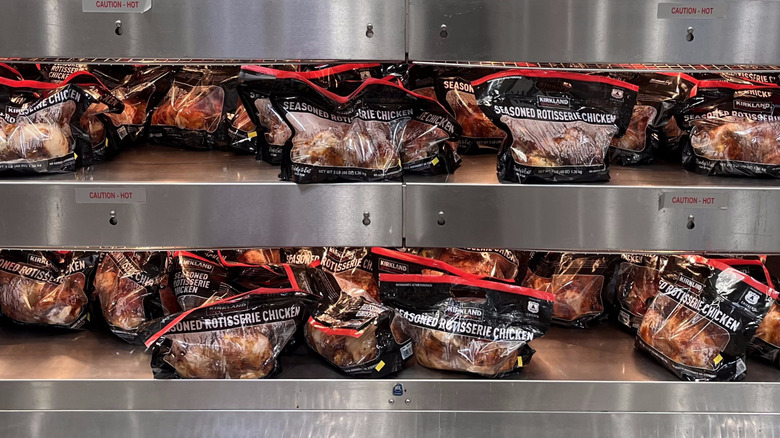
You know how rotisserie chickens tend to be super-juicy, with a tenderness that's hard to achieve in your own kitchen? Well, that's not necessarily because of the way the chicken is actually roasted. Rather, it may have more to do with the additives in the chicken. According to Consumer Reports, rotisserie chickens at grocery stores are often injected with a special solution that results in this delicious, juicy flavor and texture. Unfortunately, though, those additives aren't great for you — excess salt and even some processed ingredients are common in these additives, and some even add sugar to the chicken to boot.
To make matters even worse, some of the most popular grocery store chickens, like Costco's and Sam's Club, boast the highest sodium content of them all. However, that doesn't mean you'll run into the same problem with every grocery store chicken. Some chains, like Whole Foods and Kroger, offer chickens with less sodium, at least. Whole Foods specifically doesn't even inject its birds with a solution, so it may be your best bet if you want to avoid as many additives as possible. When in doubt, you can always ask the deli for more information about how the rotisserie chicken was made and what additives it contains.
After being cooked, rotisserie chickens stay out all day before being sold
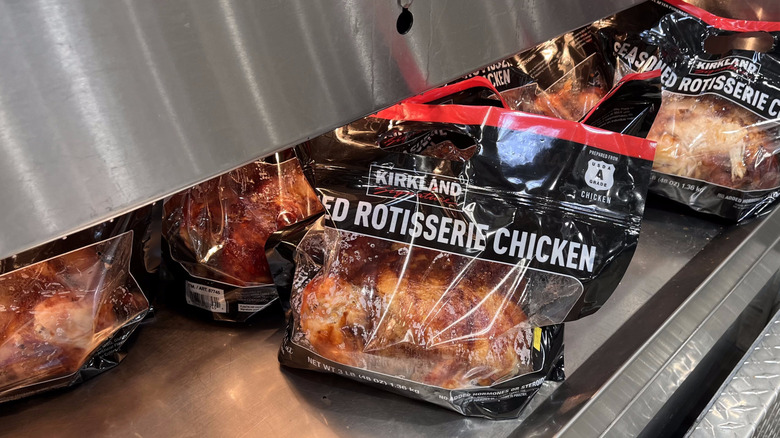
Have you ever skipped a grocery store rotisserie chicken because you did your shopping in the evening and didn't want a chicken that had been sitting out all day? That's a valid concern, but in reality, it's not often that chickens are out for more than a few hours at a time before they're rotated out for new, fresh ones. If you're really concerned about freshness, do your rotisserie chicken shopping at Costco. At the big box store, rotisserie chickens only stay out for two hours. At that point, the meat is repurposed into different prepared dishes.
Most grocery stores put out new rotisserie chickens throughout the day. For example, Walmart tends to do its first batches of rotisserie chicken early, around 5:30 to 6 a.m. Kroger is said to do a midday batch of chickens around 11 a.m. And the majority of the time, rotisserie chickens will even have time stamps on them. In fact, if they don't, it's a major red flag. Generally, if the chicken has been out for over three hours, though, you should skip it. When in doubt, ask the deli when they last put out new chickens to help you decide whether they're fresh enough to buy or not.
You can just roast chicken at home for that same grocery store rotisserie chicken flavor
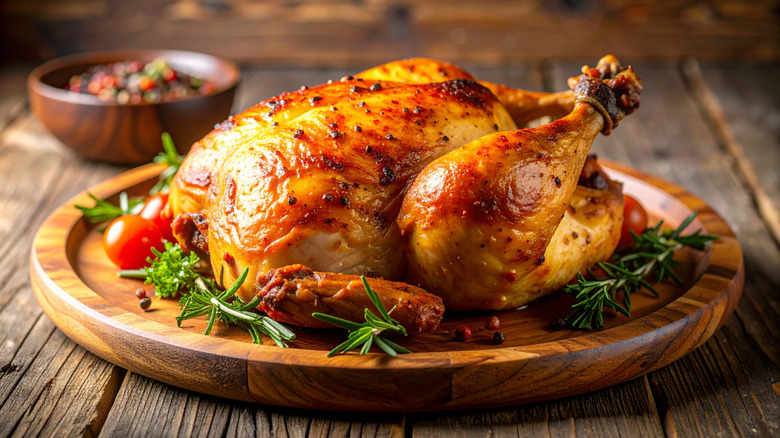
Whether you don't like the additives in some rotisserie chickens or you're craving this dish but don't want to run to the store, you may wonder whether you can make rotisserie chicken at home. After all, it's basically a roast chicken, right? While technically that might be true, it's not that easy to replicate that level of deliciousness in your home oven. This is because rotisserie chickens develop their specific flavor and texture largely because they're rotating while being cooked, which you probably can't do at home.
That rotation allows all the juices in the chicken to circulate during cooking, whereas you don't get the same effect when your chicken is sitting in a pan in the oven. This is why grocery store rotisserie chickens have a juiciness that you can taste throughout the bird, not just in the dark meat. With a plain old roasted chicken, though, those leaner and fattier parts are more distinct from one another.
Of course, this doesn't mean your roasted chicken will taste bad — it won't taste exactly the same as a rotisserie chicken. At least grocery store rotisserie chickens are usually available for a very competitive price.
Grocery store rotisserie chickens are more expensive than raw ones
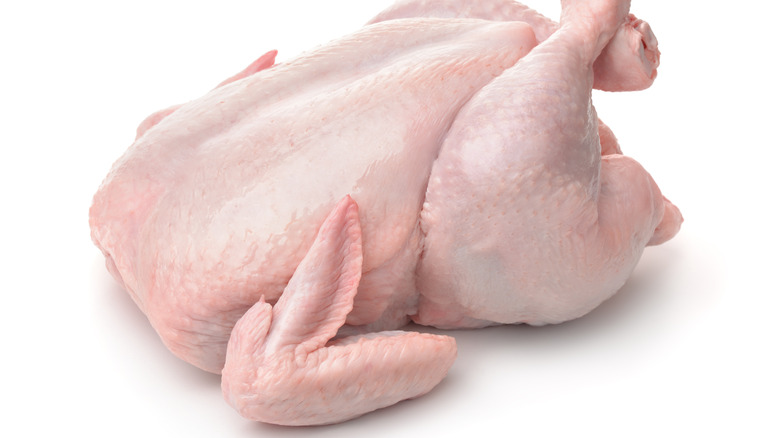
Have you ever compared the prices of a rotisserie chicken and a whole, raw chicken at the grocery store? You might have noticed that the raw one was more expensive than the prepared, cooked, and ready-to-eat option. At first glance, this doesn't make much sense. After all, you're not only paying for the chicken itself, but also the labor it took to make it. So, why is it cheaper than the raw chicken you'd have to baste, season, and cook yourself?
At a lot of grocery stores, rotisserie chickens function as loss leaders, meaning the stores actually lose money on them. They continue to sell these chickens at a loss, though, because they attract customers to the store. Think about it: You need a quick meal, so you stop by your local grocery store to pick up a rotisserie chicken. Then, you realize you need some side dishes as well. You snag those from the deli section. Oh, and the kids need snacks for school tomorrow! That's another thing in your cart. Before you know it, you're leaving the store with way more than just the chicken itself, but it was the chicken that got you there in the first place.
There's another factor at play here, too. Often, raw chickens weigh more than their rotisserie chicken counterparts, so you're literally getting more meat when you buy one raw and cook it yourself.
You shouldn't eat grocery store rotisserie chicken that contains any pink
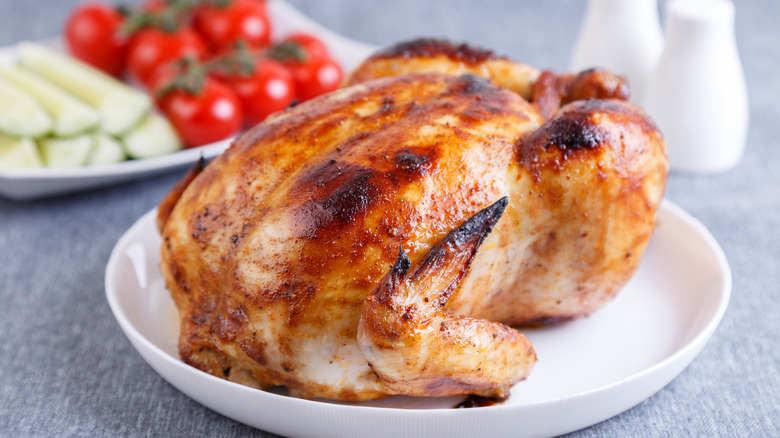
You can eat many meats rare or medium-rare without a problem, but chicken isn't one of them. Eating undercooked chicken poses a risk for food poisoning, so it's best to ensure that your chicken is always well-cooked before taking a bite. When you're cooking chicken at home, you can easily tell if it's done by simply using a meat thermometer — the internal temperature of the chicken should reach at least 165 degrees Fahrenheit. But it can be trickier to tell whether the chicken is cooked properly when you're buying a rotisserie chicken from the grocery store.
One myth that too many consumers buy into is the idea that if a chicken has any sort of pink tint, that automatically means it hasn't been fully cooked. In reality, though, that's not true — chickens, especially young ones, often have a pink hue in the meat around their bones. Additionally, hemoglobin, which is found in the blood of the bird, can also give your chicken a red color, but it's safe to eat. If the chicken has a rubbery texture, it may be undercooked. It's not a foolproof sign that the meat isn't fully cooked, but it's a warning sign you probably shouldn't ignore.
You can only use a grocery store rotisserie chicken as-is
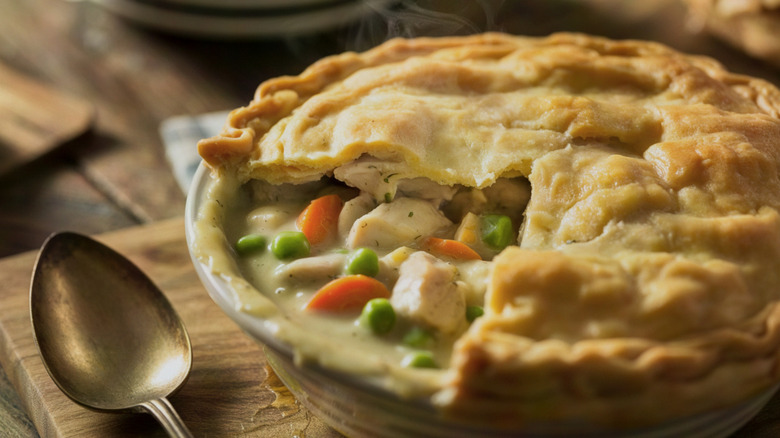
Grocery store rotisserie chicken can feel like such a godsend on busy nights because you don't have to do anything to make it taste good. Just carve it up, put it on a plate, and serve it alongside some sides, and you have a meal that's ready to go without any protein prep at all. That may lead some shoppers to believe that this is the only way to serve rotisserie chicken: straight from the clamshell or bag, plopped onto a plate, and eaten as chicken and nothing else. But that's a myth. In reality, one of the reasons we love rotisserie chickens so much is because they can be used for many different purposes.
Have some taco toppings on hand? Shred that chicken meat and make tacos that come together in a flash. Trying to get rid of that leftover rice you have in the fridge? Chicken fried rice it is. You can also make chicken salad for a refreshing sandwich at lunch or create a creamy, tangy Buffalo dip to serve with chips. Basically, anything you'd do with hunks of chicken breast, shredded chicken, or canned chicken, you can do with a rotisserie chicken as well. That means that you don't have to waste a single shred of meat.
Grocery store rotisserie chicken isn't very healthy
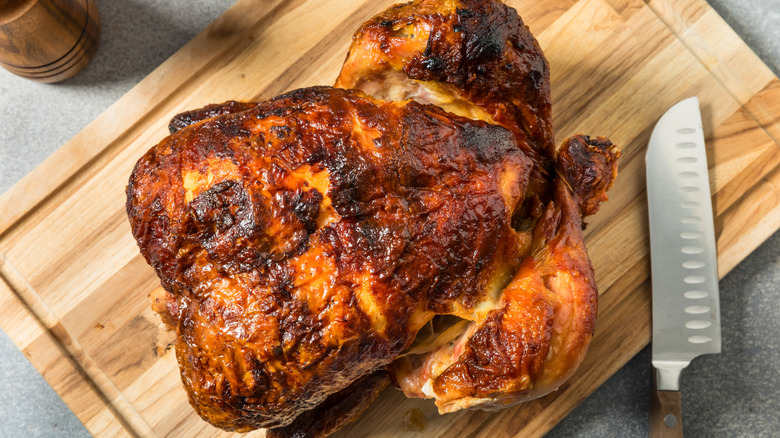
We all know that rotisserie chicken can be a quick and affordable dinner option, but many shoppers are concerned about whether they're actually getting a healthy product. If rotisserie chicken isn't particularly healthy, after all, you might not want to eat it on the regular. Of course, everyone's version of "healthy" is different, so whether it falls into that category for you depends on what you're looking for in a meal.
Although the additives in rotisserie chicken are FDA-approved, some worry that they're getting a processed product. If that's a major concern to you, then you may want to limit your intake. The same goes for salt: rotisserie chicken can be quite salty, so it's not great if you're closely watching how much sodium you eat. Plus, the skin contains a high level of saturated fat, which can have a negative effect on your cholesterol, so limit your skin consumption if you have issues with cholesterol.
At the same time, rotisserie chicken boasts a lot of the nutrients you need to thrive. It's an excellent, affordable source of protein; plus, since it's already cooked, it's easier to consume than other options on the market. And if you're actually a fan of that chicken skin? Well, it contains collagen, which can also have positive benefits for your health.