

6 Steak Cuts You Should Never Order Rare
We may receive a commission on purchases made from links.
There are many cuts of steak that you can order at a steakhouse or purchase at the butcher. That doesn't mean that all varieties of steak are created equally, however. These pieces of meat are cut from various parts of the cow, and therefore contain varying levels of fat and muscle, which determine how they're best cooked and served. So, for those of you who prefer to order a rare steak at dinner, there are some steaks that aren't cut out for that (no pun intended).
To find out which steaks you should never order rare, Tasting Table turned to some experts on the matter so you don't leave a meal unsatisfied. According to these experts, any type of steak is perfectly safe to eat rare, but the texture of certain steaks isn't ideal due to their muscle or fat contents. That doesn't mean all hope is lost with these cuts of steak, because getting it to at least medium-rare promises a tender and juicy bite of meat. And while types of beef like brisket are not technically cuts of steak, experts say those are best not eaten rare either. Keep reading for the six cuts of steak you should never order rare at your go-to steakhouse for dinner.
Chuck
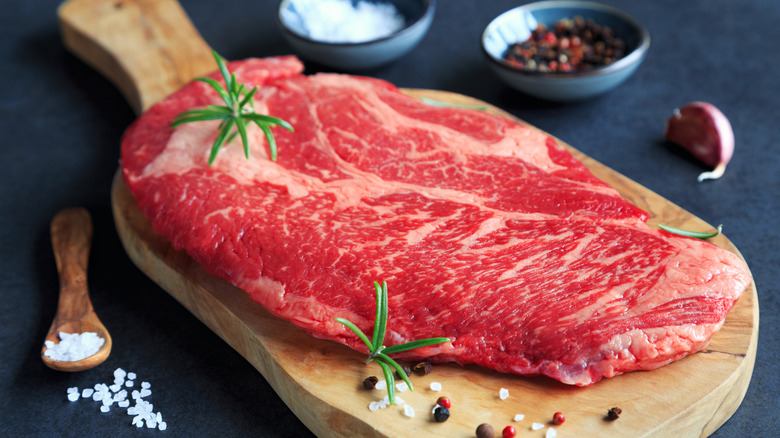
Cut from a cow's shoulder area, including its neck and upper arm, chuck steak is loaded with muscle because of how much movement it gets. For those reasons, many chefs warn that chuck is not a cut that you should typically order rare at your favorite steakhouse. Danny Grant, executive chef and partner at Maple Hospitality Group, says that the connective tissue and intramuscular structure need a longer cooking time to break down. Otherwise, they can feel "chewy rather than tender," he adds.
Chef Stephen Sandoval, owner and executive chef of Trino, a steakhouse in Chicago, agrees that chuck steak is not ideal to be eaten rare. "Think about where the cow gets the most movement—shoulders, chest, and legs. Those muscles are working all day, so they build up a lot of connective tissue and collagen," he says. For those reasons, we doubt you'd even be asked if you'd want chuck steak cooked rare at a stellar steakhouse. Instead, it might be presented in a beef stew, where it benefits from the low-and-slow cooking technique.
Flank
If you see flank steak on the steakhouse menu, it's not for you if going rare is the only way you like to eat red meat. It's also about the texture, but it can impact flavor, too, according to Australia-based Chef Jess Pryles, author of the new cookbook "Prime Cuts: The Complete Guide to Choosing, Understanding, and Cooking Meat." "The fibers are a little chewier and have a 'gummy candy-esque' texture when served rare," she says. "The flavor can also be a little more muted when served rare."
All of those reasons are because flank steak comes from a cow's underside, similar to another cut that we'll get to soon. It's known to have a bit of chew to it regardless of how it's cut, which is why a rare flank steak won't be pleasant, according to the chefs we spoke to. In fact, anything rarer than medium rare (around 130 degrees Fahrenheit) isn't recommended. And if you insist on eating it rare, Pryles says it's best to "try slicing as thinly as possible to offset the tough, fibrousness of the meat fibers." To skirt those issues, you might order a marinated flank steak that's cooked past rare, which will break down the toughness of the steak and result in a flavorful, tender bite.
Flap/Bavette
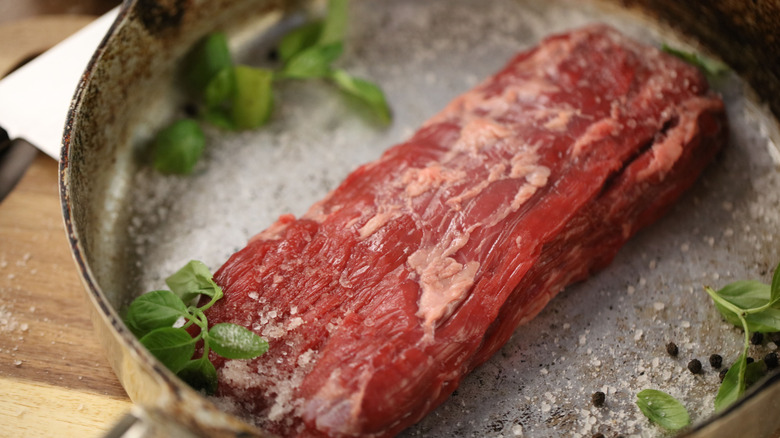
It might be listed as flap or bavette, but both of those terms refer to the same cut of steak. Regardless of how it's listed on the menu, this is the third cut that chefs say you shouldn't order cooked to rare. "There are very few cuts I'd say should never be eaten rare, but at Trino we typically recommend cuts like bavette and skirt steak closer to medium," says Stephen Sandoval. "Those muscles do a lot more work during the animal's life, so they develop more connective tissue and a coarser grain," he says.
That's because flap or bavette steak is cut from around the same area as the flank steak we described before, but it's closer to the shank. All of that movement around that area of the cow provides the same reasons why it shouldn't be eaten as rarely as flank, but there are techniques a restaurant might use to help. "Marinades can help on certain cuts, and techniques like dry aging or sous vide can improve tenderness while still keeping a rare center," says Sandoval.
However, our experts say it still isn't ideal to be eaten rare. Don't believe the experts? Skip the steakhouse and try our cherry balsamic flap steak recipe that hinges on a marinade.
Hanger
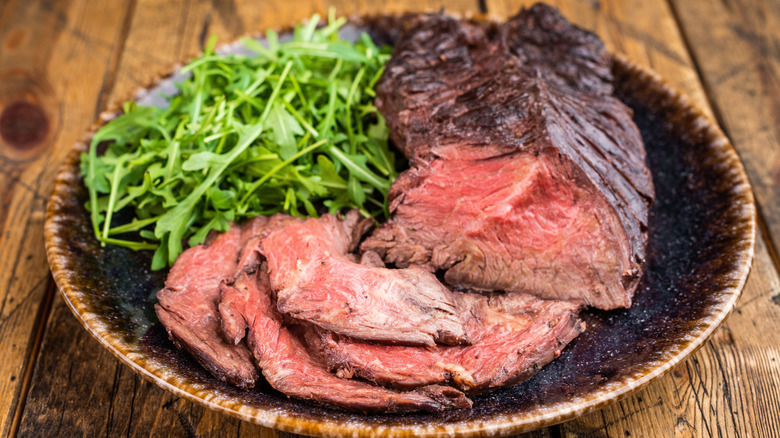
Chef Gustavo Montes, Executive Chef at Yamashiro Miami, includes hanger steak as a cut that you should never order rare. Like the others on our list, cuts like hanger steak "contain more connective tissue and longer muscle fibers, which can make them chewy and less enjoyable when served rare," he says. There is one workaround if you insist on a rare hanger steak: "The biggest technique for getting a better result is slicing properly against the grain. That's critical with cuts like skirt, flank, and hanger steak," Chef Montes says.
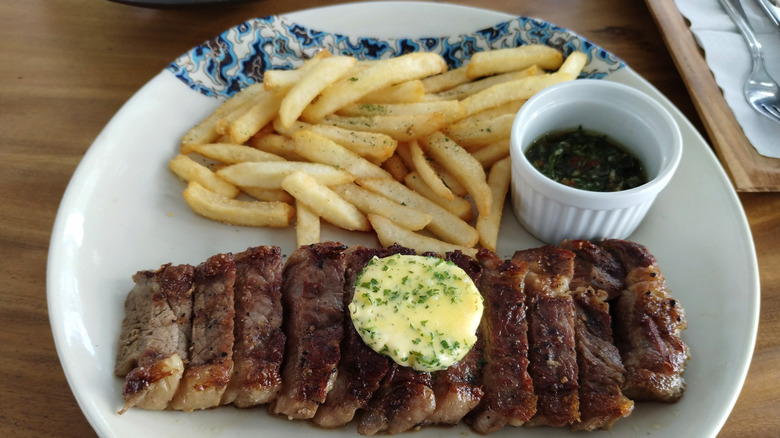
Instead, hanger steak is often served as a steak frites, per Montes; it should ideally be cooked to medium rare. The cut comes from the lower belly of a cow, so it doesn't necessarily get a lot of movement like other types of steak, but it is connected to muscles that make it chewy if not prepared properly. That means even grilled hanger steak at your go-to steakhouse might have been marinated for tenderness for quite some time. It's often sold cheaper than pricier cuts of steak that are naturally tender, so it's a good option if you don't mind a steak that's cooked beyond rare.
Skirt Steak
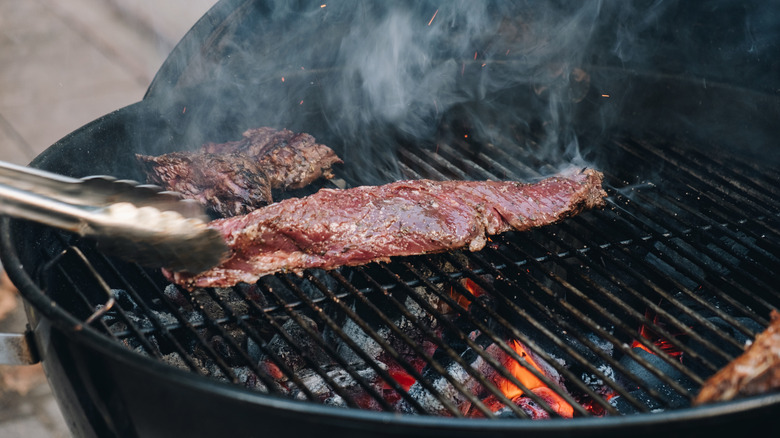
Next up is skirt steak, a cut that can be delicious but shouldn't be your go-to choice to order rare at a restaurant. Gustavo Montes says that this is due to its proximity to "harder-working muscles." Skirt steak is cut from the plate primal section around the cow's belly, and is naturally tough with a thick grain, which is why cooking it to rare won't suffice. In addition to a marinade, steakhouses and other eateries will likely recommend it to be ordered medium or medium-rare. But because it's a thin cut, it can be pulled off over high heat for a short period of time instead of a low-and-slow cooking technique like other cuts on the list.
Regardless of how the restaurant serves your skirt steak, it's important to slice it as thinly as possible, as chefs have recommended for other cuts on the list. However, Stephen Sandoval says that this cut has become popular in recent years due to flavor, which often comes from muscular areas. "In fact, skirt steak used to be considered a relatively inexpensive butcher's cut, but demand has grown so much that the price has increased dramatically," he explains. So, just because you shouldn't ideally order a rare skirt steak, that doesn't mean it won't be delicious.
Tri-Tip
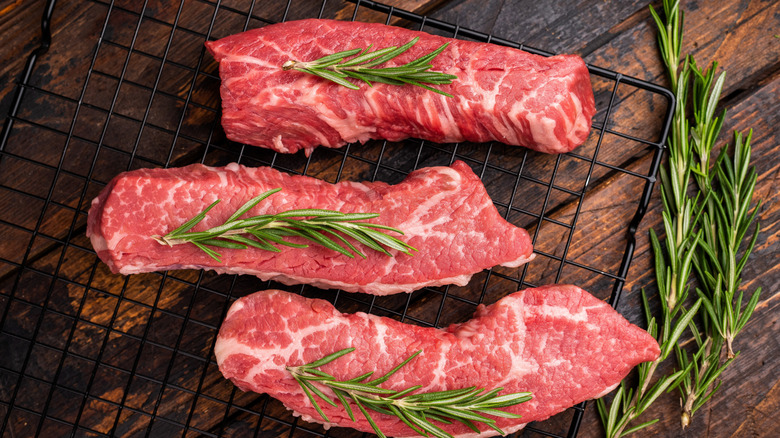
The last cut of steak that our experts say you should reconsider before you eat it rare is tri-tip. This steak was popularized in California and in South America, and is often considered a good alternative to flap steak. Tri-tip comes from the sirloin subprimal, which is located in the rear of the cow. There's plenty of marbling in a tri-tip steak, but it's also lean, and therefore shouldn't be ordered or cooked rare, regardless of your preference.
Jess Pryles included tri-tip steak in her list of cuts that shouldn't ideally be ordered rare, for the same core reasons as most of the other cuts. The lean cut could be tough if not cooked through, because that fat needs time to break down and transform into a tender bite. Instead, Pryles recommends the "medium side of medium rare" for this affordable cut of beef (as well as the aforementioned flap and flank). It also has a thicker end that takes more time to cook through compared to other cuts on our list, like skirt steak.
And just in case you are wondering what types of steak our sources say are ideal to order rare at your go-to steakhouse or eatery, filet, ribeye, prime rib, and New York strip are all delicious options.