

Use This Easy Corn Kernel Trick To Find The Best Ears At The Grocery Store
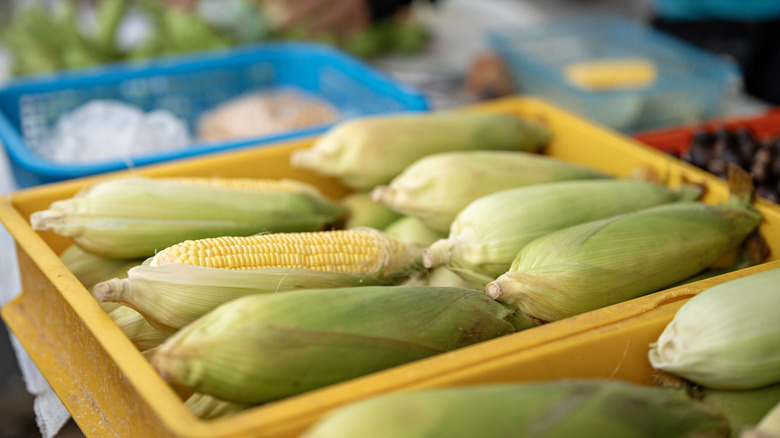
Every year when summer rolls around, we're treated to a plethora of delicious goodies like colorful tomatoes, perfectly ripe berries, and bright, juicy watermelons. It's also the prime time for corn, which usually hits its peak between May and September. The issue with corn, however, is that its kernels are often covered by the husk at the store. That makes it a little harder to figure out which ones are the ripest — but there is a simple trick you can employ to ensure you're buying the best corn on offer.
First, peel back the husk a little bit, but don't worry, many markets and stores provide bins so that people can shuck their cobs right on site. This is because the kernels can reveal a lot about when the corn was harvested. If they're plump, it means they're perfectly ripe. But if you want to be sure, stick your fingernail into one of the kernels. A liquid will ooze out, and it should be a milky color.
This indicates that the sugars inside the corn are at their peak level, so it will taste nice and sweet. If the liquid runs clear, the corn was harvested before the sugars fully developed, so your corn on the cob won't have as much flavor. If there is no liquid at all, it's overripe and won't be juicy. The nail test is easy and reliable, but it's just one of the signs to look out for when buying corn on the cob.
Look at the husks of corn on the cob to see if its ripe
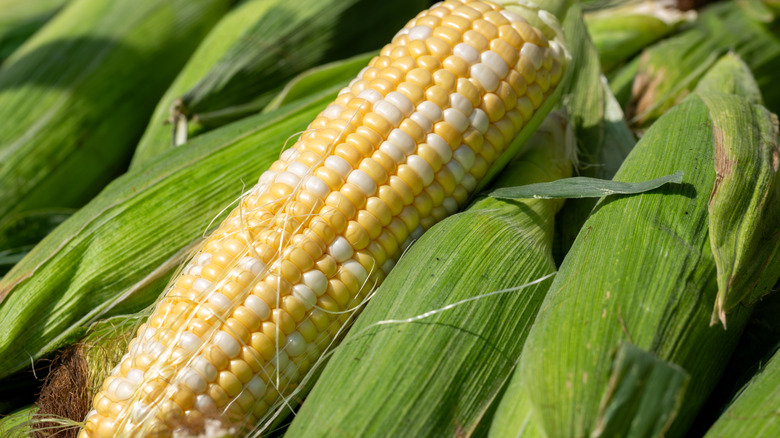
The husks can also give you some indication of which ears are ripe. They should be vibrant green and fit the corn perfectly. If they are dry, the corn is past its prime. The end where the corn was cut from the stalk should also be pale, as this indicates it was harvested recently. If it's brown, the corn has been sitting around for a while.
Corn silks are also loaded with insights into the quality of the cob. These are the hair-like wisps that stick out from the top of the husk. If they're yellow, the corn probably hasn't fully matured, but if they're a darker color, the corn should be ripe. The silks turn black when the corn sits out for too long, which means you've missed out on its peak freshness level.
The sweetness clock goes very quickly once corn is picked. Up to 60% of the sugars in corn, which largely determines quality, may be converted to starch in a single day after harvesting. You're more likely to find fresh corn at stores that buy directly from farmers versus wholesalers. If you're unsure where your local market gets its produce, look for stickers or ask. When you find the perfect husk, here's the best way to cook corn on the cob – and you can put corn husks and silks to use in the garden.