

The Reason People Believe Guinness Is 'Good For You' Goes Back To The 1920s
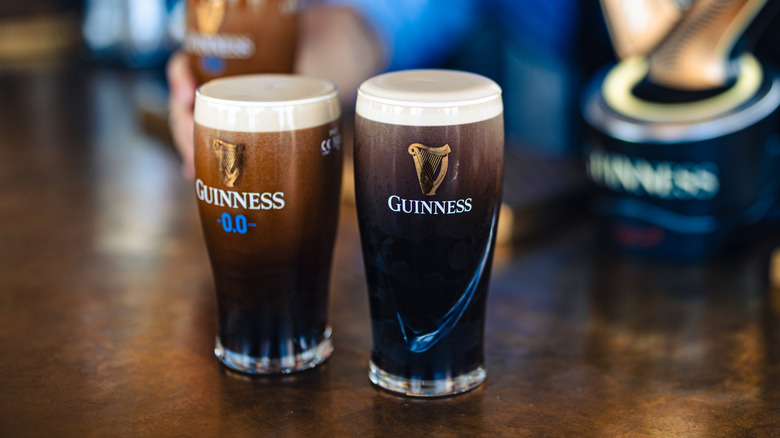
For decades, Guinness let its stout speak for itself. When the company embraced advertising in the late 1920s, its first slogan was as noteworthy as its beer. In 1929, "Guinness is Good for You" was linked to the brand — and it has certainly made a lasting impression.
Even if you think you know everything about Guinness, you may be surprised to learn that the phrase was primarily based on local market research and not substantial health claims. When Guinness-drinking pub-goers were asked about the beer and how they felt after drinking a pint, they replied that "they thought it was good for them" (via Royal College of Physicians). Encouraged, Guinness contacted doctors for personal accounts, many of whom reported using Guinness as a kind of tonic for their patients. The beer was suggested to pregnant women and post-op patients, as pints were thought to be a solid source of iron. Guinness took that information and ran with it. Even today, the association of Guinness as a potentially healthier beer persists, but the brand is careful not to make any sort of definitive claims.
Toasting to fact and fiction

Iron is part of why the "good for you" claim has had staying power. Guinness was made with a yeast that gave it a higher iron content for its time, and doctors of the era would prescribe it to patients. "After having my son in London [in] 1978[, I] was anemic and the hospital gave us a half pint of Guinness every night," commented one user on Facebook. The reality is, however, that a pint of Guinness offers only around 0.3 milligrams of iron. For comparison, one egg yolk contains about 0.46 milligrams of iron.
Some studies state that Guinness also contains more B vitamin folate and more fiber than other beers since it is made with unmalted barley. The Irish stout is comparatively considered lower in calories than some other beers, with calories in a Guinness Draught only slightly higher than a Bud Light. Some modern publications suggest that moderate alcohol consumption could decrease the risk of a heart attack and benefit the gut microbiome, but the research doesn't specifically focus on Guinness. Furthermore, many beers are said to offer benefits like vitamin B, fiber, and antioxidants – not just Guinness.
At the end of the day, too much of anything can cause issues, and doctors caution those who choose to drink alcohol to do so with moderation. If you're looking for the purported benefits sans alcohol and want to split the G, Guinness 0 is a solid bet.