

8 Store-Bought Sweet Treats Boomers Miss
We may receive a commission on purchases made from links.
If you were to ask the average American what their favorite sweet treat is today, there's a good chance they'd say something like Sour Patch Kids or Skittles, or maybe Dubai chocolate, or a Starbucks iced latte loaded up with sugary syrup. But a few decades ago, the kind of indulgences children, teens, and adults were enjoying looked a little different.
We scanned social media (primarily Facebook and Reddit) to find out which store-bought sweet treats Boomers miss the most. And we found some pretty interesting candy, cakes, and cookies from the past. For example, did you know there was another Oreo-like cookie before Oreo was a thing? And that there have been different types of Milky Way?
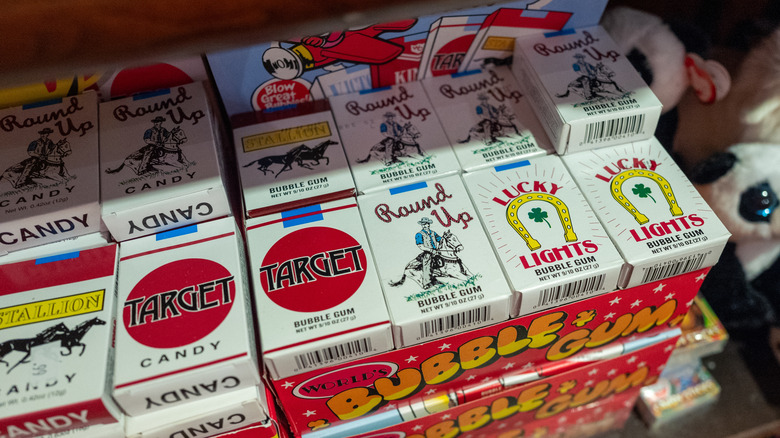
If you grew up in the 1950s, 1960s, or 1970s, this is all probably sounding quite familiar. If you didn't, some of this might surprise you more than a little (ahem, candy cigarettes).
Butter-Nut candy bars
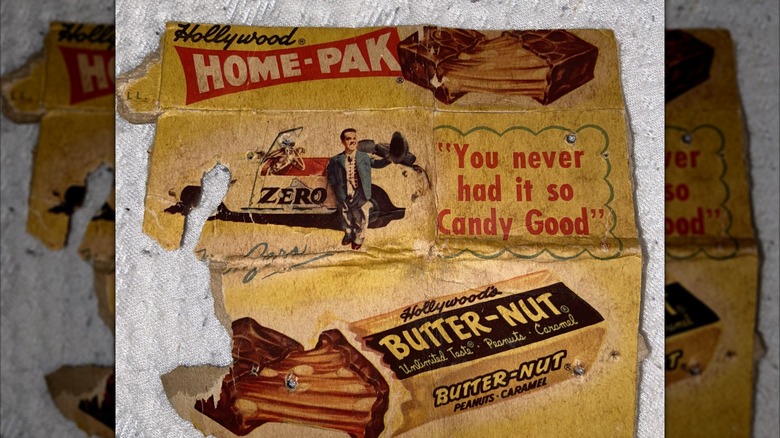
Founded in 1912 by former macaroni maker Frank Martoccio, The Hollywood Candy Company (based in Hollywood, Minnesota) churned out many of the 20th century's most popular candy bars. Payday, Zero, Milkshake — they all came from Martoccio's brand, which, like many entrepreneurs at the time, started in a bid to compete with Hershey's and get in on the candy bar boom of the early 1900s.
One of the first candy bars to come from The Hollywood Candy Company, and arguably, one of the most beloved, was Butter-Nut. As the name suggests, Butter-Nut candy bars were a mix of caramel and peanuts, encased in a milk chocolate shell, kind of like today's Snickers bars. While popular, the candy bars didn't last out the century — The Hollywood Candy Company was sold in the 1960s, which is, coincidentally, when many remember having their last taste of a Butter-Nut bar. Although some remember them sticking around a bit longer, until Hershey bought the Hollywood Candy portfolio in the 1990s.
For many Boomers, modern candy bars can't fill the Butter-Nut-shaped hole in their hearts. There is even a Facebook group, currently with nearly 400 members, dedicated to bringing them back. "Hershey has the right to Butternut candy," said one user on Facebook in another group devoted to memories from the 1970s. "Please sell them again. I loved it and would love to taste that buttery chocolate and nut taste again." Another added: "I think [Butter-nut] was the best chocolate bar ever."
Forever Yours candy bars
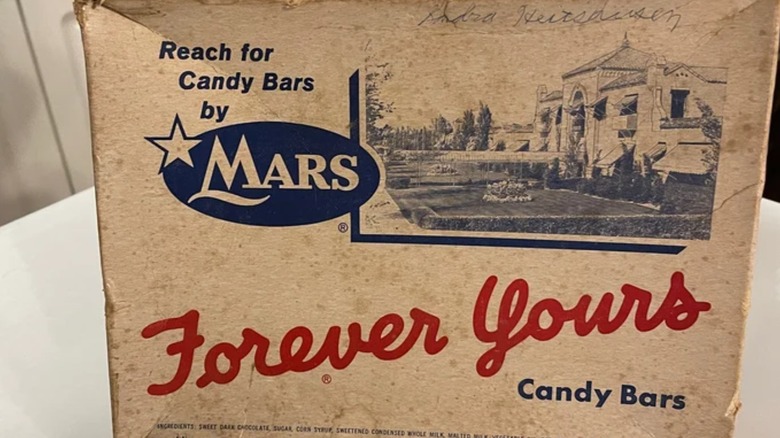
As we mentioned earlier, the candy bar market was pretty crowded in the early 1900s. And alongside Martoccio, another major player in the industry was Frank Mars. Yep, Mars as in Mars, Incorporated — in fact, Mars' son, Forrest Sr., would go on to invent the Mars Bars in the 1930s. But we're getting ahead of ourselves. A few years before Forrest's now iconic creation, Mars would create household favorite Milky Way.
That candy bar, a combination of hard chocolate shell and chewy nougat, came in two flavors, chocolate and vanilla. And in the 1930s, the vanilla Milky Way recipe was upgraded and given a new name, Forever Yours. And boy, do some Boomers miss that fluffy, gooey, vanilla-flavored candy treat with dark chocolate, which was discontinued in the late 1970s.
Fortunately, though, some got to taste Forever Yours again in the 1980s, when Mars brought out a very similar chocolate bar, called Milky Way Dark. And then again in the 2010s, when it came back as Milky Way Midnight. The Midnight candy bars are available as of this writing, but if you're nostalgic about the Forever Yours-like taste, don't hesitate to stock up, as Mars has been known to pull them from distribution when demand drops. If it's the old-school packaging and design you miss, that's a little harder to come by, but not impossible. In fact, there are often old print advertisements and Forever Yours candy boxes for sale on eBay.
Banana Flips
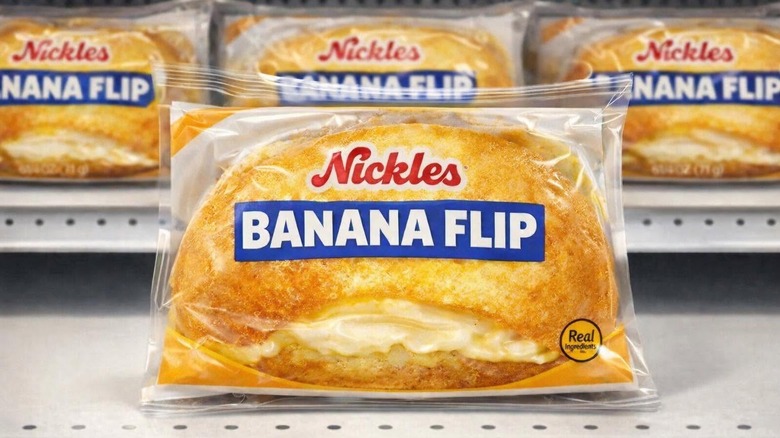
If you were a school kid in the 1960s or 1970s, you might have been lucky enough to have a chocolate candy bar in your lunchbox, sure. But if you had a really sweet tooth, you might have had a Banana Flip instead.
Produced by Nickles Bakery, Banana Flips were kind of like cake tacos. The outside was a soft, fluffy banana sponge shaped like a semi-circle, while the filling was super-sweet banana cream. "These bring me so many childhood memories please bring them back," pleaded one person in a Reddit thread about Banana Flips in the 1970s. "I miss these so much just as I do my family members that bought them for me as a child."
According to some who remember them, they tasted just like a Twinkie if it were filled with banana creme. Still, many say the modern Banana Twinkies are not anywhere near as good as old-school Banana Flips. Nickles wasn't the only bakery to produce a Banana Flip; rivals like Hostess and Dolly Madison made their own versions, too, but, unfortunately for nostalgic Boomers, none of them are on the shelves today. "Boy I wish they would bring these back," wrote one Facebook user. "I can almost taste them."
Penny candies
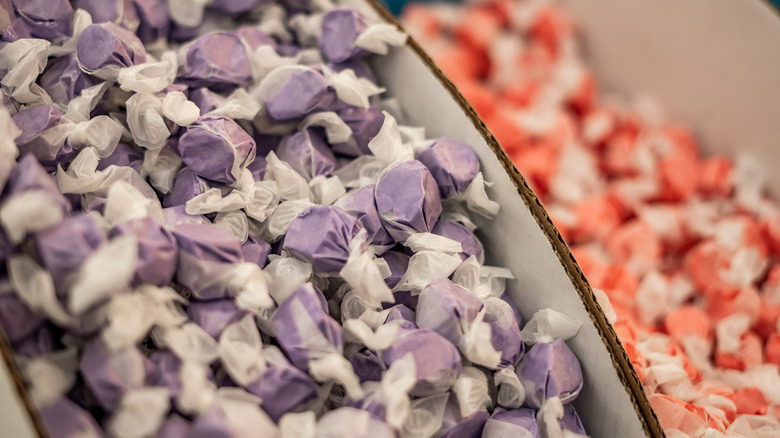
Before Hershey, Mars, and The Hollywood Candy Company were battling it out in the early 1900s to make the perfect chocolate candy bar, many American kids got their sweet treat fix from penny candies. The clue is in the name, but these were usually small candy pieces sold for one cent. There were many different kinds, but some of the most popular and first types were Tootsie Rolls and lollipops.
The birth of the chocolate candy bar industry created more competition for kids' taste buds, but it didn't erase penny candy. In fact, many Boomers still remember heading to the penny candy store to stock up on these small, sweet treats when they were children in the 1950s, 1960s, and 1970s. The choice had expanded, too, to include candies like BB Bats (flavored taffy on a stick) and Brach's Neapolitan Coconut Sundaes (basically small chewy squares).
For some, choosing among candy was tough, but choosing between cheap toys available from the same stores (like DIY wooden planes for 10 cents) made it even harder. "I remember going down to our neighborhood little store with 25¢ to buy penny candy and it was always a hard decision for me if I wanted to spend a big part of my quarter on this plane or spend it all on candy," reminisced one Facebook user in a Facebook group for Baby Boomers.
Betty Crocker Snackin' Cakes
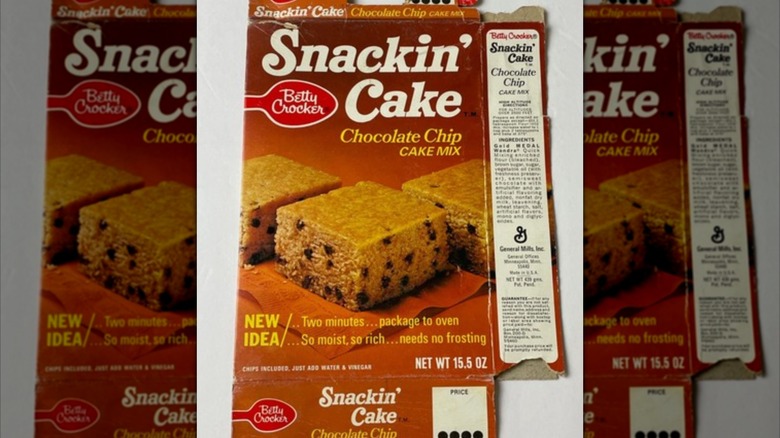
Betty Crocker has been making sweet treats for the American public and beyond since the 1920s. In fact, she might be entirely made-up, but she is arguably one of the most influential bakers and cooks in American history, thanks to the many cookbooks, cake and cookie mixes, and tubs of easy premade buttercream-style frosting sold under her name.
But not all of Betty Crocker's beloved products have stuck around for the long haul — much to many people's dismay. One long-lost love is Betty Crocker's Snackin' Cakes, which first hit the market back in 1972. They were popular partly because they were incredibly easy to make (they came together in just a few minutes in only one pan), but also because they were pretty indulgent, too.
Unfortunately for fans of the Snackin' Cakes, they were discontinued in 2012, but many still reminisce about the mixes years later. "I loved them!" exclaimed one Facebook user in a group dedicated to 1970s memories. "The chocolate chip was divine," another remarked, "I liked the golden chocolate chip. They were just right for a quick dessert."
Hydrox cookies
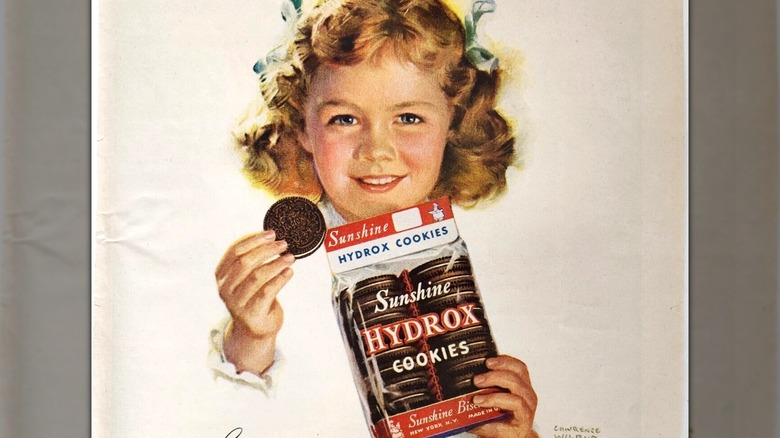
Before Oreos, there was Hydrox. No, we're not talking about a chemical mix of hydrogen and peroxide (although that's what it sounds like), but a real chocolate sandwich cookie filled with cream. The cookies were launched by Sunshine Biscuits in 1908, four years before Nabisco brought its Oreos to market, and while they were certainly outshone by their very similar, slightly sweeter counterpart, they managed to stay popular for a few decades. Yes, despite that very interesting choice of a name.
In fact, many Boomers remember eating Hydrox cookies when they were kids, and plenty maintain that they were better than Oreos, despite the very similar recipe and look. "Hydrox had a deeper dark chocolate taste," noted one Facebook user in a Baby Boomer group. "Much better!" another chimed in: "Loved the Hydrox cookies. I have never been a fan of Oreos, too sweet possibly, [and the] chocolate cookie [was] not as flavorful, just never cared much for them."
Due to the immense success of Oreo, Hydrox faded into the background over the 20th century. By the early 2000s, they had disappeared from the market. In the mid-2010s, Vernon, Califronia-bases candy company Leaf Brands tried to bring Hydrox cookies back. They had some success, but they seem to have run into trouble with production in recent years, and at the time of writing, they are unavailable online.
Candy cigarettes
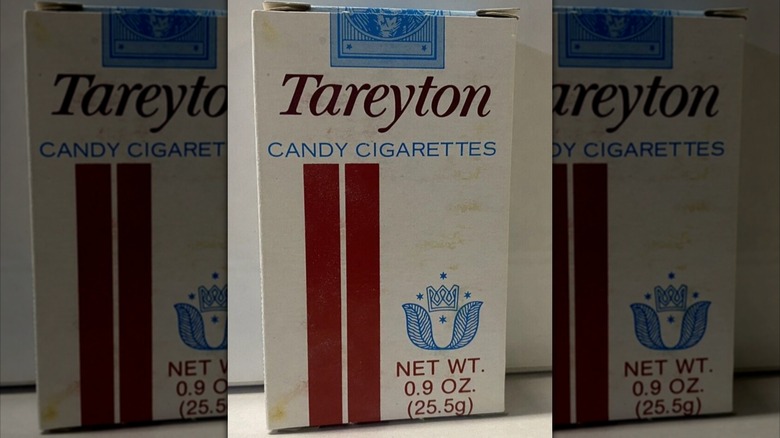
It might be difficult to believe now, but there was a time when cigarette companies made products for kids. They weren't handing out paper cylinders of tobacco and chemicals to little ones, of course. Instead, they were selling them candy that looked the same as cigarettes, puffed out smoke-like candy dust, and even came packaged in cigarette-like boxes complete with strikingly similar branding. Harmless, right? Not at all. Since then, research has suggested that kids who played with and ate candy cigarettes were more likely to smoke when they were older. Go figure.
Still, in the early-to-mid 20th century, people weren't as fussed about smoking and its potential health hazards. People knew smoking was dangerous by the 1950s, but the cigarette companies didn't back down. They persistently marketed to adults, and they kept selling those candy cigarettes, too.
And listen, many know that these candy cigarettes, now banned in several countries, were problematic, but that doesn't change the happy memories many Boomers have playing with them. "I remember [candy cigarettes]!" said one Facebook user in a Facebook group dedicated to 1950s memories. "Those were so cool!" In a separate Baby Boomer group, another added: "We used to imitate the [adults'] gestures while pretending to smoke them."
Nestlé Choco'Lite
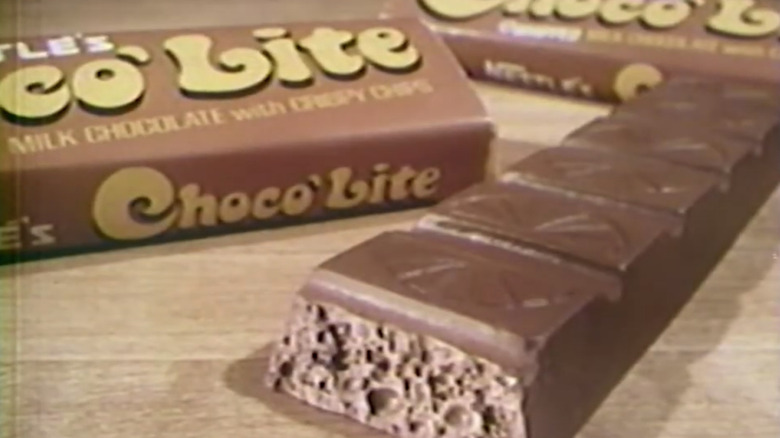
Nestlé might have started out in the baby food industry, but, of course, over the years, it has expanded into everything from convenience food to nutrition to candy. And in the 1970s, it created one particular chocolate bar that many Boomers at the time loved: Choco'Lite.
Choco'Lite bars were made with creamy milk chocolate, but it was the puffed crispy chips inside that gave them their signature crunchy texture and made them a firm favorite for many. Fun fact: They were the first aerated chocolate bar to be sold by Nestlé in America. "This and the Marathon Bar were my favorite candy bars ever," claimed one Reddit user in the r/70s subreddit, with another saying, "These were great, with a wonderful melt-in-your-mouth quality."
But it seems the popularity didn't last, and Choco'Lite bars were retired in the early 1980s. According to one Redditor who claims they worked for Nestlé in the 1980s, demand dropped for Choco'Lite largely because of its name. As they pointed out, many people during the era associated the word "lite" with dieting. "The idea of diet chocolate made no sense to people," they explained.