

How Medieval Lasagna Was Flavored Without Tomatoes Doing The Heavy Lifting
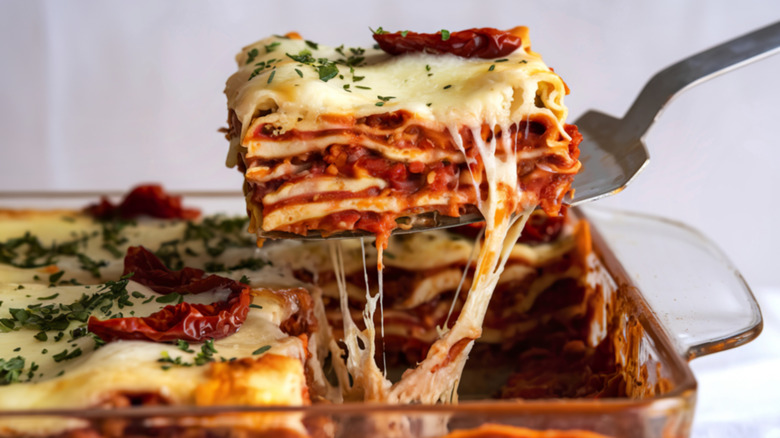
While you might associate them with Italian cuisine, tomatoes are actually a Mexican crop that wasn't introduced to the Old World until long after Christopher Columbus sailed the ocean blue. Believe it or not, Italian cuisine existed long before red sauce graced pasta dishes. To that effect, no tomatoes were to be found in medieval lasagna.
Lasagna originated before Italy was even a country, appearing as early as ancient Greece and Rome. The earliest versions of lasagna were simply deep-fried circular sheets of pasta. While the deep-fried version persisted into the Middle Ages, the most popular medieval lasagna featured small, three-finger-wide sheets of pasta made with eggs, flour, and water or milk, cooked in beef or fish broth. Instead of tomato sauce, medieval cooks took advantage of the wealth of spices imported into the region from Africa and Asia. A typical medieval lasagna was layered with a generous sprinkle of spice mixes like peppery grains of paradise from Africa, as well as ginger, cinnamon, nutmeg, and clove. Sometimes, even sugar made an appearance. After layering the pasta sheets with spices, another layer of shredded Parmesan cheese was added, and voila, you had medieval lasagna. The heat of the sheets bloomed the flavor of the spices while delicately melting the cheese without the need for baking them; these dishes were assembled directly onto a plate and eaten by stabbing the pasta sheets with a stick.
Modern lasagna and overlaps from medieval recipes
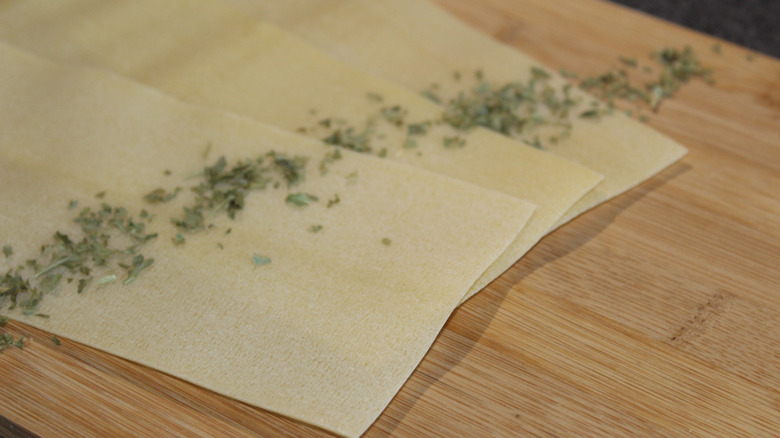
Lasagna may be a medieval dish we still eat today, but over the past handful of centuries, it has become something that looks nothing like the medieval version. The only thing the two varieties have in common is that they're layered. Not only do we use different types of cheese, most popularly ricotta and mozzarella, but the pasta sheets themselves are longer and wider, and the dish is layered with sauces and baked. Of course, tomatoes are a crucial ingredient, but there are as many white lasagna recipes as there are red lasagnas. We'd also argue that your lasagna isn't traditionally Italian without adding a layer of béchamel, a key layer in the classic lasagna alla Bolognese. Bolognese certainly has tomatoes in it, but instead of tomato sauce, you'll use crushed tomatoes or tomato passata and tomato paste.
If you want to bring a medieval element to your next lasagna, you can give your tomato sauce or meaty ragù a spicy kick with grains of paradise, which actually belong to the ginger and cardamom family. If you want to incorporate ginger, cardamom, and cinnamon into your lasagna, they'd be the perfect ingredients for a fall-inspired lasagna with pumpkin puree, creamy ricotta, rich Gruyère, and nutty parmesan. Of course, you can infuse flavor into the lasagna sheets by cooking them in broth. The Italian lasagna in brodo takes things a step further by adding hot broth to each layer of meat, cheese, and pasta sheets before baking.