

If You Spot This Red Flag At Your Grocery Store Meat Department, Run Out The Door
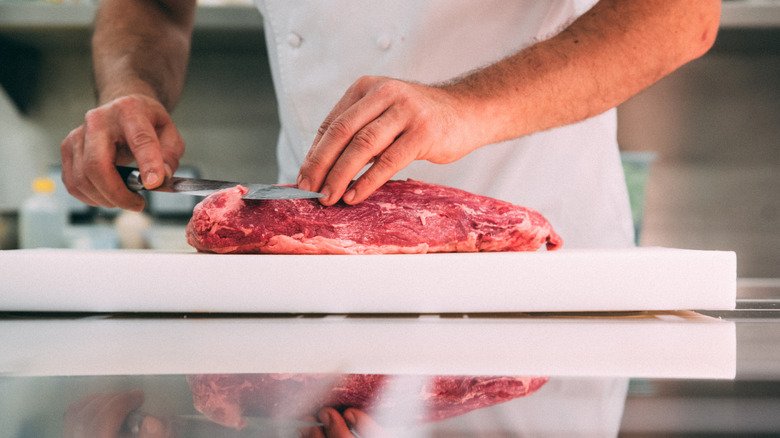
A good grocery store meat department often will provide both the best quality and value. But shopping for high-quality steak and other meat often comes down to something much more than the premium cuts offered, or even ethical meat sourcing. In fact, if you see one major red flag at your grocery store's meat department, don't walk; run out the door: an unclean space. Signs of unsanitary meat-handling practices can be spotted easily — helping you avoid buying beef or chicken from a place where possible contamination may occur.
You can check for an unclean meat department by looking at two main areas: the surfaces of the meat counters and storage containers, along with the hygienic dress elements that the employees are (or aren't) wearing. While cleaning supplies and chemicals shouldn't be in direct contact with meat handling areas, the surfaces should appear clean and free from leftover debris, like ground beef or spilled meat liquids. Workspaces should be regularly maintained and sanitized daily, so if they appear greasy, unkempt, or messy, this is an important red flag you shouldn't miss.
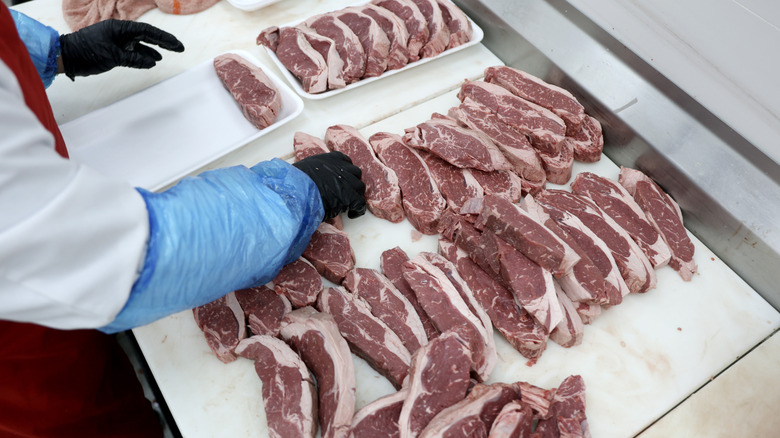
Meat department employees should also wear hygienic clothing. This includes visibly clean aprons, gloves, and hairnets or beard covers. If any of these factors are missing, it could indicate that important sanitary practices are not being observed.
Less noticeable red flags in the meat department
Another factor, though perhaps less noticeable, you should look for at your local grocery store's meat department is the presence of clear and well-maintained food safety management systems. Labels on containers of meat or thermometers in the meat cases that monitor temperatures to ensure they stay out of the bacterial "danger zone" are examples of good safety protocols in place. You may also notice meat department employees performing regular temperature checks on the items in the case.
Raw meat cases shouldn't be overcrowded with meat, as this can increase the internal holding temperature and increase the risk of bacteria or food-borne illness spreading. To further prevent cross-contamination, prepared meats like deli products or chicken salads should be clearly separated from raw products.
Meat department employees should always wear gloves when handling raw or ready-to-eat meats, and they should never go directly from handling raw meats to ready-to-eat items without washing their hands and changing their gloves or protective dress. If you still find these unsanitary red flags hard to spot, we've got your back with a list of the grocery chains with the worst meat departments. That way, you can make an informed choice on where you prefer to shop.