

Lump Vs Briquette: How To Decide Which Charcoal Your BBQ Needs
We may receive a commission on purchases made from links.
As convenient as gas or propane-fired grills are, good old charcoal just can't be beat. You can't get the deep, wood-smoke flavor when you grill your burgers and steaks on a gas burner — that's a strictly charcoal grill thing. Plus, plenty of grillers can agree that the ritual of firing up and stoking the red-hot coals is half the fun. But if you're new to charcoal, here's the thing: you've got two choices for fuel, and they're quite different — either lump or briquettes.
Lump charcoal is precisely what most people imagine coals to be: big blocks of carbonized, natural hardwood. Briquettes, on the other hand, are a more industrial product made from compressed wood byproducts such as wood shavings and sawdust. To make them easier to light and burn longer, briquettes usually include other ingredients such as cornstarch and sodium nitrate, and some are even impregnated with lighter fluid.
Lump is the purist's choice, whereas briquettes are the pragmatist's. But their differences go much deeper than how they're made — they also behave differently once they're in your grill.
The cases for lump or briquettes
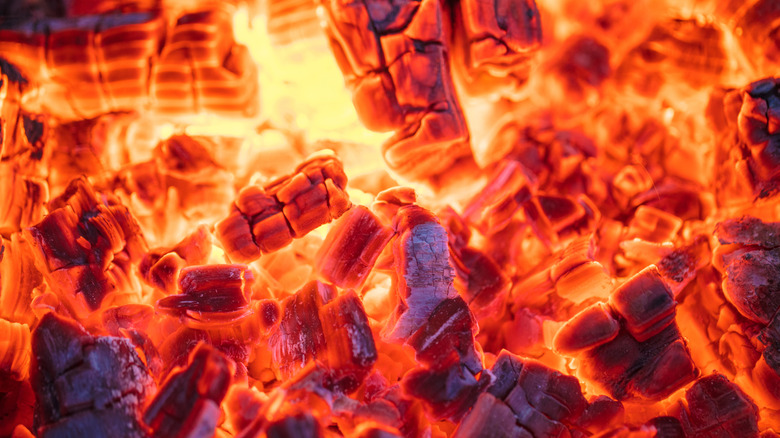
If maximum flavor, temperature, and fire control are what you're after, lump charcoal is hard to beat. Since it's pure hardwood with no additives, it tends to deliver a cleaner, more pleasantly smoky flavor (you can pick the kind of wood to give your food precisely the scent that you're after). Lump doesn't have any additives, so you'll have less ash to clean up once you've finished cooking — and as the pieces are so big, you can often reuse them for a second cook. You'll also find lump charcoal to react more quickly to changes in airflow. When you open a vent, the temperature will begin to rise fast, and when you restrict oxygen, it settles just as quickly. This responsiveness makes lump charcoal the go-to for chefs who typically do drawn-out cooking sessions where that near-real-time heat control is valuable.
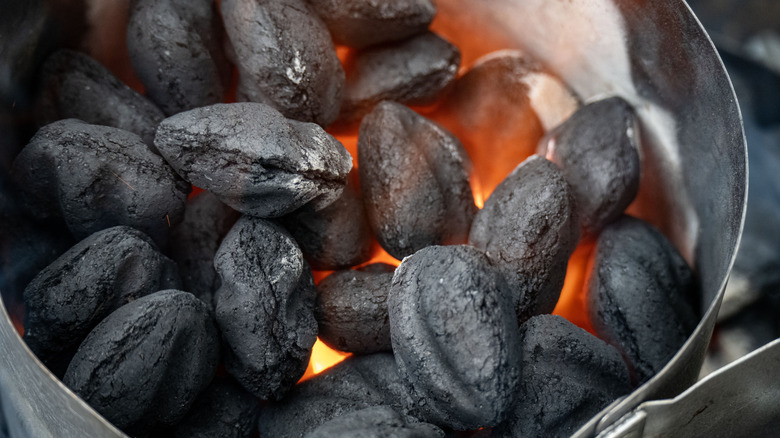
A drawback with lump charcoal is consistency. Pieces vary wildly in size, which means filling a chimney starter — a recommended method for lighting lump — can be awkward; one oversized chunk can throw off your heat output and cooking time before you even get started. Briquettes solve that problem (almost) entirely. They fill evenly, light quickly, and burn consistently, which is exactly why many cooks reach for them when grilling something straightforward like marinated vegetables or chicken wings.
The tradeoff with briquettes is that the additives can sometimes produce an unpleasant smell as they burn off, and they generate more ash over a long cook. If you want to skip the additives entirely, all-natural briquette brands such as Cowboy Hardwood Charcoal Briquets and Royal Oak Natural Organic Premium Briquettes, which use only a vegetable binder, are worth seeking out.
Here's how to choose the right kind of fuel for you
Let's get it right out of the way: neither is better than the other. The "best" one for you will come down to how you like to cook. Lump charcoal burns at a higher temperature but tends to burn down faster, which makes it a natural fit for searing steaks or cooking burgers — anything where you need an intense, direct blast of heat. Experienced grillers who enjoy reading and adjusting a fire in real time will find lump more rewarding to work with. The irregular piece sizes that frustrate beginners may actually become a boon down the line once you become more skilled with the grill, as they let you build heat zones more easily.
Briquettes are your tool for indirect cooking — they'll burn longer, stay cooler, and hold heat steady. Need ribs for hours? A whole spatchcocked bird? Briquettes won't flake out on you. If you're a casual griller, they're also more forgiving, so you can walk away and mingle without having to constantly babysit the grill.
So if you're just starting out, briquettes will be your best bet. They're much more forgiving than lump (especially the kind with lighter fluid added). Once you know what you're doing, you can level up your game by mixing them together or switching entirely to lump. That way, your first backyard BBQ can be a fun and exciting experience without anything burning or the fire department being called.