

Why America Banned This Common Type Of Beef
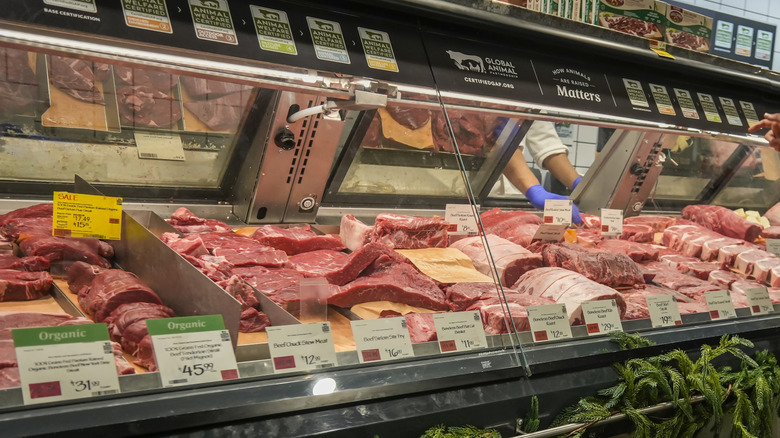
The phrase "mechanically separated meat" doesn't exactly make one's mouth water, but for years, it was a common method for processed beef products. It's created once an animal has been fully processed; the leftover carcass of bones and tissue are squeezed through a high-pressure machine. What emerges is a finely textured meat paste used in certain processed foods like hot dogs or chicken nuggets, but in 2004, mechanically separated beef was banned, setting off one of the worst food recalls in U.S. history.
Concern over mad cow disease, or bovine spongiform encephalopathy (BSE), which had originated in the United Kingdom was the reason for the ban, particularly after a cow was infected in Washington state in 2003. Scientists figured out the infectious proteins were concentrated in the cow's brain, spinal cord, and other nervous tissues. The fear was that these tiny bits of tissue could potentially enter the finished product while being mechanically separated, increasing the risk of infection to humans. The USDA moved surprisingly quickly and tightened its meat-processing regulations, leading to the formal prohibition of mechanically separated beef in human food.
Interestingly, mechanically separated meat is still allowed in poultry and pork. In fact, it's actually how bologna is made. The general consensus was that BSE is a unique cattle disease, so regulators focused only on banning this type of beef product. But if you want to avoid any kind of mechanically separated meat, you'll do well to read labels on packaged deli meats.
The ban began because of mad cow disease fears
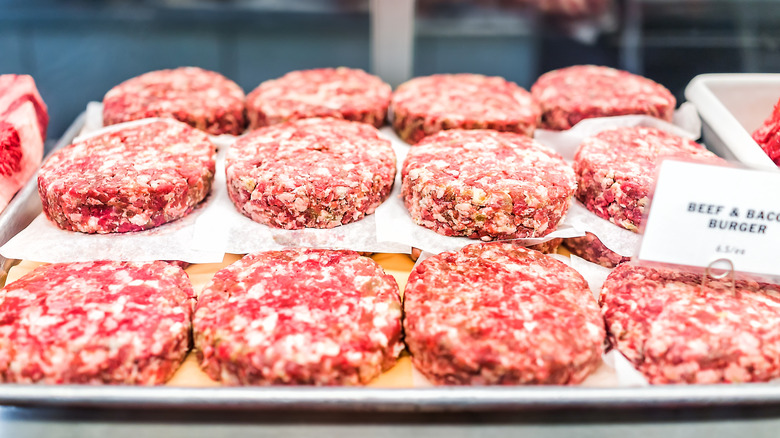
You're probably wondering how burger patties and meatloaf are made if this type of beef processing is banned. This is where meat labeling gets really technical. Those beef products are made with what we officially call "lean, finely textured beef." You might also know it by its adorable nickname, "pink slime." Though you'd be forgiven for thinking pink slime was once in McDonald's Chicken McNuggets, it was actually in the chain's burgers until 2011. This particular beef paste is legal, even though the meat is often contaminated with bacteria and has to be treated with ammonium hydroxide, an industrial-strength cleaning product.
There's yet another way the sausage is made, and it's also got a somewhat nebulous name: Advanced Meat Recovery. This is yet another technological process that strips as much meat and tissue as possible from the bones. Though it sounds suspiciously similar to mechanically separated meat, AMR doesn't crush or pulverize the bone. The beef also has to be free of spinal cord, brain, or any tissue from the central nervous system to pass federal regulations.
Though these peeks into industrial meat production can be stomach-churning, it's good to know what and why different types of meat present certain types of risk. There's a reason why ground beef is often recalled, and much of it has to do with the processing. It's food for thought the next time it's Burger Night.