

How To Choose The Best Pork Tenderloin At The Grocery Store For The Juiciest Results
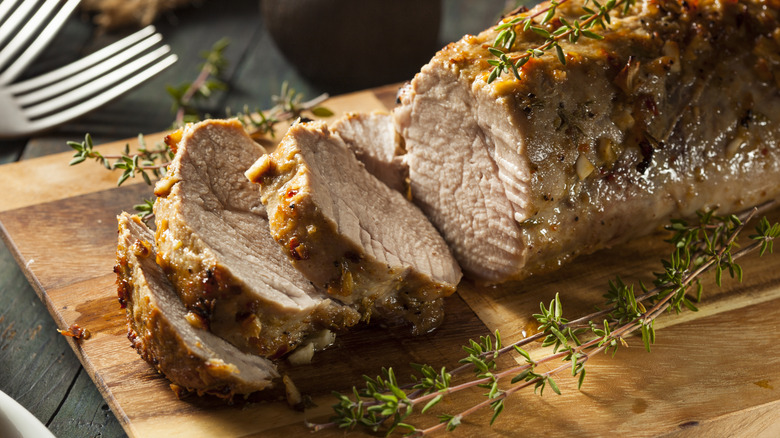
A pork tenderloin is a wonderful thing. The tender, mild meat takes on whatever flavors you choose for it, and can be sliced into beautiful butter-soft medallions. All it takes is one or two mistakes with pork tenderloin, though, and that juicy, flavorful roast comes out tough, dry, and bland. To help us lock in the best technique for pork tenderloin, we sat down with Christie Vanover, head cook and pitmaster for Team Girls Can Grill, and a contestant on Food Network's "BBQ Brawl."
"Anytime you buy fresh meat, you should check the sell-by date and make sure that the meat feels cold," she says. Beyond ensuring that the vendor has properly cared for the meat, it's largely down to your personal tastes. "Most grocery store pork tenderloins are going to cook the same," Vanover says. "The key to juicy pork tenderloin isn't as much about the meat that you buy. It really comes down to cook temperature."
The most expensive cut of pork at the grocery store, tenderloins are generally sold in vacuum-sealed two-packs, so you can grab any package off the shelf. That said, questions of both breed of pork and seasoning can influence the quality of your choice. "You'll really only start to notice better-quality pork when you order different breeds online like Duroc or Korobuta, which is also called Berkshire," Vanover explains. If you're looking for a luxury tenderloin, search for those. Otherwise, any will do, though seasoning is the next big question.
Technique is the key to good pork tenderloin
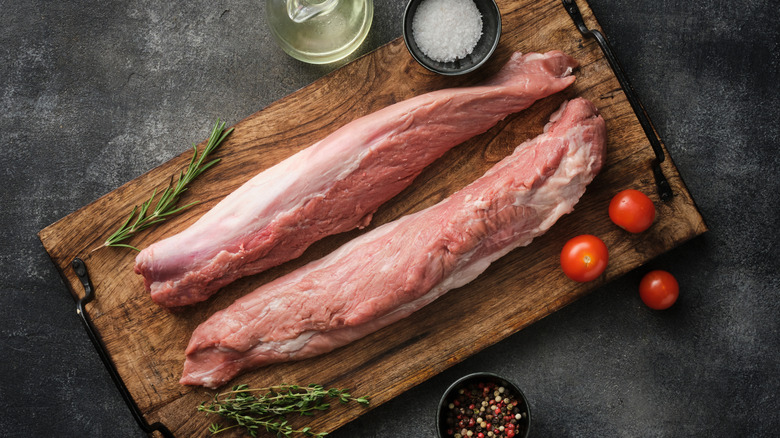
Because of its natural mildness, pork tenderloins are often sold pre-marinated with intense flavors like lemon and garlic, caramelized onion, mesquite bbq, or teriyaki. As Vanover explains it, these packages are often loaded with flavor enhancers that can result in a juicier final product, but also strip the cook's ability to design their own dinner. "Personally, I prefer seasoning pork tenderloin myself, so I tend to avoid the pre-marinated packages," she says. "I like to have more control over my ingredients."
Picking up a pre-marinated pork tenderloin can be a time-saver, but for those that like to exercise their culinary creativity, this cut of meat takes well to a wide variety of flavors. Aside from the pork tenderloin seasoning ideas pulled straight from the marinated packages, you can also have a look at recipes like this simple roasted pork tenderloin, or this balsamic-glazed pork tenderloin with roasted apples. For juicy results, you still need to nail the cook.
"You should cook it to 145 degrees Fahrenheit degrees internal temperature and then let it rest," Vanover suggests. This is the ideal temperature for perfectly cooked pork, considerably lower than the old USDA recommendation of 160 degrees Fahrenheit. With the right cook, any tenderloin you choose will come out tender, juicy, and delicious.