

Here's How Costco Decides Which Kirkland-Brand Products To Make
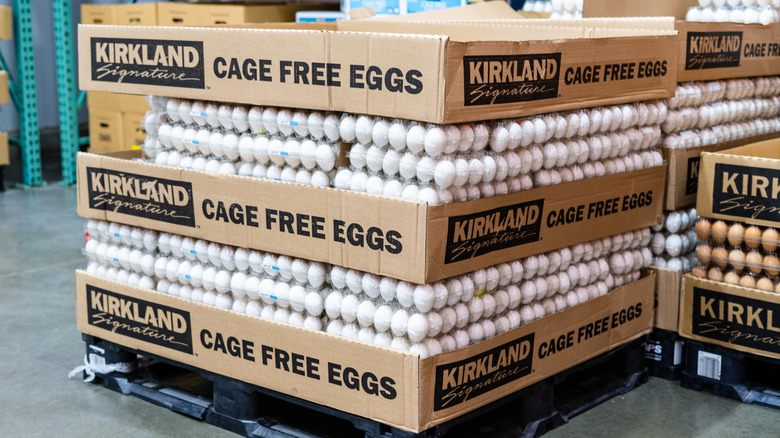
Kirkland is Costco's... well, signature. It's cheaper, can be bought in bulk, and has comparable (sometimes even better) quality to its branded counterparts — it's no surprise that Kirkland alone is responsible for a third of the warehouse chain's annual sales (via The Wall Street Journal). The catalog is sizeable, with about 550 different SKUs, so you're not short of options. Though that also raises an obvious question: How exactly does a product earn that iconic white-and-black label in the first place?
Fortunately, in a recent interview with The Wall Street Journal, Costco CEO Ron Vachris walked us through the process that Costco uses to determine what's the next big thing for the Kirkland brand. It starts with the buying team, which tracks commodity markets closely for gaps between raw ingredient costs and retail prices. An opportunity arises when a product category sees costs drop, but national brands hold prices steady or even raise them. When that happens, Costco calls producers, finds someone willing to operate at thinner margins for high volume, then builds the case all the way up to the CEO for sign-off.
With quantity and cost out of the way, Costco only has to concern itself with the last and most difficult thing to get right: quality. The company is really serious about this — Kirkland has differentiated itself since it was launched in 1995 with the motto "Quality and Value," so subpar products won't do. It's passed on entire product categories before (razors and consumer electronics, for instance) because it couldn't quite figure out how to match the quality of national brands while also keeping prices low. So when a Kirkland version does make it to shelves, you bet it's cleared some pretty high bars.
How Costco decides when it's time for a Kirkland product to go
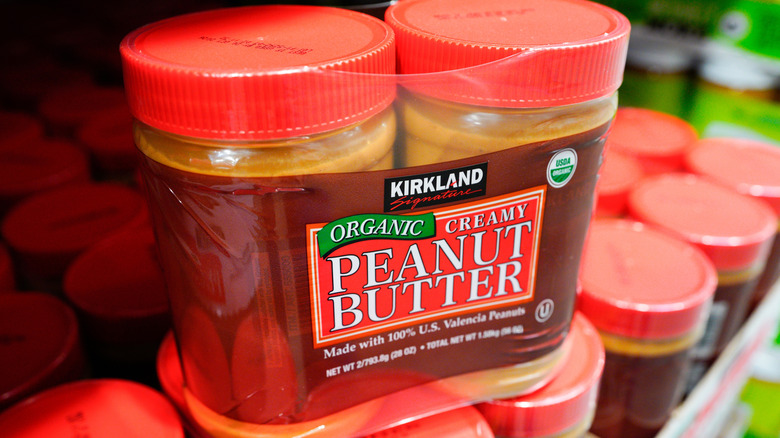
No Kirkland product is truly forever — veteran Costco members know this. We've all gone through the heartbreak of a discontinued Kirkland product before. Remember the Kirkland Signature Organic Creamy Peanut Butter, mango salsa, semi-sweet chocolate chips, or soy milk? One moment they're there; the next, the entire shelf tag is gone.
Even though Costco's buying team is always on the lookout for potential new SKUs, Costco runs a very tight inventory. To keep prices low and operations efficient, it'll occasionally shave off a few products that aren't pulling their weight. Sometimes it'll also take a look at what national brands are selling — if the products are available for a better deal elsewhere, there's just no point in keeping them stocked.
Costco isn't always the one making the call in discontinuation cases, however. Outside factors — supplier disputes, seasonal ingredient availability, quality issues mid-production — can all yank a product off shelves. Take the 7-pounder Kirkland All-American Chocolate Cake as an example. Despite being quite popular at the time and pulling decent sales, Costco still took an axe to it during COVID, reportedly due to supply chain issues. But here's the silver lining: Costco gives you a warning when it's about to pull the plug on something. When a Kirkland product's tenure is ending, you'll find an asterisk often called the "death star" on the shelf tag. That's the signal the product's days are numbered, and you'll want to snap it up before it's gone.