

Garden Seeds Do Expire: Here's How Long They Actually Last
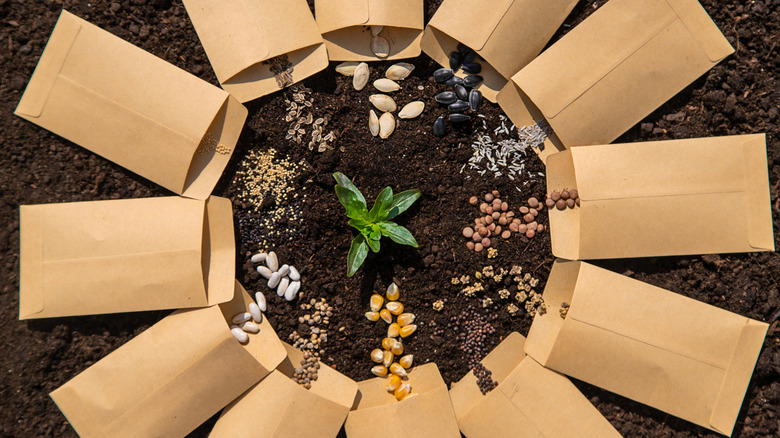
Admit it — you got overzealous buying fruit and vegetable seeds from Walmart, and now reality is sinking in: You definitely won't get to all the packets this growing season. Some seeds could stay good for years to come, but others have a shorter lifespan. The shelf life of seeds is unfortunately not indefinite, so here's everything you need to know about their longevity.
First and foremost, let's define what it means for seeds to expire. Unlike yogurt or milk, which can rapidly turn sour, seeds lose their potency over time. As years pass, fewer and fewer seeds from a packet are able to successfully germinate. They simply don't have the energy to sprout anymore. This is the most common way for seeds to expire, although with improper storage, they can also develop mold, discoloration, or changes in texture — definitely don't plant those!
The seeds with a short lifespan should be planted within the season you purchased the packet in. Parsley, onions, peppers, leeks, and spinach, for example, will lose most of their viability within a year or two. Lettuce, one of the absolute best seeds to grow, is usually in the short-span category as well, although some varieties can last longer. Carrots, basil, broccoli, beets, and chard, on the other hand, can last around four years when stored properly. There are also some sturdier seeds, such as watermelons, cucumbers, tomatoes, and pumpkins. Those can retain high viability even five or six years down the line.
How to store garden seeds to protect their viability
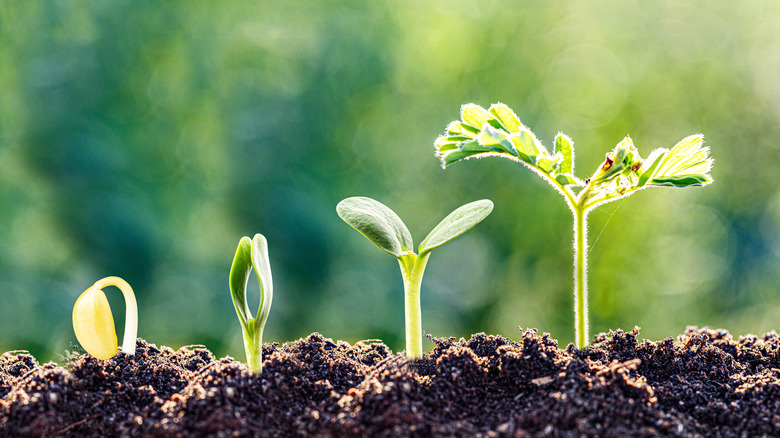
While time is an important factor in the lifespan of seeds, the environmental conditions in which they are stored actually play a far more significant role. Garden seeds need a dry environment with a cool temperature, minimum air flow, and zero light. Those are the ideal conditions. Temperature-wise, the fridge can serve as seed storage, but you have to be very mindful of moisture. A cold garage is an acceptable option, and a drawer in an air-conditioned house will do just fine, too.
The unplanted seeds should have very little exposure to light and air. Once you decide on a storage solution, keep the seeds there unbothered until you're ready to plant them. Moving them around or opening the packets can shorten their lifespan. If you have seeds that need to be stored longer than a year or two, you can put them in the freezer. This will keep them in a dormant state and prolong their life cycle, but make sure they are completely dry before you freeze them.
Seeds look small and delicate, but many are quite the resilient little things. If there's an old seed packet rolling around in your shed that grandma gave you a decade ago, you truly have nothing to lose by giving it a chance. Germination odds will be much lower, and the plants may grow more slowly, but those that do make it will still be a wonderful addition to your budget-friendly vegetable garden.