

Why You Should Rub Tomato Paste On Your Copper Cookware
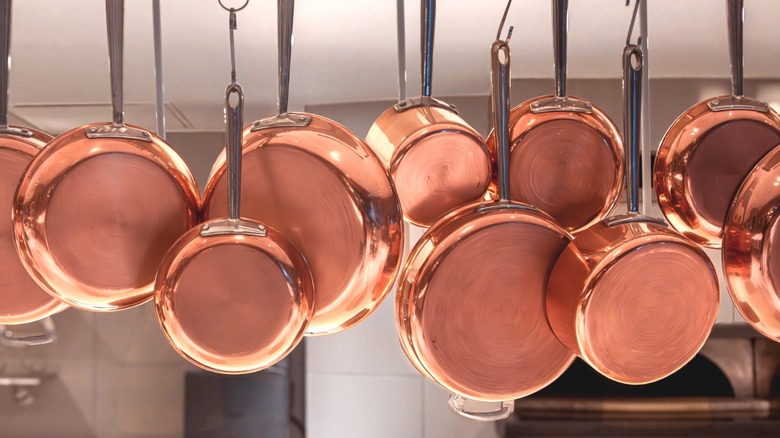
Few kitchen tools are as aesthetically pleasing as copper cookware with its warm rose-gold hue. But these gleaming pots and pans are known for more than just flashy appearances in foodie movies and Food Network segments. When it comes to conducting heat, the heftily-priced treasures are worth their weight in, well, copper. Assuming you're actually using copper cookware to cook with (not just for photo-ops), maintaining that Instagram-worthy shimmer requires a little love and affection, or in this case a little rub and tomato paste.
Copper is reactive, which is why copper kitchenware needs a protective lining. This means it's particularly sensitive to such factors as oxidation (exposure to oxygen), oils (from being handled), various chemicals, and the acidity of ingredients like tomatoes, lemons, milk, vinegar, and wine. As a result, copper develops a brownish-black tarnish over time that, eventually, can develop a green-blue cast called a patina. While it isn't corrosive, it's not what everyone wants for their pans. To get rid of it requires a one-two punch of an acid and a salt, the former to counteract copper oxide and the latter as a mild abrasive.
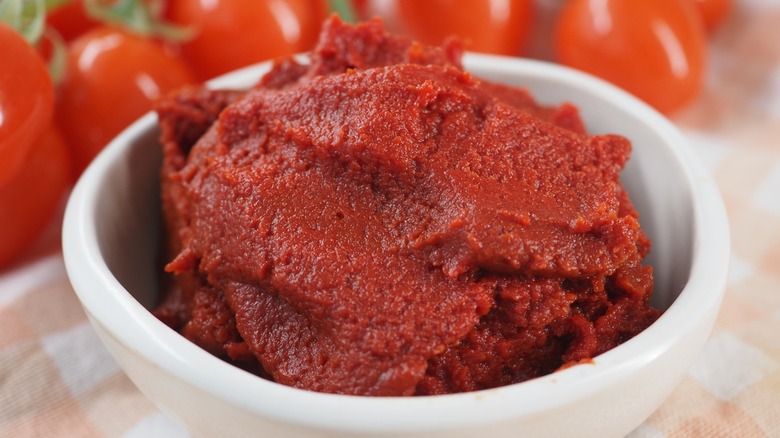
Tomato paste is perfect for cleaning unfinished copper (not lacquered) because of its subtle, natural acidic properties. To use this method, combine two parts tomato paste (ketchup can be substituted) with one part coarse salt. Next, rub this mixture onto the bottom and sides of your pan until thoroughly coated. Allow the paste to sit on the pan for a few minutes, giving the acid time to work. Then, wipe it off with a soft cloth. Rinse with warm water and mild detergent before drying thoroughly.
Other edible options for cleaning copper cookware
Though commercial cleaners are widely available, they're unnecessary. In fact, tomato paste is just one of many low-cost, natural ways to keep copper pristine and patina-free. Having several methods in your arsenal means you can always keep your pots and pans glistening. One of the most common, outside of tomato paste, is lemon and salt. Just cut a lemon in half, coat the exposed inside with salt and scrub the pan with the lemon (a hack that's just as good when caring for wooden cutting boards). Allow it to sit for a few minutes. Rinse with soap and water and dry.
Want to go beyond mere cleaning? Polish that copper to perfection using a paste of flour, vinegar, and salt. Apply the mixture with a soft cloth, gently polishing the copper's surface — then, rinse and dry. Follow with an additional vinegar buff if needed. You can also restore copper cookware with yogurt, or use beer to polish copper pots and pans. Even Worcestershire sauce is useful when it comes to cleaning copper.
A few final pro-tips: Always dry the pot or pan thoroughly after cleaning it, never use steel wool or bleach to clean your copper cookware, avoid the dishwasher, and don't soak it in water. Armed with these tools, tips, and techniques, there's no excuse for your copper to not sparkle and shine — maybe securing a starring role in your next YouTube cooking video.