

Russian Vs Thousand Island Vs French Dressings: What's Actually The Difference?

We may receive a commission on purchases made from links.
Many recipes emerge from similar groups of ingredients. The finished results are distinct, but they're adjacent to — or iterations of — one another. They might even look similar, but they're not the same. This is the case with many cold sauces and salad dressings, which generally fall into two categories: vinaigrettes and creamy emulsions. Endless regional and commercial variations branch out from there.
Russian, Thousand Island, and French dressing all belong to the same slightly uncanny American condiment continuum: pinkish, sweet-savory dressings from familiar bottles most of us have on standby in the shelves of our refrigerator doors. These dressings typically come together with a squirt of ketchup, a spoonful of mayo, and maybe some chopped pickles or onions for a pop of flavor or textural intrigue. All three sauces follow this formula, so there is definitely overlap between them, but their histories, proportions, and applications differ—if ever so slightly.
Russian dressing is usually smooth but more aggressively seasoned: almost, but not quite spicy. Thousand Island dressing is pretty similar, just sweeter and chunkier. French dressing, which is specifically regulated by the FDA, occupies the most distinct territory. It's thin, comparatively bright orange in color, and is associated more with bottled supermarket dressing than hot meat sandwich topping. They're not exactly interchangeable, but they're all similar enough that you could substitute one for the other in a pinch. The distinctions make sense once you trace where each dressing came from and what foods it was developed to accompany.
Dressings for successings
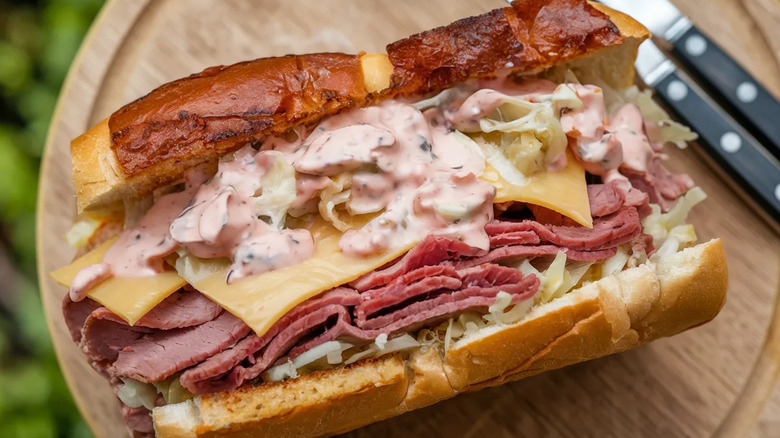
Despite the name, Russian dressing isn't actually from Russia. It's generally considered an American invention, tracing back to early 20th-century New Hampshire, where a grocer named James E. Colburn reportedly served a mayo-and-chili sauce mixture alongside cold cuts, and later successfully sold it pre-bottled far and wide. Some theories connect the name to the use of caviar or other "Russian-style" luxury ingredients in older recipes.
Modern Russian dressing has settled into something more middle-of-the-road: fairly smooth in texture, tangy from Worcestershire and ketchup, creamy from mayonnaise, and lightly spicy thanks to horseradish, mustard, or pimentos. The ketchup's tanginess is a nice accompaniment to rich foods, which is why it pairs so well with the salty, greasy corned beef on a Reuben sandwich. The mayonnaise component melts into the Swiss cheese, while the acidic, funky sauerkraut intermingles with the spicy elements to form a backbone that keeps the flavor profile from collapsing under its own density.
Thousand Island dressing is the progenitor of many modern burger condiments. Think tartar sauce with ketchup. It takes its name from the Thousand Islands archipelago region along the border of New York and Ontario, where several competing origin stories place its development in the late 19th and early 20th centuries. The dressing became associated with the wealthy summer tourism and fishing culture of the region during the Gilded Age, before eventually spreading nationwide. Like Russian dressing, it uses a tomato-and-mayo base, but usually includes more "chunky stuff"— sweet pickle relish, onion, pimento, chopped olives, even hard-boiled egg. It's sweeter, chunkier, and more recognizably adjacent to "special/secret sauce." It works well on burgers, spread between the bun and the meat, or as a dip for fries, nuggets, and fried seafood.
Americans love sauces
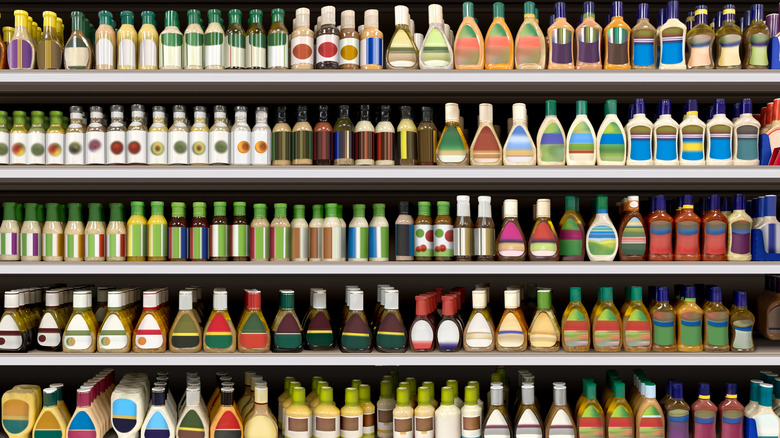
You may have noticed a pattern in these geographically questionable names. Like the other two, French dressing is not actually from France. In classical French cooking, "French dressing" once meant a simple, easy vinaigrette: oil, vinegar, mustard, salt, maybe some herbs, all casually whisked together, usually without strict measurements. But in 20th-century America, the term evolved into something more vivid. Bottled French dressing is sweet and orangey-red colored. With a white wine vinegar base, it's heavy on the tomato, a little bit creamy, and in addition to lots of sugar, it's often seasoned with Worcestershire sauce, paprika, onion, and garlic powders. It's also notably thinner and more pourable than Thousand Island or Russian dressing, and it remains a familiar diner salad option alongside ranch, balsamic, blue cheese, and Caesar dressing.
All three dressings, despite their names, are definitively American and reflect a cultural instinct toward abundance and improvisation. They also all emerged during roughly the same era, when sandwich spreads, bottled condiments, industrial mayonnaise production, refrigeration, and supermarket culture radically changed how Americans cooked and ate. They belong to a distinctly midcentury ecosystem of deli counters and burger joints, where familiar ingredients were endlessly recombined into proprietary "house sauces." In practice, the line separating Russian from Thousand Island, and French dressing is fairly thin: an extra spoonful of relish here, a bit more sugar there, more or less mayonnaise, a shake or two more of paprika. But that's how recipes evolve and come into being. Entire categories of food emerge from small variations in ratios, applications, temperatures, and contexts.