

Say Goodbye To Sticky, Greasy Kitchen Cabinets With This Easy Coating
We may receive a commission on purchases made from links.
Greasy kitchen cabinets can be a nightmare to clean. Unfortunately, the longer you let grease and grime sit on the surface, the more likely it is to damage the cabinet paint or wood, cause foul odors, attract pests, and even create a fire hazard. Ideally, you should clean your kitchen cabinets every week to fight grease, and do a deep clean every six months. However, if you're struggling to find motivation to tackle a deep cleaning project, you might benefit from taking a preventive approach instead. After applying a heavy-duty wood finish, your cabinets will be primed to resist grease.
A two-component polyurethane or 2K poly coating is a premium, factory-grade finish for wooden kitchen cabinets. It is composed of a resin base and a hardener that are mixed together before being applied to the cabinet surface. The ingredients undergo a chemical reaction that bonds them to the wood, resulting in a highly durable surface that resists grease, stains, and scratches. The coating essentially acts as a hard seal that prevents water and other contaminants from penetrating. High-gloss finishes have the added benefit of making it easier to remove surface-level liquids and grease from the cabinets before they cause damage.
While the coating won't prevent grease, food particles, and dust from settling on your cabinets, it will make clean-up easier. After application of a 2K poly coating, it will be much easier to degrease kitchen cabinets while avoiding finish damage. However, you should take the time to properly prep your cabinets before application, and follow our tips for applying a 2K poly coating to kitchen cabinets.
Clean cabinets before carefully applying a polyurethane coating
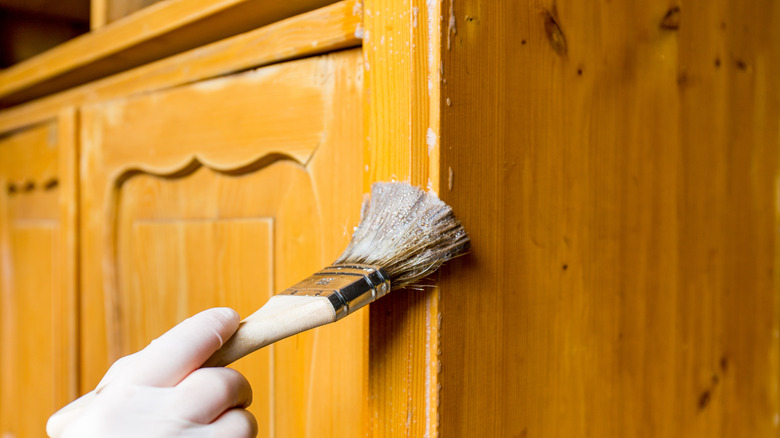
You'll need to deep clean your kitchen cabinets before applying a polyurethane coating. Start by wiping the exterior with a clean, dry microfiber cloth. Next, spray the surfaces with a mixture of warm water and a few drops of Dawn dish soap. Let the liquid sit on the surface for a few minutes before cleaning it off with a damp towel or sponge. If stubborn, sticky areas remain, try cleaning greasy kitchen cabinets with cooking oil. Finish by rinsing the cabinets with a damp cloth and drying them thoroughly.
When the cabinets are completely dry, you're ready to apply the polyurethane coating. Some of the best polyurethane coatings for kitchen cabinets are EVO Eclipse and Renner 851, and Varathane. You can get a one-quart can of polyurethane water-based interior cabinet coating like Varathane at Home Depot for $24.98. Follow the manufacturer's instructions carefully. You will need to wear gloves and a respirator, and make sure the kitchen has proper ventilation by opening a window. Don't use fans as they could blow dust onto the cabinets as you apply the coating.
Don't apply the coating in direct sunlight or in temperatures lower than 55 degrees Fahrenheit or over 90 degrees Fahrenheit. Stir the coating thoroughly before beginning, then then use a synthetic bristle brush, foam paint roller, or lint-free cloth to apply the coating. You will need to complete two to three coats, letting each one dry for an hour before starting the next. Let the cabinets dry for 24 hours before use, and do not clean the exterior for at least three days.