

There's A Cheaper Steak Cut Hiding Next To Filet Mignon, And It's Just As Tender
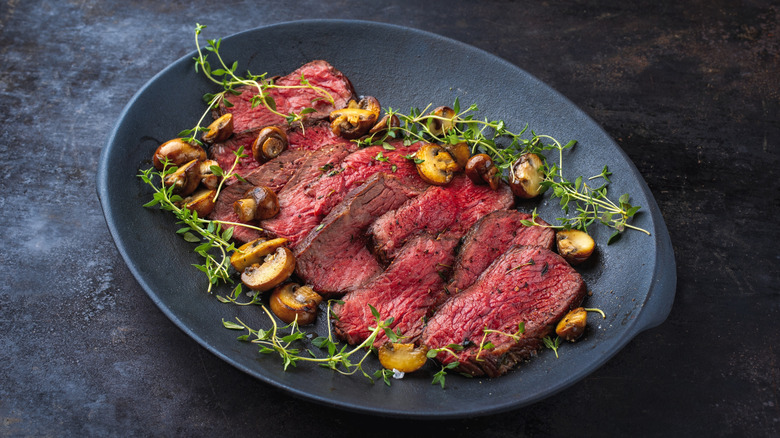
When you ask for a filet mignon over the butcher's counter, you're secretly saying, "I know my steak, and I've got that premium-steak money." Well, there's an alternative phrase you can utter to your butcher that says, "I love a great steak, and I know something a lot of people don't." The phrase: "Do you have any filet tails?"
Also called filet tips, tenderloin tips, Texas tips, or Tennessee tails, this is the tapered end of the tenderloin's main muscle group. This section doesn't make the cut for those thick and succulent rounded filet mignon steaks which come from the middle section. However, where the filet tail lacks the size and shape of typical fat steaks that carnivorous shoppers usually go for, it still boasts the same lean tenderness for a much lower price. The psoas major is a posture muscle, rather than a locomotion muscle, which means that it remains pretty passive throughout the life of the animal and so doesn't become tough. Filet tips can often be graded USDA Prime, given that they've been separated from other desirable tenderloin cuts.
If you see filet tips on sale at your local butcher or online, claim them quickly. Otherwise, you may be able to request them from a butcher, whether in a private butchery or in a supermarket. Costco even sells cut filet tails by the pound, so keep a watchful eye.
A heroic tail for steak lovers
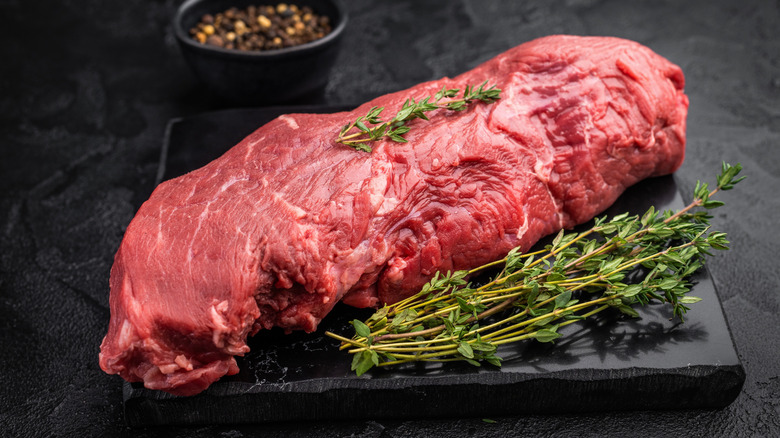
Filet tail is often considered a byproduct, meaning it's a cut that's considerably kinder on the wallet, sometimes even half or a third the price per pound of cut filet mignon steaks of the same grade. In this way filet tips can actually reduce the price of your premium steaks when you buy a whole tenderloin. Every time the butcher separates a cut of meat, the price increases. Why not save money at the butcher and leave the underrated "byproduct" on the tenderloin in place, effectively letting it subsidize the cost of all of your steaks when you buy it whole? Filet tails can have slightly more fat than the rest of the tenderloin, which is great news for their flavor, and they still offer that delectable butteriness found in the best filets.
Regarding preparation, there are two main factors to consider: One, the beef tastes great. Two: It doesn't look as great as it tastes. Simply grilling filet tips like you would any other premium steaks yields a tasty result — just maybe not one that makes your guests feel very special when placed in front of them — so consider slicing the beef once it's rested. You can also capitalize on the quality of the beef to make tartare or succulent miniature beef Wellingtons. Otherwise, just use tails to level up your beef skewers, seared medallions, or stir fries for a lower price than with cuts of comparable quality.