

Banish Cutting Board Cracks With This Easy Food-Safe Fix
We may receive a commission on purchases made from links.
Wooden cutting boards have a rustic aesthetic and hang onto less bacteria than plastic ones, despite some assertions to the contrary. Although a good wooden cutting board can last for years, it can still suffer damage become cracked. Not only is that unsightly, but cracks can harbor bacteria, making them more dangerous to use. Not to mention it's harder to cut on a cutting board that has a large crack in it. Fortunately, you don't necessarily have to throw away a cutting board with a crack. Just a little food-safe glue or epoxy can fix it right up, as long as the crack isn't too big.
There are several types of glue and epoxy that can be used to seal cracks in wood, like Dr. Resin or Titebond III. Just make sure you're getting a kind that is designated food-safe or intended for use on wood rather than ceramics or plastic. You don't want to use an adhesive that could leak dangerous chemicals into your food or create a surface that traps bacteria and makes the cutting board dangerous to use.
You will also need fine-grit sandpaper to smooth the repair, along with food-safe mineral oil or beeswax to season the finished board. For a more natural looking fix, you can mix sawdust in with the epoxy before filling the crack.
How to fix a cracked cutting board
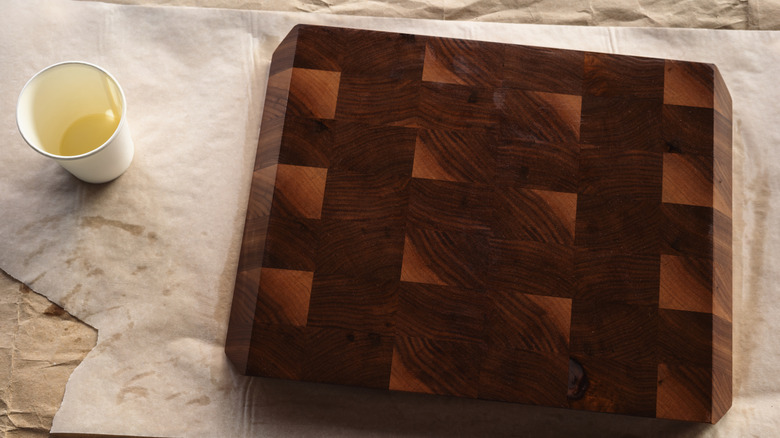
Before beginning this project, prepare by thoroughly cleaning your cracked cutting board with soap and water. The tip of a knife or a toothpick can help remove debris from especially deep cracks. Let the board dry completely as any moisture in the crack will prevent the adhesive from bonding correctly and could promote more bacteria growth.
If you're using sawdust, mix it with your epoxy in a small container just before applying it. Use an applicator tool, such as a brush or toothpick, to apply the epoxy carefully and fill as much of the gap as possible. Overfilling is better than underfilling since you'll sand it down anyway. Allow the epoxy to dry for as long as the package recommends. This could take up to a day. Once dry, use a fine-grit sandpaper to smooth out the epoxy so it's level with the rest of the board.
Once the patch is smooth and even, use mineral oil or beeswax over the entire surface of the cutting board to condition it. This will help prevent future cracks, especially if you regularly season the board every few months. If your cutting board is warped and won't sit evenly, or if the crack is too big to fill, fixing it may not be possible. If you can't restore the cutting board, it may just be easier to get a new one and start fresh.