

Baking Bread? Try Using This 5:3 Ratio For Foolproof Results
We may receive a commission on purchases made from links.
From one home baker to another, making homemade bread is a labor of love. It requires not only patience to properly proof and rest it, but also an understanding of the science behind bread. From mixing it just enough to develop the gluten to scoring it to control tearing in the oven, every single step in bread-making is a science, and that starts with deciding on your hydration ratio.
If your bread is too dry, the dough won't hold together. But if it's too wet, it will stick to everything and not rise properly. The hydration ratio — the ratio of flour to water — will depend on the type of bread you're making. Focaccia is a high-hydration dough, meaning that it is very wet. Bagels are low-hydration, which creates their signature chewiness.
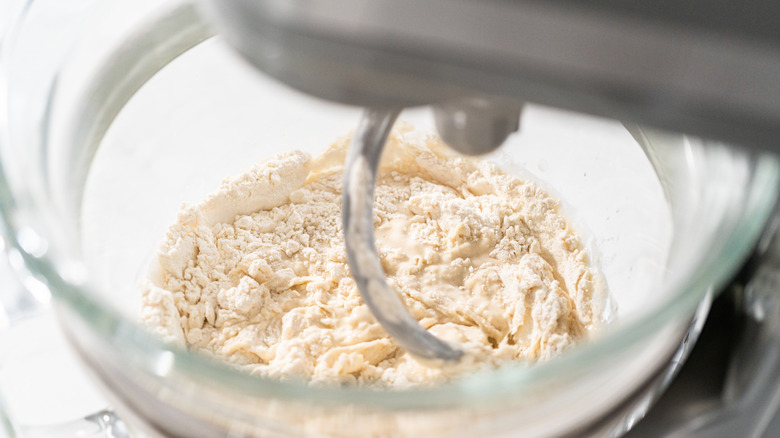
If you are looking for a good place to start, author and chef Michael Ruhlman recommends using a ratio of 5 parts flour to 3 parts water by weight for a basic homemade bread dough. He claims that it can be used as a base for pizza dough, flatbread, or braided breads. However, this is not all that you need. In his book, "Ratio: The Simple Codes Behind the Craft of Everyday Cooking," he says that the amount of yeast is dependent on the recipe you use, as well as the amount of salt. But as long as you have this ratio down, you can play and experiment to create your perfect loaf.
Looking beyond the ratio
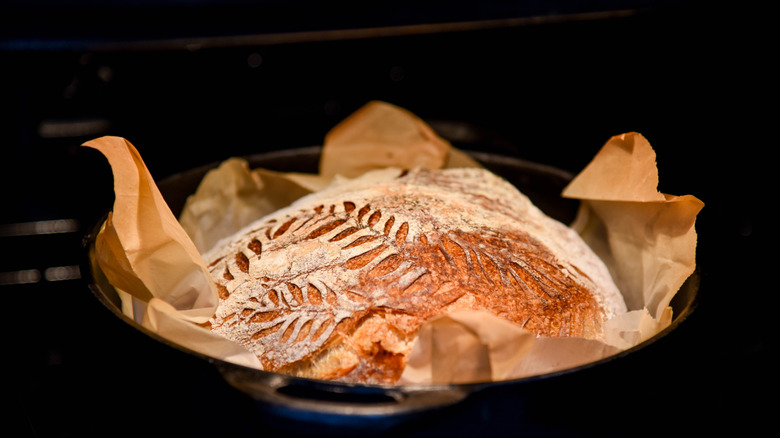
In his book, Ruhlman offers some ways to elevate this ratio and basic bread loaf, like making a roasted garlic and rosemary ciabatta or adding fresh herbs or spicy peppers. He also says you can use whole-grain or even potato flour — though since different types of flours hydrate differently, you may need to change the ratio or use a different technique to get the bread that you want.
While you may understand the ratio, you will need to follow other bread-making tips to ensure your loaf comes out perfect. As Ruhlman writes, this takes both patience and time, so don't feel like you need to have it down pat immediately. As someone who has personally experimented with all different types of bread, I agree with this and recommend starting with some novice-friendly bakes, like a basic foccacia or a Dutch oven sourdough if you want to play with a starter and develop more flavor in your bake. Keep Ruhlman's tips in mind and be patient, and you'll be well on your way to a tasty loaf in no time.