

Hummingbird Vs Lumberjack Cake: What's The Difference?
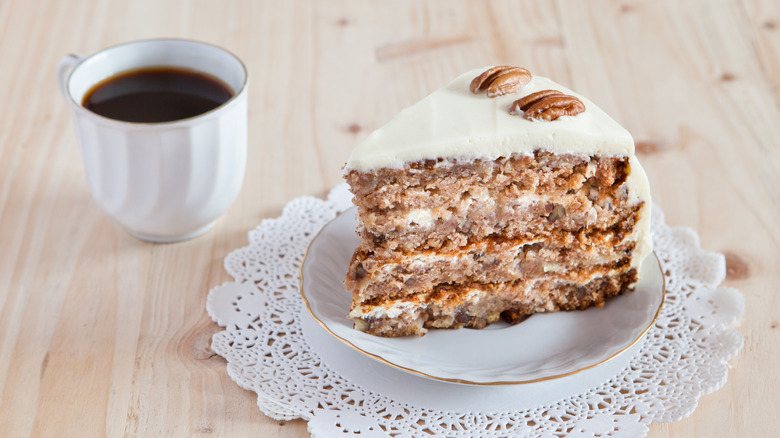
If you're unfamiliar with hummingbird cake, it's a vintage cake from the 60s. Less popular in the United States, but very common in Australia and New Zealand, is the lumberjack cake. The two cakes use fruits to both sweeten the cake and contribute lots of moisture, but both the fruits used and the final product are vastly different from one another.
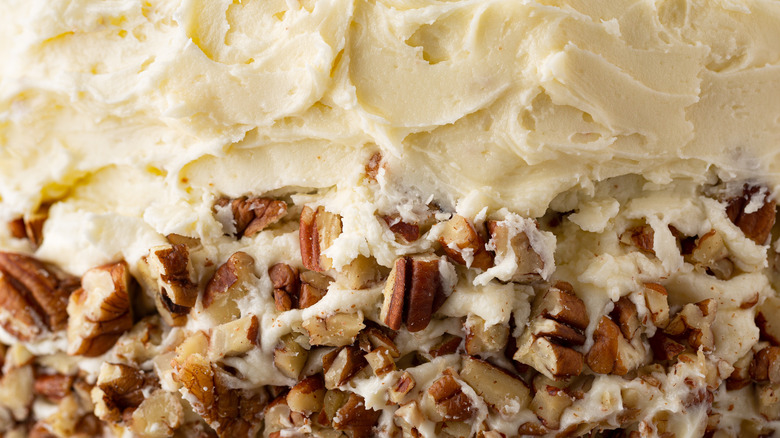
Hummingbird cake has a bit of everything, and you could think of it as if carrot cake and banana bread had a tropical baby. A hummingbird cake, which usually has multiple layers, gets its unique flavor profile from sweet, ripe bananas and canned pineapple, along with warm spices like cinnamon and sometimes allspice, and pecans lend a bit of texture as well as rich, nutty notes to the flavor. These moist cake layers are accompanied by a cream cheese frosting, which is where the carrot cake comparison is usually drawn from.
Occasionally, hummingbird cake will include sweetened shredded coconut, but it's not necessary and isn't traditionally used. Hummingbird cake is generally thought of as a Southern dessert, but it actually has roots in Jamaica. Thanks to a promotional idea from the Jamaica Tourist Board in the 1970s, the cake showcases Caribbean produce and was named after Jamaica's national bird, the Doctor Bird, a type of hummingbird.
Lumberjack cake is also fruit-based
Lumberjack cake is different from hummingbird cake in multiple ways. First, it's visually dissimilar, as lumberjack cake is not enveloped by cream-colored frosting nor does it have multiple layers, so it's a squat, dark cake compared to the tall, layered, and frosted hummingbird cake. In terms of base ingredients, apples and dates make up the bulk of the cake, which are softened with boiling water and baking soda before folding into the cake batter, giving the cake a more dense, fruitcake-like texture. There are no spices added, but it's the topping that really makes the lumberjack cake unique. A mixture of shredded coconut, butter, brown sugar, and milk is slightly cooked on the stovetop before being added to the almost fully baked cake and cooked for a bit longer, resulting in a caramelized, crunchy top.
Lumberjack cake is popular in both New Zealand and Australia, but it has rumored roots in Canadian logging camps, although its history is a bit murky. The topping can look like a smattering of wood chips, which may also contribute to the cake's name. If you're curious about the flavor combinations of these desserts but are wary of committing to baking a whole cake, try a smaller version of the classic Southern dessert like our frosted hummingbird bread recipe instead.