

The Walmart Under-$20 Ribeye So Tasty One Customer's Eaten 240 Of Them
We may receive a commission on purchases made from links.
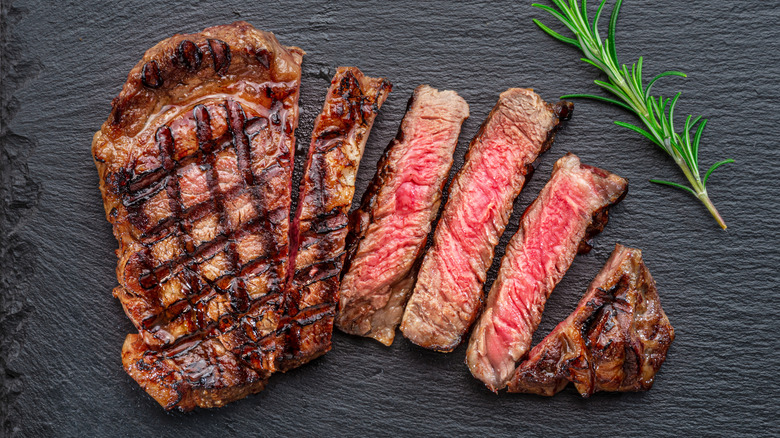
There is a certain amount of personal preference that plays into determining your ideal steak. For some, the lean tenderness of a filet mignon is the best choice; for others, the rich beefy flavor and moderate marbling of the New York strip is top; but the most popular cut of steak overall is the juicy, richly marbled ribeye. Were it not for the often exorbitant prices that are charged for this cut, there are many who might eat one every couple of days. As it turns out, Walmart may have created exactly this scenario for at least one customer — one that we know of for sure — by keeping the price of its USDA Choice ribeyes reasonable.
The per-pound cost on these steaks is only around $15, a bill low enough to encourage a certain individual by the name of Peter not only to eat at least 240 of these steaks over the past couple of years, but also to take to the review page on Walmart and share the good word. "I eat roughly 10 of these a month and have been doing so for over two years," Peter says. "I pick out the fattiest steaks and they are ALWAYS good..... and occasionally they are OFF-DA-HOOK-GREAT!"
It may not be quite the same feat as eating 35,000 Big Macs, but the commitment is still impressive. At an average weight of 1.25 pounds each, that's a solid 150 pounds of ribeye a year — almost three times the amount of total beef the average American eats per year.
What makes these Walmart ribeyes such a good deal
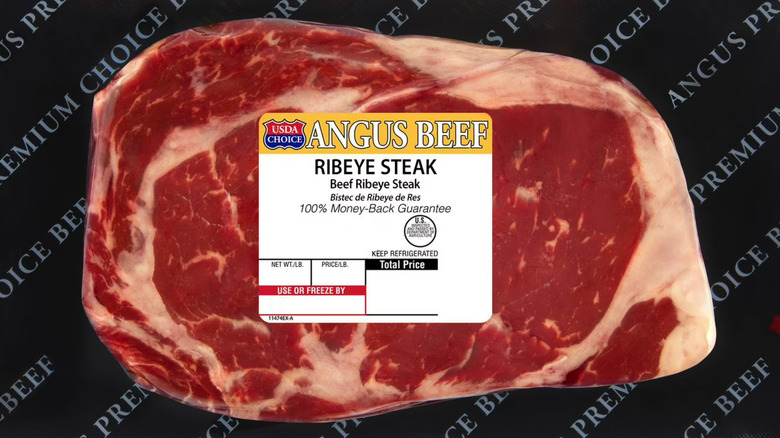
By price alone, these steaks are clearly a pretty good deal, but to really understand what you're getting, it's important to know a bit about how cuts of beef are graded. The top three grades of beef for the USDA are Select, Choice, and Prime, and they ascend in quality in that same order. All are good cuts of meat, and well-suited to all sorts of different steak recipes, but there is a hierarchy, and these Choice steaks fall right in the middle.
The grading process focuses on factors like tenderness, flavor, and juiciness in the meat. From the perspective of the customer, the primary visual characteristic that differentiates these different categories of ribeyes is the quantity of intramuscular fat — also known as marbling. The difference between the grades is clear even to the untrained eye, with Prime ribeyes displaying much more marbling than the Choice steaks, but this difference also comes with a significant increase in price. Choice beef is often a better buy than Prime, particularly when you're talking about eating steak the way this guy does.
Not only would the cost of Peter's groceries go up considerably if he upped the grade — Prime ribeyes are often about twice as expensive by weight as these Walmart Choice steaks — but it's probably not great to be eating all of that extra fat anyway. Then again, the American Institute for Cancer Research suggests limiting red meat intake to 12 to 18 ounces a week, so we're pretty far outside of a doctor-recommended diet from the get-go here.
You might want to pick the Walmart steaks for yourself
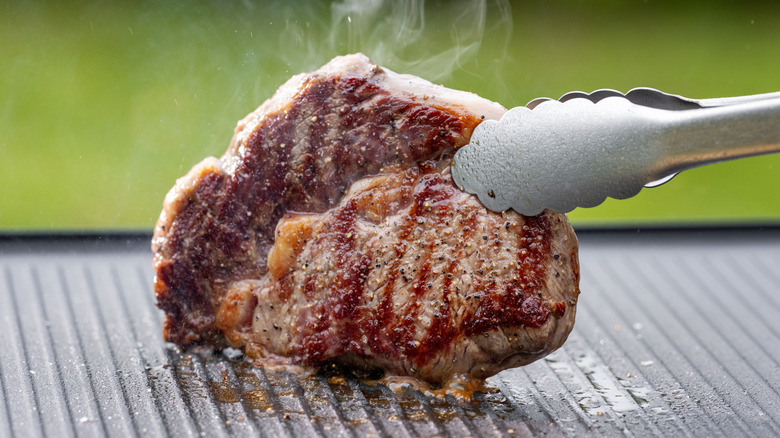
We're not here to police your diet. If you want to follow in Peter's footsteps and start putting down three ribeyes a week, that's up to you — and these steaks from Walmart are a good choice. Reading through the reviews, however, there is one potential problem that comes up again and again. If you prefer to order your groceries online, these steaks can be hit or miss.
Again, however, we come back to personal preference. Some folks are unhappy with how lean these ribeyes are when they pick up their grocery order, while others complain that they are too fatty. Probably the latter group should be ordering something other than a ribeye if they are concerned that their steak might have too much marbling, but both dissatisfied groups hammer home the idea that if you want a really good steak, you might need to pick it yourself.
Then again, if you are flexible with how you cook your beef, a steak that arrives leaner than you might like doesn't have to be such a problem. Ribeye steak fajitas are a perfect use for just such a too-lean cut, for example. But stopping into the store to pick out your own steak does more than just ensure that you get a cut of beef that suits you. With your own eyes on the display, you can also rifle through the packages to find the fattiest, most marbled steak that could almost pass itself off as a Prime cut with a stunningly low price.