

9 Most Cluttered Spots In Your Kitchen And How To Deal With Them
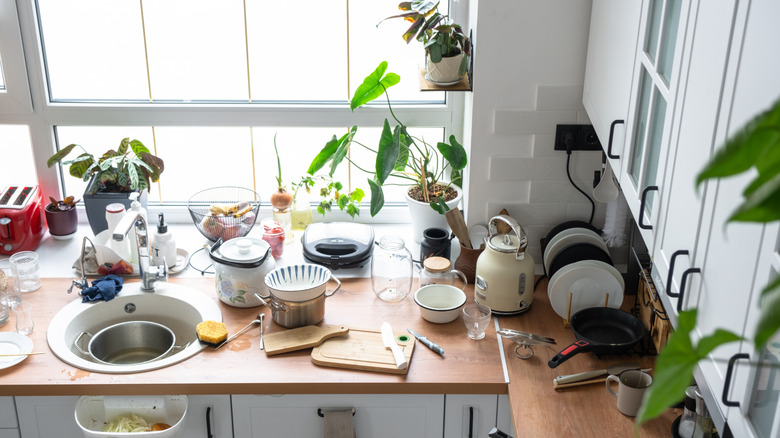
If you feel like your living space is getting smaller and smaller, chances are that it's filled to the brim with random items. That means you're ready to declutter. Getting rid of items is no easy task, but it can often help you breathe fresh air into your space. Do you really need 14 mugs when you have exactly two that you reach for? What about that enormous pile of plastic takeout containers?
I have done a fair amount of decluttering, decluttering challenges, and moving over the years, so I have quite a lot of insights on how to get rid of items that no longer serve you while maximizing your space. I'll go over the most cluttered areas in your kitchen and give you insights on how to deal with them. I'll also give you some questions to ask yourself for certain areas.
It may seem overwhelming, but it's important only to tackle one spot at a time. Don't attempt to do everything at once. Pick one of the following areas, take everything out, and really take a look at each item. Then see what you can donate, list on a secondhand app, give to a friend, or organize better to make the area easier to navigate. Let's get started — your kitchen will be clutter-free in no time.
Spice rack or spice drawer
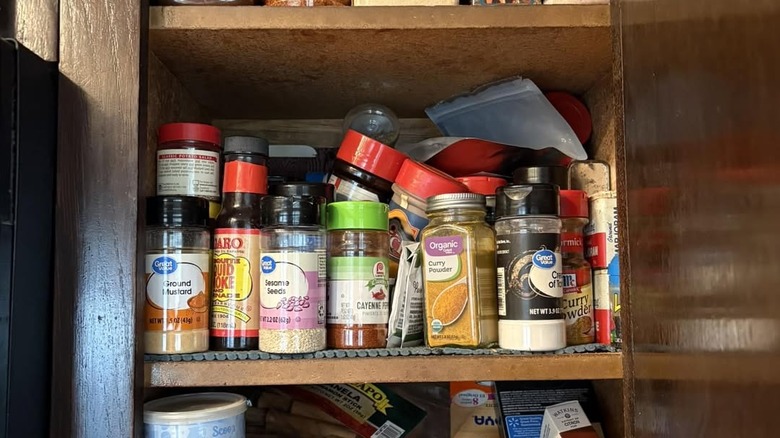
Ah, the spice rack. It promises richly spiced foods and meals of all origins, but how many of them do you actually use? The first step is to take everything out and look at every single item. First, you can confidently throw away anything well beyond its best-by date. Generally, dried herbs and spices can last for around one to four years, depending on what they are.
The main issue is that the potency and the flavor start to wane. So you might be adding that seven-year-old smoked paprika and wondering why it doesn't make your dish taste any better. After you go through your expired herbs, put everything back and clean the labels and the exteriors of the jars so you can see them clearly. Label the jars with a Sharpie or label maker to make them easier to identify. If your spices are in a drawer, you can write the spice name on top of the lid so you can see it from above.
If you have anything in bulk containers, consider transferring it into a smaller vessel if it will take up less space. As you start working through your items, ask yourself which you reach for most often and which you hardly use. In the future, it might be better to pick up the exact amount you need for a specific recipe, rather than purchasing a container of a spice or herb and letting it sit for years. Try stores like Sprouts or WinCo Foods (which offer loose spices by weight).
Tupperware or container drawer
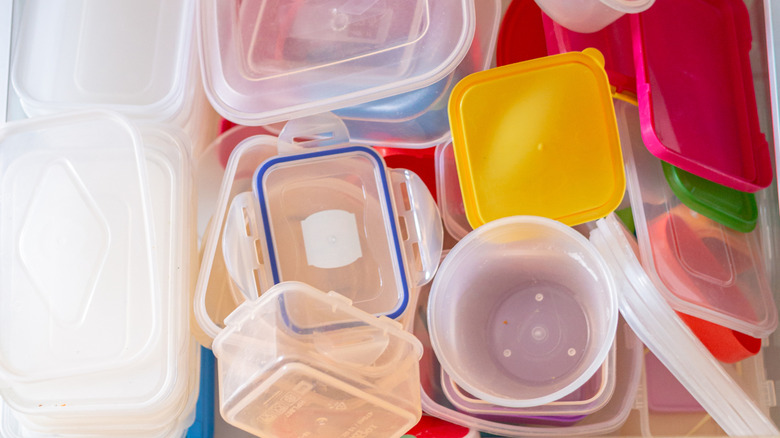
That blasted container drawer takes up so much space. Take out all your storage containers, whether they're glass or plastic, and really take a look at them. First, match everything up to see if it has a lid. If it does not have a lid or if something is broken or cracked, those are easy to get rid of — particularly since cracks can often trap bacteria.
Now, examine plastic containers to see if they are particularly stinky; you can get rid of those as well. If there are some tricky food stains (like tomato-stained containers), try your best to get them out. Do you find that you have more containers than you usually use? You can always donate the good ones that you know you don't need. The last thing to look for is whether the shape and size are convenient for what you typically use the containers for, or if you like the design. If it's a no for either, they can go.
After all that, depending on how many containers you have left, it's time to organize. If you have a bunch of similarly sized containers, you can save space by stacking them and organizing the lids separately. If you only have a handful, you can put the lid on the container to make it easier to reach.
Freezer and fridge
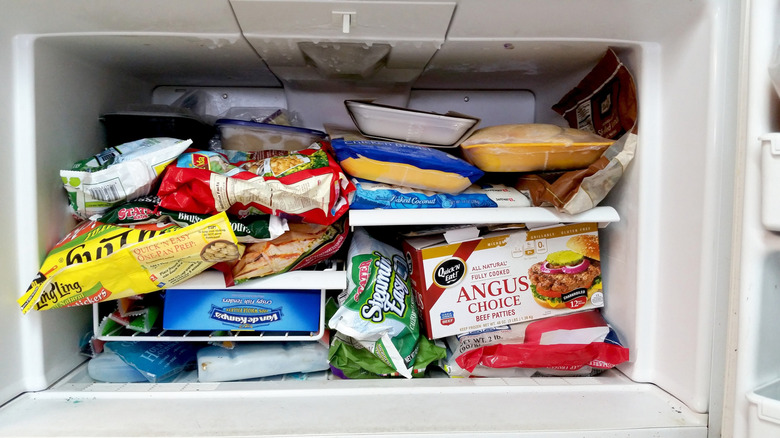
In this economy, it totally makes sense to stock up on items in your fridge and freezer, particularly if they are on sale or purchased in bulk. However, now that you're decluttering your kitchen, it is the perfect time to organize everything you've accumulated.
Start by taking items out of the fridge or freezer in batches. Pick a space on your counters or table and work there. Make sure to wipe each shelf to get rid of any crumbs or juices that might have leaked there. It helps to place similar items together (like all frozen veggies on the top shelf of the freezer rather than mixed throughout) and then create a running list of your frozen items so you know what's in there. If it is hidden or separate, you might not even realize you have 10 packs of chicken tenders or three opened boxes of frozen waffles.
Write everything down and keep the list nearby so you can cross things off as you use them. If anything is particularly frostbitten or extremely old, it's good to toss.
You can do a similar organization ritual for your fridge, but this time around, you might have leftovers you can either eat or throw away. Take a look at any condiments to see if any have expired or grown mold, and generally take inventory here as well; that way, you can meal plan around finishing what's in your fridge without continuously buying new groceries. Then, it's all about organizing things so you can see them. Have the labels facing out and consider using clear organizers for smaller items that are hard to see.
Under the sink
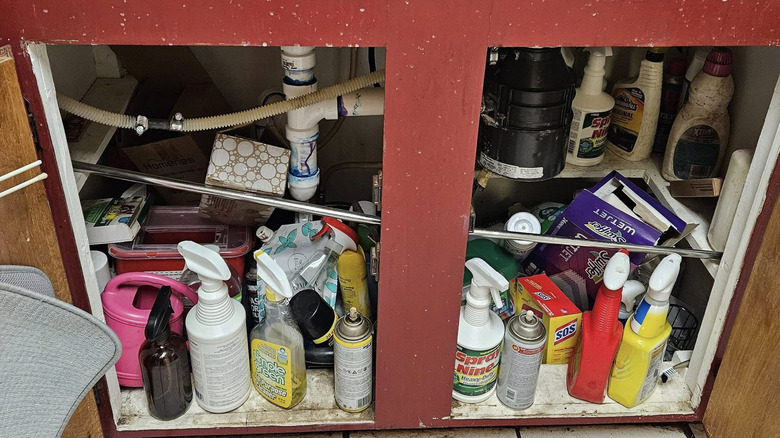
Under your kitchen sink might have become a catch-all for random items. There might be trash bags, plastic grocery bags, takeout bags, cleaning supplies, sponges, dishwashing soap, and random stuff — but unlike other areas of the house, you might use virtually every item. Take everything out, give it a good wipe-down, and familiarize yourself with what you have down there. Is there anything you forgot about, don't use, or rarely need? Perhaps you have three open packages of sponges from Costco, and now you don't have to buy any more for the next couple of years.
You can minimize clutter by condensing your plastic bag collection; place them all in one larger bag so they do not fall all over the place. Throw away anything sticky or broken. Some under-the-sink organizers could help declutter certain items in boxes. A two-tier organizer can help maximize your space, especially if you have a taller sink area that isn't utilized to its full potential. There are also over-the-door organizers for hanging certain things inside. Under the kitchen sink is typically a functional area, so it doesn't have to look beautiful, but organization can make it a lot easier to access and find what you need.
Pantry
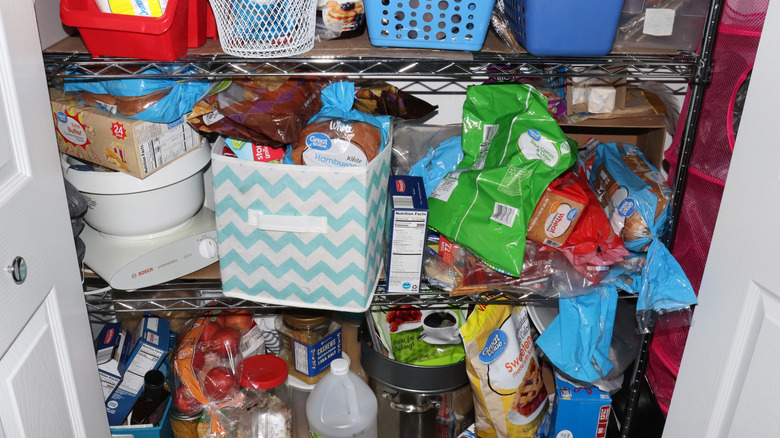
If you feel overwhelmed with your pantry, start with one thing at a time, whether that's a particular row or food type (packaged snacks or pasta boxes, for example). Go through and toss expired food. Throw away any dented cans. Place like items together — consider finding some affordable organizational items at Dollar Tree, such as caddies or wire baskets to store similar things together. Donate things that you know you don't use/won't use in time. Some of the best kitchen organization hacks include not overstuffing your pantry, using turntables to make things easier to find, and using square containers for better organization so things fit better.
Take out some of those Tupperware and plastic containers that you organized to see if anything works for your pantry. For example, you can reuse pasta sauce jars or anything glass with a lid to store dried goods. Rather than taking up space with a big 30-ounce bag of quinoa that you only have a cup left of, place the leftovers in a smaller jar, and label it so you remember the expiration date — boom, you've already saved yourself some room.
This is also the time to look for repeated items, like four opened bags of tortilla chips or your sixth bottle of hoisin sauce. If you have items that are not expired, not dented, and not opened, you can always consider donating them. Food pantries often seek items such as peanut butter, pasta sauce, flour, sugar, and other cooking essentials. Alternatively, you can call your local food pantry or food bank to see if there are any items that they specifically need; that way, some of your excess items can go to a good cause and feed people in your area.
Tea and takeout condiment section
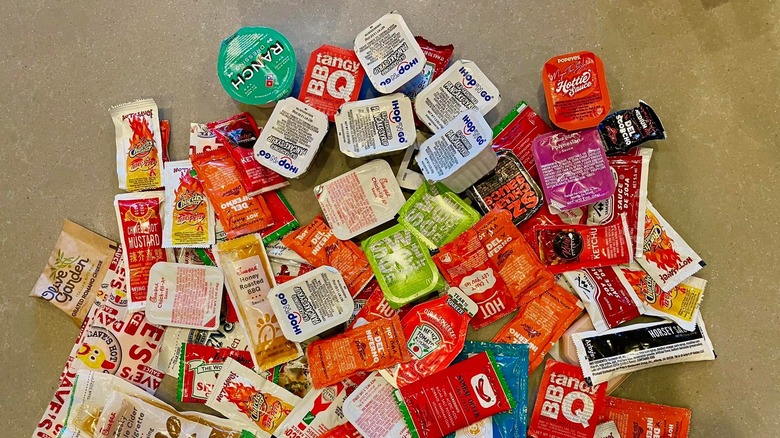
Some people have a pretty impressive tea collection, have accrued condiments from their takeout meals, or both. Even though they may seem small, these items start to add up and contribute to clutter in your pantry or drawer. Take out all these packets and really see what you're working with.
If you have unopened tea still in its sealed box or container, and it's well within its best-by date, consider gifting it to someone or donating it. Go through every tea bag and throw away any that are accidentally ripped, opened, or expired. Then it's all about how you store them. Organizing them in a tea organizer or a clear plastic container so you can see them might be your best bet rather than plopping all the loose tea bags into a big plastic bag.
If you have soy sauce packets, chili pepper packs, or other condiments, it can be hard to know how old things are. Is it from last week's pizza delivery, or from eight years ago? Since it can be hard to gauge the shelf life of condiment packets, it's up to you whether to throw them all away if you're unsure. Things like honey packets or pepper can last a lot longer than something like mayo.
Dish cupboards
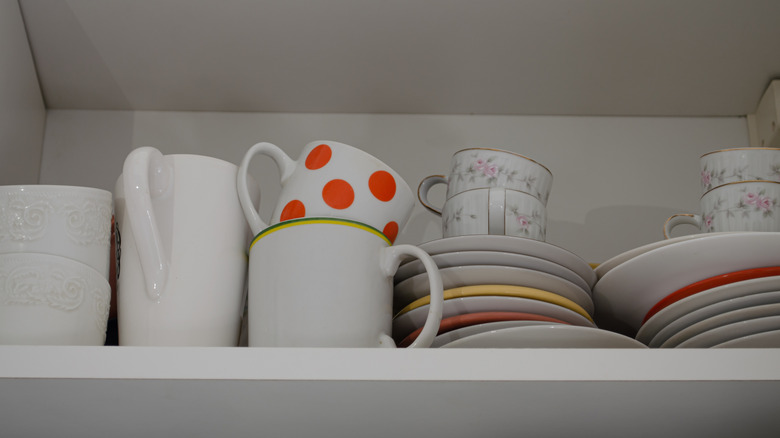
When it comes to decluttering your dishes, you'll want to empty your cabinets to check your inventory. Go through everything and identify what you use. Do you notice what you have multiples of? For example, if you're a household of two but entertain a lot, it makes sense to have sets of eight plates or wine glasses. However, if you don't entertain much, it simply takes up a lot of space.
Do you unintentionally collect things like mugs or shot glasses? Take a look at everything and be honest with yourself about what you use, what means a lot to you, and what you can donate or repurpose. If you don't have the heart to get rid of a certain mug, cup, or vessel, consider repurposing it as a small planter or using it in other ways around the house — like storing pencils or makeup brushes. If anything is chipped or broken, you can confidently get rid of it.
If you use your belongings, don't feel pressured to ruthlessly declutter. Some items are worth saving space for. Simply keep the area organized so you can find and use everything frequently. Things like dish risers can help a space feel less cluttered by maximizing a shelf.
Pots and pans
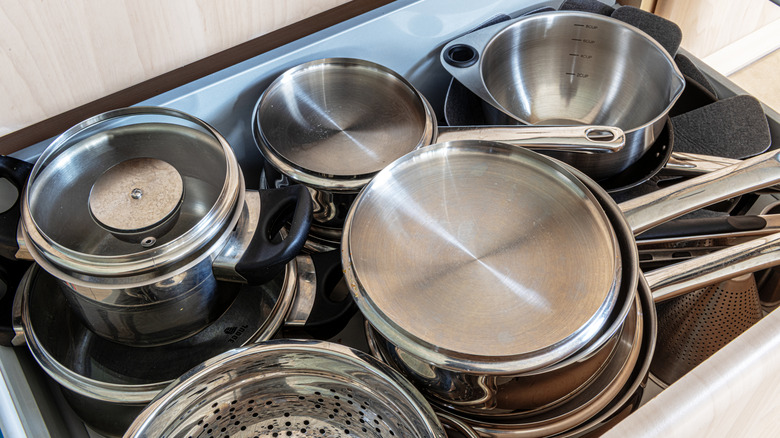
Sometimes it makes sense to buy pots, pans, and lids in sets. However, you might purchase something with two pans you need, but it comes with a strange-sized pot you'll never use. Go through your cabinet and see what gets used the most versus what you tend to overlook.
Why are there three muffin tins when you haven't baked muffins in years? Donate things that you don't use. If you have pans or other items with coatings that are heavily scratched or warped, it is in your best interest to simply get rid of them. We have found some amazing stainless steel items at the thrift store, and your donation could truly make someone's day. You can use pan organizers to make items easier to access.
The same goes for baking supplies and utensils. Suppose you have really gone through and checked your stock. You might not need four different-sized ladles. There are plenty of ways to organize your utensil drawer, such as using drawer dividers to store things that might not fit in a standard silverware organizer. Perhaps you've accumulated a collection of glass and silicone straws. Consider decluttering and keeping the stuff you only love and use frequently.
Kitchen counters
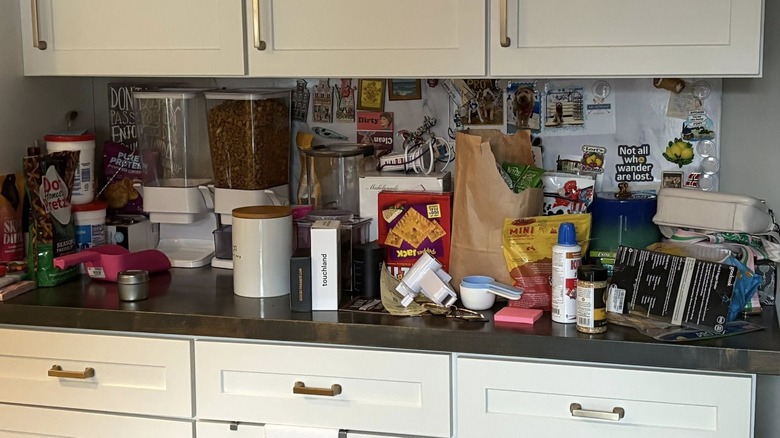
Now that you've decluttered other areas, see if you can remove visual clutter and place counter items in cabinets. This is easier if you've found some space in a particular pantry, cabinet, or drawer. Now, you can put your blender in a cabinet rather than keeping it out when you only use it once a month. Getting rid of the visual clutter can help the entire space feel fresh and new. Place utensils in their designated area rather than keeping them out. But ask yourself how often you use it and whether it should remain on the counter. It makes sense to leave a coffee maker out, for example, if you make a pot every day.
Decluttering is also an opportunity to see if there's anything you've been keeping for the sake of keeping it, rather than for a purpose or to bring you joy. Go through your decor pieces, too, to see if there's anything old, chipped, warped, or stained that you can get rid of. If you have limited space, consider storing items in closed wicker baskets to reduce the appearance of clutter and keep your space cute but organized. Buy nothing groups (local groups on platforms like Facebook where you can offer or find free items) are a great place to find new homes for things like utensils, dishware, and even unopened, unexpired food goods.