

Starburst Was One Of The First New Candies Of The '60s — And It Had A Totally Different Identity
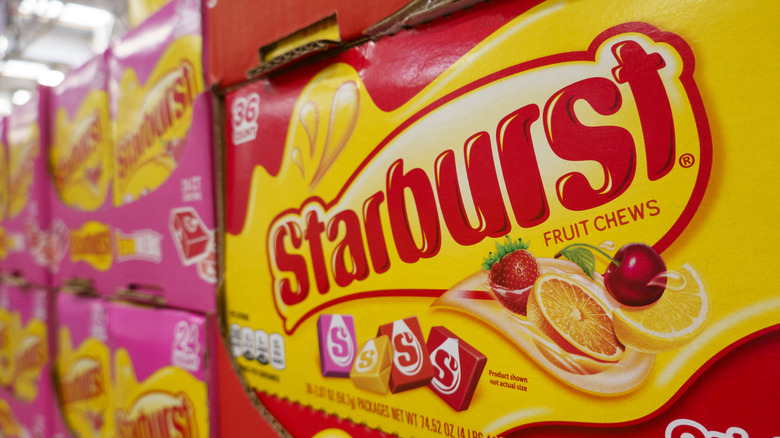
With its bold packaging, intense flavors, and surreal commercials (don't make us start chanting "berries and cream"), Starburst comes off as a pretty modern candy. You might have expected them to be dreamed up in the tubular 1980s or radical '90s, but these guesses are both wrong. Everyone's favorite fruity chews debuted right at the start of the '60s under a different name: Opal Fruits. What's more, they're an import from the United Kingdom.
Mars, the maker of other beloved candies from Skittles to Snickers, first whipped up Starburst in Britain in the year 1960. The company held a naming contest to promote the new candy, and an advertising writer, Peter Pfeffer, reportedly won the challenge with Opal Fruits. While not as in-your-face as Starburst, the name did suit the bright, jewel-like colors of the candies. The flavor set consisted of strawberry, lemon, orange, and lime, while today's Starburst flavors include strawberry, cherry, orange, and lemon in the "original" assortment.
While the name may be different, the packaging of Opal Fruits looks mighty familiar. They were sold in red-and-yellow wrapped bars that could be torn open to reveal individually-wrapped, color-coded candies, just like how Starburst are packed today. A major difference, however, was in the pricing. According to a vintage advertisement, one pack of Opal Fruits cost four pence (pennies to American folks), while one bag cost just 10 pence.
Opal Fruits took on one more name before they became Starburs
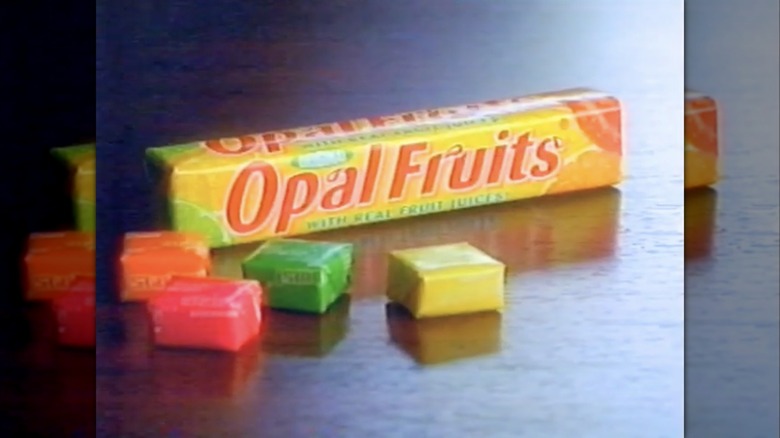
Opal Fruits' slogan was "made to make your mouth water," and British commercials emphasized their refreshing tanginess that could quench your thirst in a pinch. But when the candy came to the U.S. in 1967, Mars had a harder time figuring out the marketing. The company's U.S. product development team came up with the name "Starburst" for their own version of Opal Fruits, but at the last second, Mars changed it to "M&M's Fruit Chewies." M&Ms had been a success for Mars since 1941, so perhaps the company thought name recognition would help the new candy out.
It was Aaron Brody – a famed food scientist and Mars employee at the time — who successfully advocated for the candy's name to be changed back to Starburst. He thought the M&M name was too synonymous with chocolate, so the fruit chews deserved their own unique moniker (via University of Georgia). Brody was clearly onto something, as by 1998, the candies were called Starburst around the globe, even in their birthplace of the UK.
Many UK consumers were actually pretty cross about the name change, and some nostalgic candy lovers still call them Opal Fruits, not Starburst. But what's in a name when everyone can agree that these tangy, sweet, fruity bites are iconically delicious? While other after-school snacks of the '60s have faded in relevance, Starburst will likely remain one of the best popular snacks in America (and around the world) for the foreseeable future.