

3 TSA Rules For Bringing Snacks Through Airport Security
Bringing your own snacks to the airport can feel like you're pulling one over on the overpriced food courts, allowing you to dodge huge markups on bottled water and bland sandwiches. Given the price of airport grub, bringing your own snacks on board can feel like the easiest money-saving hack, but the TSA (aka the Transportation Security Administration) doesn't make it so simple.
Security protocols go far beyond the universal 3.4-ounce liquid rule, with so many gray areas that can make or break your snack strategy. Solid foods like pretzels, crackers, or even some leftover fried rice are a go, but the line between solid and liquid isn't as concrete as one would assume, especially when it comes to creamy, spreadable items. Add in agricultural restrictions that vary by destination, and suddenly that wholesome snack stash gets a little more complicated.
Whether you're trying to save a few or are just a picky eater, showing up to the airport with a lunch bag in tow is the move, but only if done right. There are a lot of unexpected foods that you can squeeze into your carry-on, but it requires a bit of know-how. Keep these three rules in mind so you don't dedicate precious carry-on space to the wrong snacks that will just end up in the trash.
Fresh produce isn't always allowed

An apple might seem innocuous, but travelers have been fined $500 just for having the fruit in their bag. If you're jetting out of the continental U.S., you might want to think twice before packing your snack bag. Agricultural restrictions in Puerto Rico, Hawaii, and the U.S. Virgin Islands are put in place to protect their delicate ecosystems, but that puts limitations on what fruit and veggies we can snack on mid-flight. Invasive species and diseases can hide on fresh produce and sneak their way overseas, causing irrepressible damage to the local agronomy.
Hawaii in particular has strict rules around what can come in and out, and the U.S. Department of Agriculture is quick to enforce them. The Animal and Plant Health Inspection Service also keeps an eye on foods leaving Hawaii, heading to other parts of the U.S. — like Alaska and territories like Guam. Travelers can try their luck with fresh Hawaiian pineapple and papaya in their carry on, but USDA airport inspectors will have to examine each and every piece of produce, tacking on some tedious time to your journey. Given these restrictions are state-by-state, you might make it through the stressful security line only to have your produce confiscated the moment you land, or even before you make it to your gate.
Hummus, guacamole, and peanut butter are considered liquids
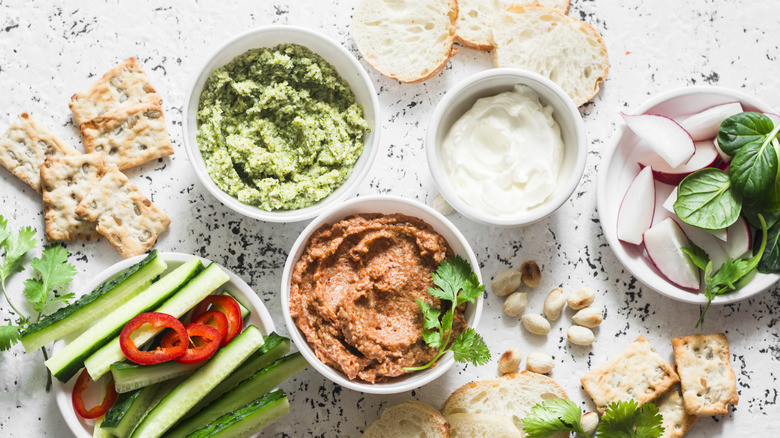
Even if you're not chugging peanut butter, it is still considered a liquid in the eyes of airport security. According to the TSA, basically anything that can be eaten with a spoon falls into liquid territory. Soup is a given, which can only pass through security in a small acceptable vessel, but hummus, guacamole, and salsa are the less obvious taboos. As liquids, these dips have to meet the rigid 3-1-1 rule, which means your snack has to fit into a quart-sized clear bag and weigh under 3.4 ounces. Even if unopened, a full-size container of hummus won't make it past security.
This also goes for yogurt, labneh, tapenade, and gel-like spreads including jellies and jams. Despite how thick or chunky a dip is, if it can technically pour or spread — it's contraband, regardless of the ingredients. The good news is that travel-sized containers of most spreads and condiments exist. If you're dead set on peanut butter by the spoon or DIY nachos for the plane, be sure to portion your accoutrements separately into small 3-ounce containers.
Some cheeses are also considered liquids
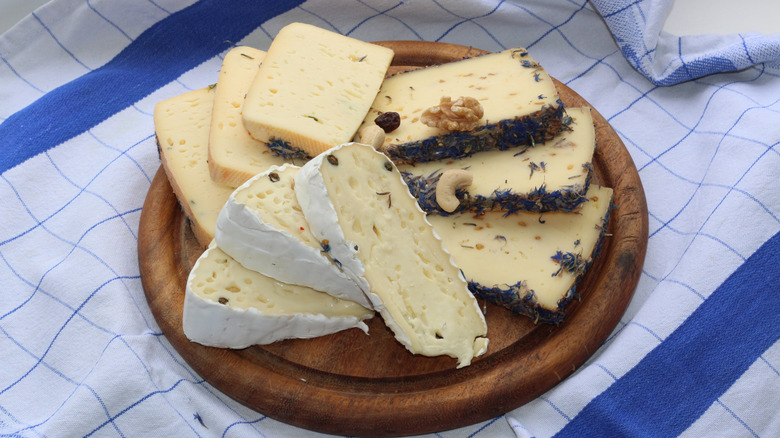
The definition of liquid continues to blur when it comes to cheese. Hard cheeses like cheddar and Parmesan are in the clear, but softer, creamier varieties get a much closer lens. Delicate, spreadable cheeses like brie, camembert, and creamy goat cheese are just pliable enough to be considered liquids. The same goes for any spreadable or whipped cheeses, like Boursin, mascarpone, or a simple cream cheese. If it can easily be smeared on a cracker straight out of the fridge, chances are it's not TSA-approved.
This means, like all other liquids, gooey cheeses have to follow the 3.4-ounce rule. Considering the price of in flight cheese boards, bringing your own isn't a bad idea, just as long as you curate appropriately. Unless you want to dedicate your final pre-travel moments to separating creamy cheeses into dozens of pocket-sized containers, stick with firm blocks of cheese.