

The Proper Method For Cleaning Your Wooden Cutting Board After Raw Chicken
We may receive a commission on purchases made from links.
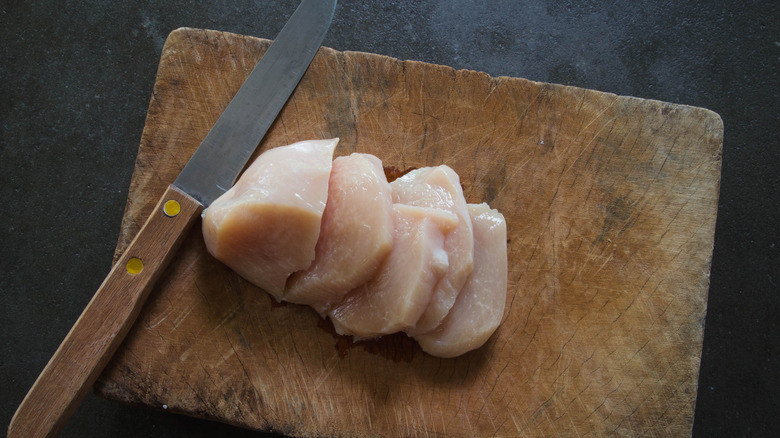
Chicken is America's favorite meat, with the average person going through 120 pounds of it each year. Raw chicken is also one of the most common sources of salmonella, so whether you're prepping a chicken pot pie or a dish of fajitas, food safety is of the utmost importance. But, avoiding cross contamination isn't just a matter of cleaning — you should be sanitizing your wooden chopping board after each use.
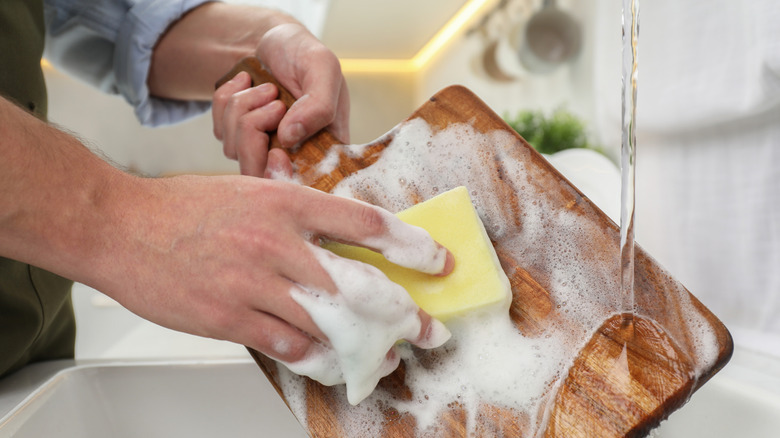
Wooden cutting boards are more porous than those made of other materials such as plastic or glass, giving them more places where bacteria can settle in and thrive. To clean your wooden cutting board, start by scraping any remains of chicken into the trash immediately after use, then wash it in hot soapy water, using a stiff scrubbing brush or sponge to get into any deep grooves in the board. To sanitize your wooden cutting board, however, you'll need to go a bit further.
For sanitizing the board, the USDA recommends a solution of 1 tablespoon of food safe liquid chlorine bleach — not laundry or scented bleach — per 1 gallon of water. Pour or spray the solution over the board, ensuring that the entire surface is wet, and leave the bleach solution to sit for five minutes before rinsing with hot water. Pat the board dry with a paper towel or leave to dry upright in a dish rack, where air can circulate on both sides. Don't store it away until it is completely dry.
More food safety tips for wooden cutting boards
Even if you clean and sanitize after every use, it's recommended that you keep different cutting boards for different uses. This isn't just about keeping poultry apart from other foods, but considering which foods are eaten raw or cooked. Salmonella bacteria can be found lurking in fresh fruits and vegetables too, and it's only killed during cooking. With that in mind, reserve one board for your raw meat, poultry, and seafood, one for your fresh produce, and another for your cooked produce.
Food safety also means keeping your cutting boards in good condition. The more damage to the surface, the harder it will be to clean thoroughly. Although it might be tempting to soak wooden cutting boards in the sink to make sure you remove any last bit of chicken, this can lead to warping and cracking. In the same vein, stick to the recommended dilution of bleach in water when sanitizing the board, as a stronger solution can damage the wood. Regardless, wooden cutting boards do become damaged over time with regular use and will need to be replaced.
If you like the look and feel of wooden cutting boards but want something more durable, consider one made of bamboo like the Kitchen Details Large Bamboo Cutting Board. Bamboo is less porous than wood, meaning it won't absorb moisture from the food you're preparing. It's also denser and less prone to surface damage from knives.