

If Your LG Refrigerator Keeps Showing You FF, Here's What It Means
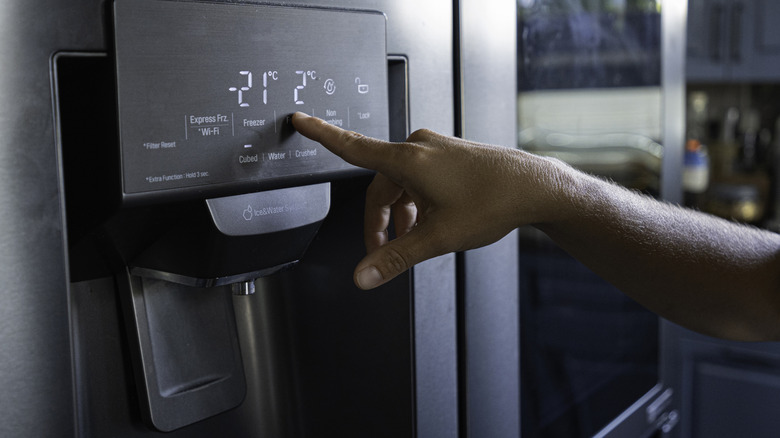
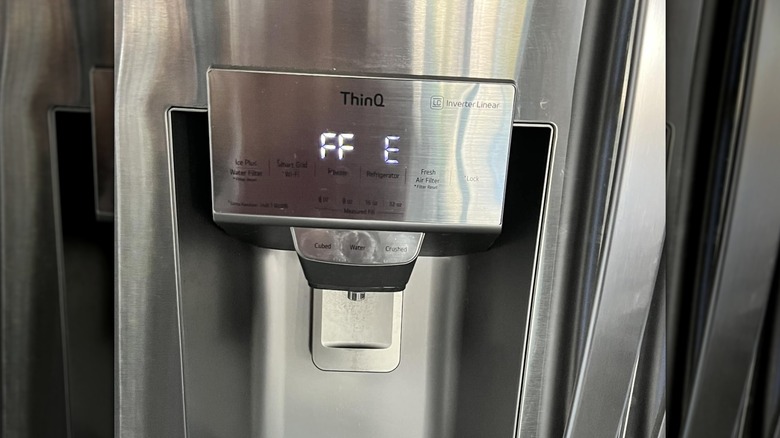
Seeing an error code on the display screen of your LG refrigerator is stressful. When you don't understand what the code means, you may think the worst and assume you'll end up paying hundreds in repair costs, or worse, that it's time to replace your refrigerator entirely. Luckily, the FF code on LG refrigerators isn't necessarily an emergency situation.
FF stands for Freezer Fan, and the error code indicates that there is a malfunction affecting the fan motor that circulates air throughout the freezer compartment. This means that cold air won't travel properly through the compartment, and hot air may become trapped. If the fan isn't operating properly, the temperature inside the freezer may increase gradually.
The first step to troubleshoot this issue is to unplug your refrigerator for five minutes. If the error message returns, make sure the vents and fan blades in the freezer aren't blocked, and check to see if ice or frost has built up around the fan's motor. When this happens, you'll have to defrost your freezer. Relocate everything in the freezer to a cooler of ice and leave the freezer door open for eight hours to allow the ice to melt. Then use a towel to remove ice and moisture. If you don't see ice or if defrosting your freezer doesn't fix the issue, call an appliance repair technician. The fan motor or unit could be faulty and require replacement.
Regular maintenance can prevent fridge and freezer fan issues
One overlooked step that could make your kitchen appliances last longer and prevent fan issues is to read the manual. Familiarize yourself with the manufacturer's recommendations for proper maintenance and care. Preventive maintenance is the proactive inspection, cleaning, and defrosting of your appliance to reduce the risk of excess wear and tear or premature equipment failure.
To extend the lifespan of the fan and its components, don't overfill your fridge or freezer. Make sure there is some space around the interior freezer vents so that the evaporator fan won't overheat or have to work as hard. Don't neglect to clean the refrigerator's condenser coils at the bottom or rear of the appliance every six months. Remove pet hair, dirt, dust, and other debris to improve coil performance and ensure the fan and compressor don't overheat and run constantly. To keep ice from building up in the freezer, check the door seals and gaskets for signs of damage or wear. Clean the seals monthly and replace them if they are damaged. Also, keep an ear out for a hissing sound inside the freezer. This could mean that the door isn't sealing correctly.
If you hear strange new noises from the fan, make sure the blades aren't obstructed by anything. A buzzing or clicking noise may be an early warning sign that a bearing or other part is wearing out and should be replaced before the fan stops working entirely. Another huge refrigerator maintenance task you may be overlooking is cleaning or replacing the air filters. A clogged air filter can reduce the efficiency of the appliance's fan, making it work harder and run longer to ensure proper ventilation.