

Why Slurping Is The Best Way To Taste Every Flavor Note In Coffee
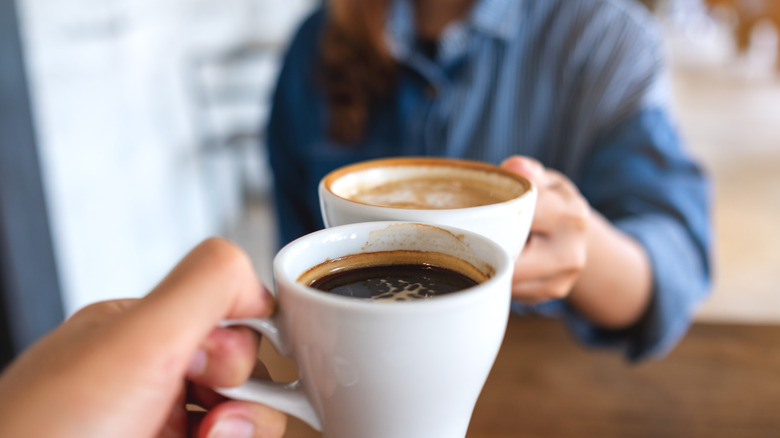
Coffee tasting (also known as "cupping") is a dedicated technique for getting the most out of your cup, and whether you're hosting a formal coffee tasting or attending one, elite coffee tasters slurp. It's loud, and it's necessary.
The experiential components of a cuppa joe are all about savoring the brew's minutiae. Not unlike wine, coffee's specific makeup gives it a unique profile. Different coffee-growing regions, for instance, yield a brew with a distinctly different character and terroir. Beans grown in Ethiopia are sweetly fruity, floral, and high acid, while beans from Colombia are lower acid with a richer, fuller body and tasting notes of chocolate and caramel — and exploring your unique brew to its fullest means it's time to slurp.
By loudly, even dramatically taking the coffee into one's mouth, the brew is effectively aerated and reaches the back of the throat. A harsh slurp helps the coffee come into contact with the most taste receptors across the tongue, and as the coffee sweeps over the palate, introducing air via a strong slurp facilitates a more thorough and developed taste. Aeration opens up not just the flavor molecules in the coffee itself but also the tongue's physical ability to perceive those flavors — allowing you to taste all the nuances of the flavor profile at once, which isn't possible with a polite sip. For optimal slurping, try to spray the brew across your entire mouth and to the back of your throat, where it will hit the retro-nasal cavity, where scents and flavors are identified.
Slurping aerates coffee, opening up nuanced flavor tones
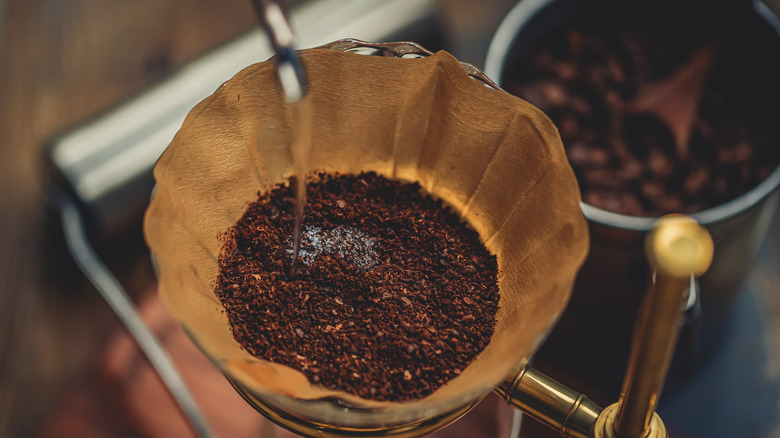
The Specialty Coffee Association (SCA) has even developed standardized guidelines to universalize the cupping process across the global coffee market. This sensory ritual begins at the olfactory level, as the taster smells the dry coffee grounds before hydrating them to develop a first impression. From there, the coffee is brewed with hot water, sniffed once more, and left to cool slightly; scalding-hot coffee masks the more nuanced flavor compounds that become detectable at a slightly lower temperature. Then, it's time to slurp.
A Reddit thread dedicated to proper slurping technique inquires, "Is it the harder the slurp the better? How much more can you taste compared to a hard quick slurp and a normal sip?" As the post's top comment expounds, "The sound [of the slurp] is pointless, but the sound is unavoidable with the high-force and high-velocity slurping — which are the desirable parts. The harder and more vigorous you slurp, the more information you get faster and more efficiently." To a trained palate, that information can reveal features like high or low acidity, mouthfeel, body weight (i.e. light, medium, full), and wine-like flavor notes such as florals, herbs, earthiness, nutiness, spice, and more.
Similar to wine tasting, slurping aggressively (despite the sound) provides maximum aeration and gives aficionados a full picture of a coffee's flavor profile much quicker than sipping. No need to feel self-conscious or intimidated by the volume. Get out of your comfort zone and get into that brew.