

If You've Opened A Bottle Of Rosé, Here's How Long You Have To Finish It
We may receive a commission on purchases made from links.
Some bottom-shelf rosés (like Barefoot) are liable to taste "off" even after they've been freshly uncorked. But when viticulturalists shell out for a high-quality bottle such as Epoch Estate or Donum – our favorite rosé brands here at Tasting Table – they should be able to get the most out of every drop. One of the most common mistakes everyone makes with leftover wine is improper storage. Not unlike food brought home from a restaurant, using leftover wine within a reasonable time frame is essential to ensuring its quality.
As a general rule, wine should be used within three to five days after opening. While drinking "expired" wine won't harm you, it'll taste pretty lousy, taking on an acidic, broken-down vinegar profile. However, proper storage can help extend that shelf life. When kept in the fridge with a cork or stopper, rosé can retain its quality for up to seven days. But for optimal enjoyment, use an opened rosé within five days.
Even within the rosé category, different wines have different needs. Sparkling wines' effervescence dictates a shorter shelf life after uncorking; so bubbly rosés should be used within one to two days after opening to prevent it going flat. It's also worth noting that sweeter rosés tend to lose their expressive fruity flavors more quickly. Whereas drier rosés fare better in the fridge for prolonged periods once opened, with fewer noticeable changes to the tasting profile.
Rosé can last up to a week after opening, but aim to finish it within five days
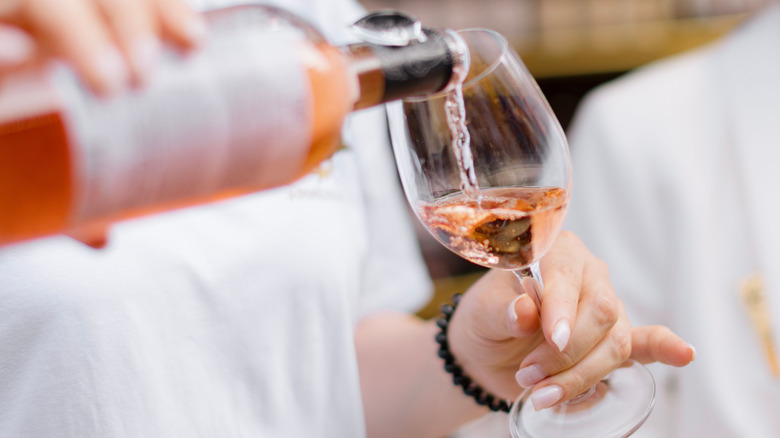
Rosé is packed with personality, delivering the best of white wine's crisp brightness and red wine's distinctive flavor. These notes can range from sweet to bone dry, but commonly feature red berry, white flower, and citrus. Made from red wine grape varietals like Grenache, Syrah, and Pinot Noir, rosé is produced with only brief skin contact, giving it a light body and low tannins. That makes it more prone to oxidation, which begins the moment a bottle is uncorked. The delicate compounds that give rosé its unique character begin to break down when exposed to oxygen. Around the seven-day-post-opening mark, you'll notice differences in your rosé's flavor, aroma, and body. It might not taste unpleasantly acidic, but its character will become less vibrant as the days go on.
Word to the wise: To get the most out of your leftover rosé, the best offense is a good defense. If you don't anticipate finishing the bottle in a single sitting, opt for a rosé with a screwtop cap rather than a cork; these can be tightly resealed, creating a superior oxygen barrier. Alternatively, it might be worth investing in a dedicated wine bottle stopper (like this stainless steel one by ERHIRY brand, currently $9.77 for a set of two on Amazon). The malleable silicone seal molds to the mouth of the bottle, keeping out oxygen and preserving the quality of your leftover vino.