

'Product Of' Vs 'Imported From' Olive Oil: What's The Difference?
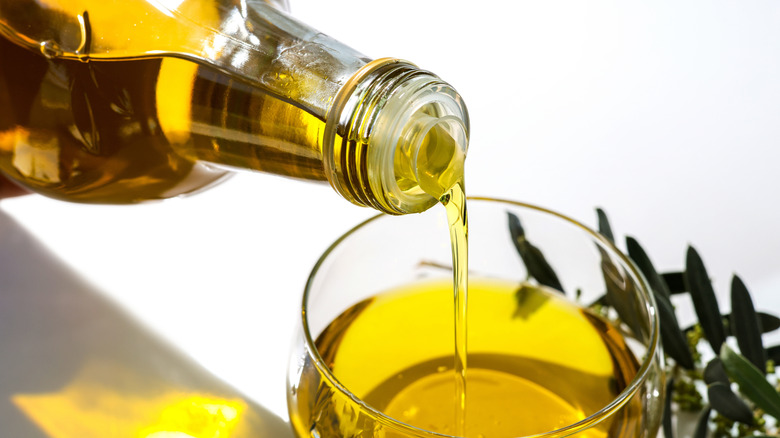
Olive oil has been steadily gaining popularity in the United States for decades, following a tradition that's been vital to the Mediterranean for thousands of years. Most olive oil in the world is still produced in Mediterranean countries, so some connoisseurs understandably want to seek out imported bottles from the historical home of the olive tree. It probably won't surprise you to learn that some of the most recognizable olive oil brands are Italian. It's important to know, though, that just because olive oil was imported from a country doesn't necessarily mean it was produced there.
There are strict requirements for what ends up on store shelves and how it's labeled. The words "product of" refer specifically to where the oil itself came from, while "imported from" tells you where the oil was bottled, regardless of where the olives were actually grown or pressed. If the name on the label is Italian or Greek, you'd likely expect the oil to come from those countries, but that isn't always the case.
In modern times, olive oil is a sprawling international industry worth almost $20 billion in 2025, even if many of us still romanticize our oil with ideas of quaint little towns and sunlit olive groves. While you can still find single-origin olive oil, most of it is blended from olives imported from various places, with their combined flavors giving the final flavor profile.
Where does olive oil actually come from?
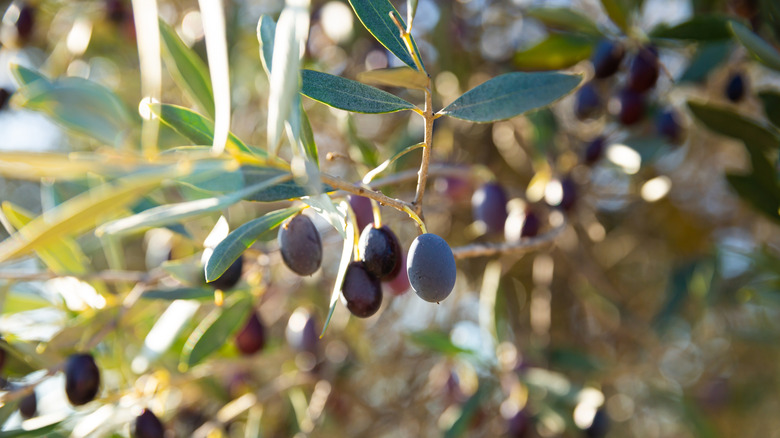
Olives are grown around the world by a small handful of big producers. Spain is by far the largest olive grower, with Italy and Turkey coming second and third, but there are many smaller producers, too. Some of these lesser-known olive growers have received accolades for their quality, such as Tunisia and China, both of which won awards for their olive oil in 2026.
Much like wine, olive oil has terroir, which means where the oil comes from determines its flavor, and is affected by factors like climate, altitude, and soil quality. You can taste the difference in single-origin olive oils, too. Italian oils have intense flavors and fruity notes, Greek oils tend to have a more herbal flavor, and Spanish oils are praised for their balance of fruity and nutty flavors. One downside to blended oils is that this diversity gets flattened to favor a consistent flavor profile.
Shipping the oil can also impact its flavor, whether it's headed for a store or going to a factory for blending. The taste can start to degrade if it's exposed to high temperatures, open air, or direct sunlight for extended periods of time. All of these can damage the flavor of the oil, but perhaps most importantly, olive oil has a limited shelf life. In essence, it's just crushed fruit. On average, the oil lasts for 18 to 24 months after the olives are harvested, but it may already be at least a year old by the time you bring it home. The more it's traveled, the older it likely will be.
Make sure you know what you're buying
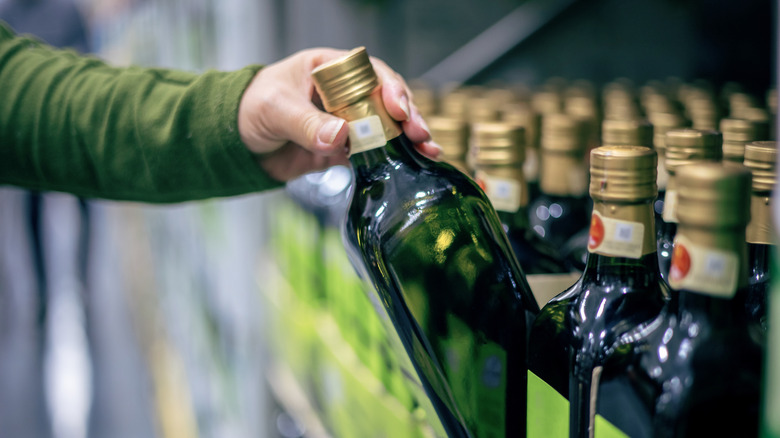
To be clear, sourcing olives and blending oils from multiple countries isn't necessarily a bad thing. The world has a voracious appetite for olive oil, with the third largest consumer being the United States, leaving only Spain and Italy consuming more of it. To meet the demand, all of that oil needs to come from somewhere. A reputable producer will likely label the bottle with the olives' countries of origin, but phrases like "bottled in Italy" with no elaboration may mean you're not being told everything.
Filippo Berio, for example, is a popular Italian brand. While the company proudly owns one of the largest olive groves in Tuscany, Italy, it also sources olives from other countries, like Greece and Tunisia (something which the company doesn't publicize). Another brand, Bertolli, has faced allegations of doing the same by sourcing olive oils from Turkey, Chile, and Australia without disclosing that fact.
The bottom line is that if you're buying olive oil and looking for a product from a specific place, only the words "product of" will guarantee that's what you're getting. Otherwise, there's no way to be completely certain. Though it's worth remembering that imported doesn't always mean better. After all, California produces some of the best olive oil available in the United States. Just remember to check for a harvest date on the label to make sure the oil is still fresh. If it's older than a year and a half, think about picking up a different bottle.