

The Reason Rotisserie Chicken Can Look Pink (Even When It's Not Undercooked)
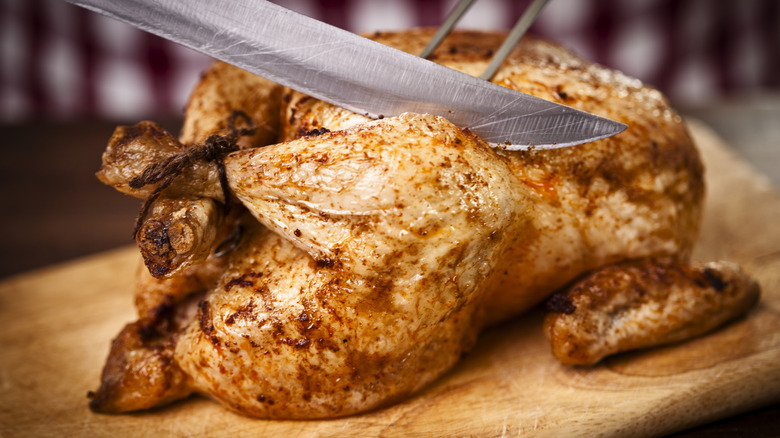
One of the first rules we all learn when first cooking chicken is that pink is bad. When you slice into a piece of chicken, we are told, any hint of a rosy hue could be a sign that salmonella is lurking within. While salmonella and other foodborne illnesses should be taken seriously, thankfully the fear of pinkness can be tossed in with the other myths about cooking chicken. Particularly when it comes to rotisserie chicken, there are quite a few reasons why a perfectly cooked and safe piece of poultry might hang onto a pinkish tint. To help explain them in detail, we sat down with Kantha Shelke, PhD, a senior lecturer on food safety regulations at Johns Hopkins University and the founder of the food science research firm Corvus Blue LLC.
"Color is a famously unreliable doneness cue in poultry," Shelke says. "USDA FSIS [the U.S. Department of Agriculture's Food Safety and Inspection Service] notes that safely cooked poultry can range from white to pink to tan, and there are several reasons for the pink blush." These reasons can even be as simple as the age of the bird. Shelke explains that most rotisserie chickens are made from birds that are just 6-9 weeks old, meaning they have thinner skin and more porous bones than their older counterparts — both of which can lead to a touch of pink when cooked.
"Gas-fired rotisseries produce CO, NO, and NO₂," Shelke says, "that penetrate the surface and generate the same family of pink pigments seen in smoked meats." In the young birds used for rotisserie chickens, these effects are particularly pronounced, as the thinner skin allows the gases to penetrate more readily.
Age and additives can cause pinkish chicken
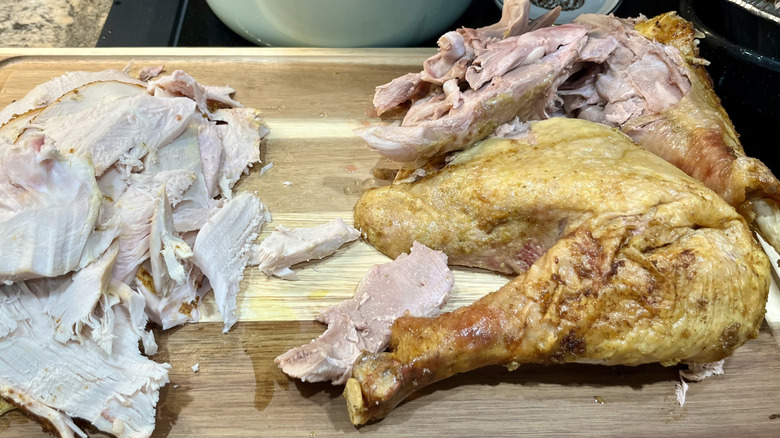
The increased bone porosity in younger birds allows marrow hemoglobin to leach into the surrounding meat both during storage and the cooking process. "The result," Shelke explains, "is a dark pink ring around the bone even at a safe internal temperature."
Another reason rotisserie chickens are prone to pinkness is that they are often injected with brines. These brine injections are part of what makes rotisserie chicken so good, as they both season the meat and keep it juicy, but brines use a variety of salts which can affect the coloration of the meat.
"Three pigments commonly cause pink color in cooked meat," Shelke explains, "undenatured myoglobin, nitrosyl hemochrome, and reduced globin hemochromes." The salt and phosphates in the brines raise the pH of the meat and stabilize the hemoglobin, allowing more pink to endure the cooking process, while nitrosyl hemochrome is the pink color you often see in cured meats, and can be caused by even trace levels of nitrates or nitrites in the chicken. "The pH, cooking method, and ingredients influence which one of these pigments dominates," Shelke says.
Clearly, you can eat pink chicken if the conditions are right. That said, this might also make it more difficult to tell whether or not your chicken is done. If we've removed coloration as an indicator, are we back to relying on the wiggling trick to tell if the chicken is cooked? Fortunately, no.
Shelke's tips for determining when chicken is properly cooked
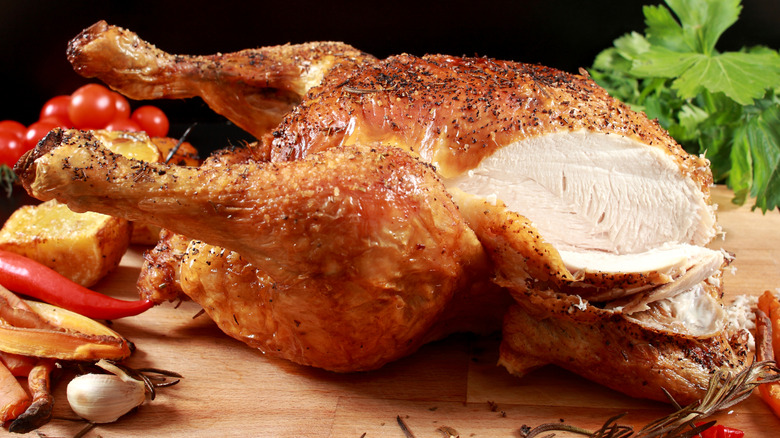
Rather than focusing on the chicken's color, you are actually better off assessing texture. As Shelke explains it, "Undercooked meat looks glossy and translucent, feels rubbery or gelatinous, and resists pulling apart along the grain." Essentially, it will behave a little bit like a raw chicken breast. When fully cooked, the meat should be firm and opaque with defined muscle fibers. But while these cues can be helpful, they are anything but certain.
"People often rely on visible indicators like color changes and firmness," Shelke explains, but "only a food thermometer confirms a safe internal temperature. Chicken can look fully white with clear juices and still harbor pathogens, or look pink and be perfectly safe." To be 100% sure that your chicken is safe to eat, the only thing you can really rely on is a reliable temperature reading. "At 165 degrees Fahrenheit, Salmonella and Campylobacter are destroyed essentially instantaneously," she notes.
Unfortunately, a meat thermometer won't do you much good with the rotisserie chicken from the grocery store, as those will have been cooled well below that threshold by the time they reach your cart. You'll just have to trust that the store employees are doing their job. On the plus side, you now have a few doneness indicators to look for, and can tone down the level of fear around a little bit of pink showing up in your chicken.