

The Deli Red Flag People Only Notice After Placing An Order
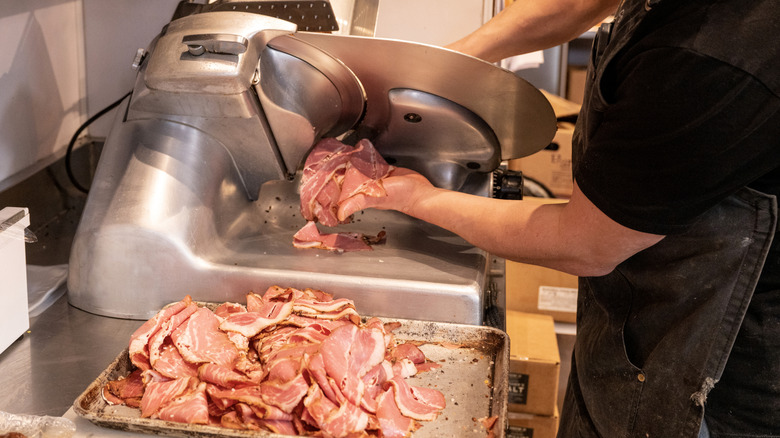
The next time you're at the deli counter, you may want to pay a little more attention. Of course, you should focus on the freshness, thickness, and whichever meat you want sliced. But there are several red flags to look out for when you're at the deli, including the slicer itself. If your deli slicer is using the same slicer blade for every type of meat without properly cleaning or changing it, you might be in trouble. It might not seem like a big deal — after all, it's all meat, right? But when we consulted several experts on the unwritten rules to know before buying meat from a deli, they had serious safety concerns.
"I closely watch to see that the deli slices each type of meat (turkey, ham, etc.) separately from other types using separate blades," explains Mark McShane, a chef and food safety expert of Level 3 Food Hygiene Certificate. "Failure to do so could result in flavor contamination, as well as serious health risks due to potential cross-contamination."
Different deli meats contain different ingredients, allergens, and bacteria risks. For customers with dietary restrictions or allergies, that can quickly become a huge health issue. Some processed meats contain milk, soy, wheat, or spice blends that you wouldn't know about unless you've carefully scanned the ingredient list. Cross-contact is also concerning for people avoiding pork for religious or personal reasons. Without proper cleaning procedures, a slicer can carry residue from all kinds of different meats.
The biggest issue is cross-contamination of meats
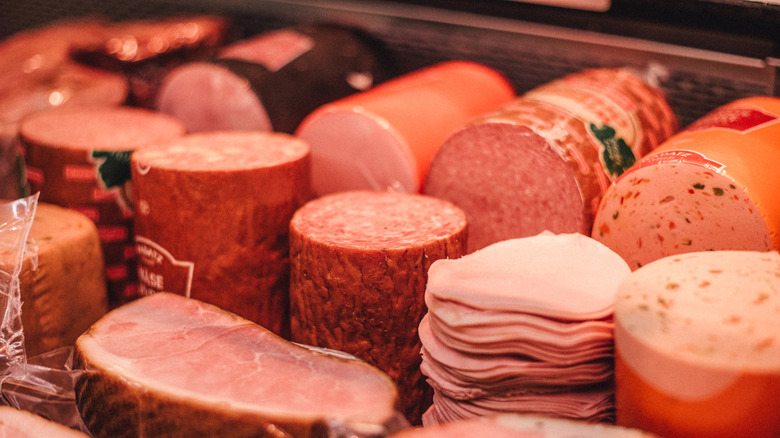
What also makes this situation particularly tenuous is that deli slicers are notoriously difficult to sanitize correctly. All those meat juices and teeny tiny food particles can collect in hard-to-reach crevices, creating the perfect breeding ground for bacteria such as listeria. And deli meat is highly susceptible to listeria contamination. The CDC recommends cleaning and inspecting food slicers every four hours, but that's obviously impossible to know when you're on the customer side of the counter.
Some higher-end delis and specialty shops take special care to avoid cross-contamination, germs, or flavor-wise. They dedicate separate slicers to different categories: one for cheese, one for pork products, for example. Unfortunately, in busy grocery stores, speed often takes priority, and workers may simply wipe the blade instead of fully sanitizing. It doesn't mean your deli is necessarily unsafe, but it could be a clue that other corners are being cut as well. If you see a visibly unclean meat slicer, meat scraps left near the blade, or a messy refrigerated display case, you should probably skedaddle outta there.
Once you get home with your deli meat, the precautionary steps shouldn't stop. Before you place that bologna in the fridge, remember that you should never store cold cuts next to raw meat. Because you're not going to cook the bologna (unlike the raw chicken), any possible salmonella spillover won't be killed through high-heat cooking. Keep these rules and red flags in mind the next time you build the ultimate charcuterie board.