

Ted Turner's Old West-Themed Restaurant Chain Is Famous For This Unique Meat
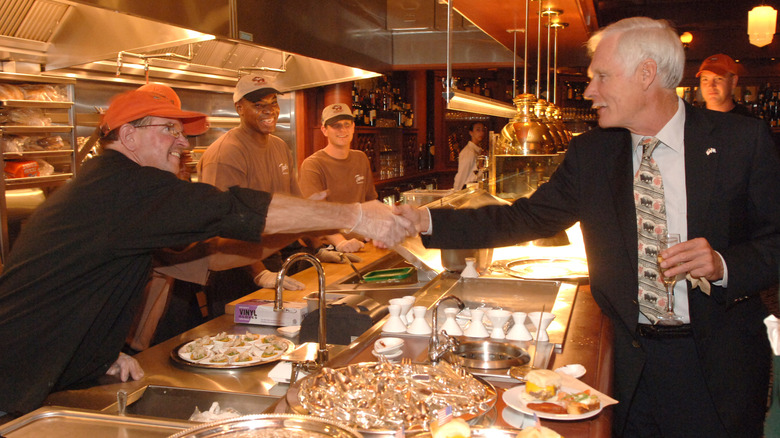
Ted Turner may be remembered as the larger-than-life media mogul who founded CNN and once owned the Atlanta Braves (along with being Jane Fonda's ex-husband), but his legacy actually goes way beyond broadcasting and business. Along the way, he also became one of the country's most influential private conservationists — and it's Turner we can thank for bringing back the bison. The American buffalo once roamed this country in vast herds, but nearly became extinct in the 19th century thanks to drought, horseback hunting, and intentional slaughter by the U.S. army. Turner advocated for bringing bison back into the American diet, and that mission ultimately shaped Ted's Montana Grill.
Turner co-founded Ted's Montana Grill in 2002 along with restaurateur George W. McKerrow, the founder of LongHorn Steakhouse. The Old West-inspired chain leaned hard into frontier nostalgia, with plenty of dark wood, cast-iron accents, and cowboy imagery. But what really made the restaurant stand out was its focus on bison meat. Turner believed bison was an even better alternative than beef steak, and he wasn't afraid to invest in the idea.
Back then, bison was still a relatively niche menu item in mainstream dining. Despite the fact that many people believed the myth that bison would taste too gamey, the Montana Grill's signature dishes include bison burgers, meatloaf, brisket, and short ribs. Bison is indeed inherently healthier and higher-quality meat than beef.
Ted Turner's commitment to bison was both business and pleasure
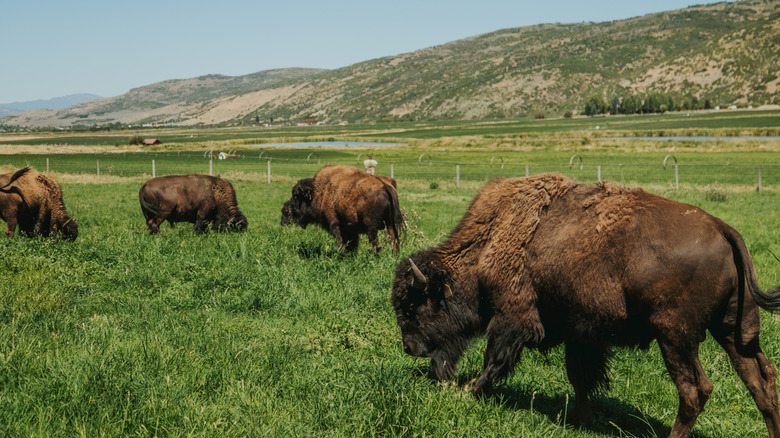
Beginning in the 1970s, Ted Turner began acquiring massive ranch properties across the American West and South, eventually becoming one of the largest private landowners in the country. He used these lands to invest heavily in bison restoration efforts. At one point, he owned roughly 51,000 bison, the world's largest private herd. By carefully managing ranching and conservation programs, his operations slowly but steadily brought back the near-extinct bison population, while also preserving precious grassland ecosystems.
The conservation efforts weren't purely symbolic. Turner believed sustainability depended partly on creating an economic demand for bison meat, hence the creation of the Montana Grill chain. Rather than treating bison like an exotic game meat, the restaurant did its best to normalize it for everyday diners. In many ways, the chain served as a large-scale public introduction to bison meat. Luckily for them, no one was forced to eat mummified bison, like one brave paleontologist once did at the University of Alaska.
Beyond bison, the restaurant was also famous for its early eco-friendly efforts, like paper straws, water-efficient toilets, and cutlery and to-go cups made from cornstarch. Today, there are more than 30 locations of the restaurant, spread out among 14 states. Turner's culinary legacy ultimately reflects his personal passions as well: conservation, land stewardship, and a belief in sustainable, ethical meat that was also good for business. Thanks to him, bison burgers are now a part of the modern American food landscape.